
Call us today
01202 986262
Farming has always demanded careful financial planning. However, rising electricity costs have made energy expenditure an increasingly pressing concern. Milking equipment, refrigeration, ventilation, lighting, irrigation systems and workshop machinery can all place considerable demands on the grid.
Commercial solar panels give farms an opportunity to generate electricity on site and reduce the amount they need to purchase from an energy supplier. For agricultural businesses with suitable barns, stores or areas of land, solar can turn previously unused space into a productive business asset.
Save Energy UK designs and installs bespoke commercial solar systems throughout Dorset. The company supports farms and rural businesses in Dorchester, Blandford, Bridport, Wimborne, Wareham and the surrounding areas. Every installation begins with a detailed assessment, allowing the proposed system to reflect the site, its electricity consumption and its commercial objectives.

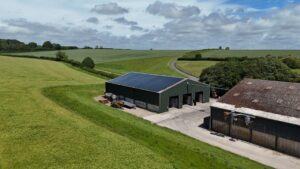
Many farms have sizeable buildings with broad roof areas. Barns, grain stores, livestock buildings and workshops can provide ample space for solar panels without interfering with productive agricultural land.
Farms also tend to use significant amounts of electricity during daylight hours. This can make solar especially valuable because the business may consume much of the electricity as it is generated. Using solar electricity directly on site usually delivers greater value than exporting it to the grid.
Every farm has a different consumption pattern. A dairy farm may use considerable power for milking and cooling. An arable business might experience higher demand during drying, processing or storage. Poultry farms may require continuous lighting, heating and ventilation. Therefore, an effective system must reflect how and when the farm uses electricity.
Save Energy UK conducts a free site survey before recommending a solution. This process helps establish which buildings are suitable, how much electricity the farm consumes and what system size could deliver a worthwhile commercial return.
The principal financial benefit of commercial solar panels comes from reducing reliance on imported electricity. Whenever the panels generate power that the farm uses immediately, the business avoids purchasing that electricity from the grid.
A well designed system can supply energy to:
Solar will not necessarily remove an electricity bill altogether. Nevertheless, it can reduce exposure to future price increases and make energy costs more predictable.
The amount a farm could save depends on its consumption, roof space, system size, electricity tariff and operating hours. Save Energy UK uses current solar design software and site specific information to prepare an accurate proposal rather than relying on a generic estimate.
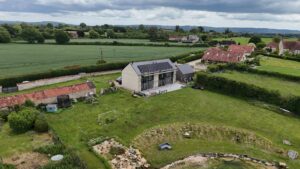
A larger system does not automatically provide a better return. If a farm generates far more electricity than it can use or store, a substantial proportion may be exported at a lower rate than the cost of imported energy.
Consequently, the design should begin with a careful review of the farm’s electricity bills and consumption profile. Seasonal changes also matter. Some farms use more power during winter, while others experience intense demand during harvesting, drying or irrigation periods.
The survey should consider:
Save Energy UK does not restrict its commercial installations to one manufacturer. This allows the team to recommend panels, inverters and storage equipment that suit the project rather than forcing every farm into the same package.
Roof mounted solar often provides the most practical option for a working farm. It can make productive use of barns, grain stores and workshops while preserving the surrounding land for agriculture.
However, agricultural roofs require careful assessment. The structure must support the additional load, while the panel layout must account for rooflights, ventilation outlets and safe access. Older roofing materials may also require specialist consideration.
The orientation of the building will influence generation, but a roof does not always need to face directly south. East and west facing installations can produce useful electricity across a broader part of the day. This may suit a farm with sustained morning and afternoon demand.
Some installations qualify as permitted development, provided that they meet the relevant conditions and limits. Larger systems, listed buildings and sensitive sites may require consent or prior approval. The Planning Portal guidance provides an overview, although the local planning authority should confirm the position for each project.
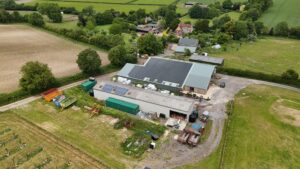
Ground mounted panels can offer an alternative when roofs are unsuitable or insufficient. They allow the installer to select a favourable orientation and can provide easier access for inspection and maintenance.
However, planning requirements, land classification, visual impact, drainage and grid access all require consideration. The design must also respect the farm’s existing operations and future plans.
A site survey can establish whether roof mounted panels, a ground mounted array or a combination of the two offers the best solution.
Solar panels generate electricity during daylight hours, but farm demand does not always follow the same pattern. Battery storage can retain surplus energy for use later in the day or when solar generation falls.
This can benefit farms that operate early in the morning, late in the evening or overnight. A battery may also help a business use a greater proportion of its own solar electricity rather than exporting it immediately.
Save Energy UK offers several storage options. EcoFlow PowerOcean combines a hybrid inverter with modular battery storage and may suit smaller premises or mixed use sites with appropriate requirements. Larger agricultural operations may require a commercial and industrial battery system with substantially greater capacity.
Battery storage is not essential for every farm. If the business already consumes most of its solar generation during the day, adding a battery may not produce the strongest return. Save Energy UK assesses the farm’s usage before advising whether storage offers genuine commercial value.
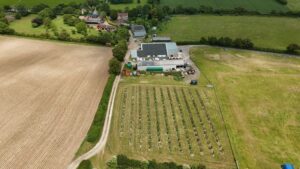
A farm may be able to receive payment for eligible electricity exported to the grid through the Smart Export Guarantee.
The scheme applies to eligible businesses as well as households. Exporters need an appropriate meter capable of providing half hourly readings. They must also satisfy the chosen supplier’s eligibility requirements. According to government guidance on the Smart Export Guarantee, suppliers set their own rates and terms, so tariffs can vary.
Export income can strengthen the financial case for solar. However, using generated electricity on the farm will often provide greater value because it offsets electricity purchased at a higher rate. A considered system design should therefore prioritise useful consumption while allowing appropriate surplus generation to earn an export payment.
Funding programmes for farms change regularly. The Farming Investment Fund has previously supported solar technology through its Improving Farm Productivity grant. However, the latest listed round is closed. Farmers should check the current Farming Investment Fund guidance before assuming that funding remains available.
Save Energy UK can also introduce eligible commercial customers to finance through Smart Ease. Any borrowing decision should be based on affordability, the full cost of finance and the expected return from the solar installation.
Commercial solar expenditure may also qualify for capital allowances. HMRC places solar panels within the special rate pool, while qualifying expenditure may be eligible for the Annual Investment Allowance or another applicable allowance. Treatment depends on the business, ownership arrangement and circumstances. Farmers should seek advice from their accountant before making a decision. HMRC guidance provides further information but does not replace professional tax advice.
The return on commercial solar panels depends on the installation cost, electricity generation, on site consumption, export income, maintenance and future energy prices.
A proposal should include estimated annual generation and projected savings based on realistic assumptions. It should also explain how those figures could change. No installer can guarantee future electricity prices or weather conditions.
Save Energy UK has completed solar installations for agricultural businesses in Dorset. Travellers Rest Farm and Manor France Farm, both in the Blandford Forum area, chose the company to create solutions for their substantial operational electricity demands. These projects form part of Save Energy UK’s wider portfolio of commercial solar installations.
A farm should judge the investment using its own survey and quotation rather than assuming that another site’s results will apply to it.
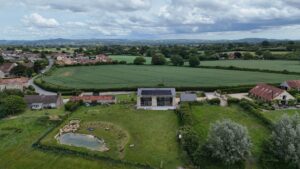
Agricultural work cannot simply stop while solar panels are installed. Therefore, the project must account for livestock movements, vehicle access, machinery, harvest schedules and other operational requirements.
Save Energy UK begins with a site survey and prepares a clear quotation. Once the design has been agreed, a technical survey confirms the equipment locations, cable routes and final specification. The team then coordinates the installation around the needs of the business before commissioning the system and providing a handover pack.
Solar panels contain no moving components and generally require limited routine attention. Nevertheless, occasional inspection, monitoring and cleaning may help protect performance. The precise warranty will depend on the products selected, so every proposal should state the relevant coverage clearly.
Save Energy UK has worked with solar technology since 2005 and has completed thousands of installations. Its commercial service covers system design, solar panels, inverters, battery storage and ongoing support.
The company holds MCS, NAPIT, RECC and CHAS Elite credentials. More importantly, it designs each commercial installation around the property and its energy requirements. This bespoke approach is particularly important for farms because no two agricultural operations use electricity in precisely the same way.
Its Poole based team serves farms throughout Dorset, including Dorchester, Blandford, Bridport, Wimborne and Wareham. Customers receive a free survey, a detailed proposal and the opportunity to ask questions before committing to an installation.
Not necessarily. The farm needs suitable roof or ground space, a viable grid connection and sufficient electricity demand. A professional survey will establish whether solar represents a sensible investment.
Some roof mounted systems fall within permitted development rights if they meet the required conditions. Larger arrays, ground mounted systems, listed buildings and sensitive locations may require permission or prior approval.
Solar panels continue generating electricity during winter, although output is lower because daylight hours are shorter. Farms remain connected to the grid unless the system has been designed for another arrangement.
It depends on when the farm uses electricity. Storage may prove valuable when significant demand occurs outside daylight hours. Farms with high daytime consumption may already use most of their generation directly.
The timescale depends on the system size, structural work, grid approval, planning requirements and site access. Save Energy UK can provide a clearer programme after surveying the farm.
Commercial solar panels for farms in Dorset can reduce reliance on grid electricity and create a valuable long term asset. However, the system must reflect the farm’s buildings, consumption and future plans if it is to deliver a convincing return.
Save Energy UK can assess your property, review your energy requirements and prepare a bespoke commercial solar proposal. To arrange a free site survey and tailored quotation, call 01202 986262, email info@saveenergyuk.co.uk or complete the enquiry form on the Save Energy UK website.