
Call us today
01202 986262
Food manufacturing sites often use substantial amounts of electricity throughout the working day. Refrigeration, ventilation, processing equipment, packaging lines and lighting can all contribute to demand. For businesses in Dorset, Poole, Bournemouth, Christchurch, Parkstone and Broadstone, commercial solar may help meet some of that demand with electricity generated on site.
The potential benefit depends on how much electricity your business uses while the panels are generating. A system designed around your site and operating pattern could reduce the amount of electricity you need to import from the grid. A commercial survey can help establish whether solar is suitable for your premises and what a tailored proposal might include.
Solar panels convert daylight into electricity. Your business can use this electricity as it is generated, with any shortfall supplied by the grid.
Solar panels can still generate electricity on cloudy days, although their output varies with the weather, season, roof orientation and other site conditions. Generation is usually greatest during daylight hours, which may suit food manufacturers whose production schedules and equipment operate during the day.
If your site uses more electricity than the panels are generating, you can continue to draw the balance from the grid. If the system generates more than the site needs at a particular time, surplus electricity may be exported, subject to the relevant connection and energy arrangements.
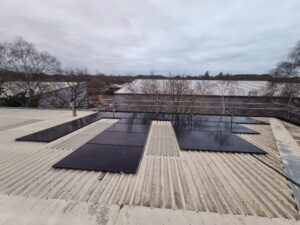
The value of a commercial solar system is not based on panel output alone. It also depends on when your business uses electricity.
A food manufacturing site may have a steady daytime demand from refrigeration and cold storage. Production machinery, conveyors, packing equipment and cleaning processes may add to this demand during operating hours. Where solar generation coincides with that usage, the site can use more of its generated electricity directly.
This relationship between generation and consumption is important when planning a system. A large array may produce more electricity over the year, but its suitability depends on the site’s usage, available roof space and other practical factors. Reviewing half hourly consumption data can help show when demand rises and falls across a typical working day.
A solar assessment should consider more than the size of the roof. The condition and structure of the building matter, as do roof orientation, shading, access and the electrical infrastructure on site.
Your business’s operating pattern is just as important. A site that runs production and refrigeration throughout the day may have a different solar requirement from one that operates mainly at night. Seasonal production changes, planned machinery upgrades and future expansion should also be discussed before a system is designed.
It can help to prepare recent electricity bills and consumption data before requesting a proposal. This gives the installer a clearer view of your current usage and helps inform the system design. A survey can then assess the building and identify any technical matters that need further attention.

Battery storage may be useful if your site regularly has surplus solar generation during the day and significant electricity demand later. A battery can store some of that electricity for use at another time, depending on the system design and operating conditions.
However, storage is not automatically necessary. If your site already uses much of its solar generation as it is produced, adding a battery may not be the right choice. The decision should follow an assessment of your energy use, required capacity, costs and intended benefits.
A tailored proposal can compare a solar system with and without battery storage. This allows your business to consider the options in the context of its own consumption rather than relying on general estimates.
Before making a decision, consider what you want the installation to achieve. You may want to reduce daytime electricity imports, manage exposure to grid prices or support your environmental plans. A clear objective can help shape the assessment.
It is also sensible to ask how projected generation has been calculated, what assumptions have been used and how the system may perform across different seasons. Ask whether the assessment includes your actual consumption data, roof suitability and any relevant grid connection requirements.
Planning requirements should also be checked for the specific site. Some solar installations on non domestic buildings may fall within permitted development rights, but conditions and limitations apply. The location and design of the system can affect what approvals are needed, so confirm the requirements before work begins. legislation.gov.uk

Commercial solar could help a food manufacturing business reduce the electricity it imports during daylight hours, particularly when the site has a strong daytime demand. The likely benefits depend on the building, system design, operating schedule, energy consumption and available tariff arrangements. A site specific assessment is the best way to understand what may be suitable.
Save Energy UK designs and installs commercial solar systems for businesses. Its commercial service includes a survey and a system proposal tailored to the site and its energy requirements. Save Energy UK
If your food manufacturing business is based in Dorset, Poole, Bournemouth, Christchurch, Parkstone or Broadstone, contact Save Energy UK to arrange a commercial solar survey and quotation. Call 01202 986262 to discuss your site and energy use.
Solar panels can supply electricity to a business while they are generating. Whether they can meet a particular site’s demand depends on the system’s output and the site’s electricity use at that time. Your business remains connected to the grid to supply any additional electricity it needs.
Solar panels can generate electricity in winter, but output varies with daylight hours, weather, shading and other site conditions. A proposal should account for seasonal variation when estimating annual generation.
No. Battery storage may suit sites that have surplus solar generation and demand later in the day, but it is not essential for every installation. A review of your consumption can help determine whether it should be considered.
Start by gathering recent electricity bills and, if available, half hourly consumption data. Save Energy UK can assess your building, energy use and requirements during a commercial solar survey, then prepare a tailored proposal.