
Call us today
01202 986262
A business car park is usually valued for the space it provides. Yet with the right design, it could do more than give employees and customers somewhere to park. A solar carport can turn the space above parked vehicles into a source of renewable electricity.
For businesses in Dorset and across the South Coast, this could be an appealing way to make better use of existing land. A carport may provide shade and shelter while its panels generate electricity for the premises. The power could help meet daytime demand, support electric vehicle charging or work alongside battery storage.
Whether a solar carport makes sense depends on the site, the business’s energy use and the cost of the project. Here is what commercial decision makers should consider before taking the next step.
A solar carport is a canopy built over parking spaces, with solar panels fitted to its roof. It works in much the same way as a rooftop solar system. The panels generate electricity from daylight, which an inverter converts into a form the business can use.
The structure can also shelter vehicles from rain and strong sunshine. Depending on its design, it may include lighting, electric vehicle charge points or provision for battery storage.
Unlike rooftop solar, a carport does not rely on a suitable roof. That may make it an option for businesses whose buildings have limited roof space, an unsuitable roof structure or competing demands for that space. It can also make use of a car park the business already owns or operates.
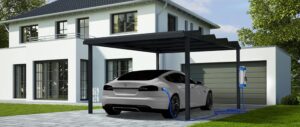
Many businesses need parking, but the land above the spaces does not usually serve another purpose. A solar canopy can add electricity generation without taking up additional ground for a separate solar farm.
That can be useful for hotels, offices, leisure centres, retail sites, schools and industrial premises. The best fit depends on factors such as the car park’s size, layout, usage and available electrical capacity.
Solar panels generate electricity during daylight hours. Businesses that use a significant amount of electricity during the day may be able to use some of that generation as it is produced. This can reduce how much electricity they need to buy from the grid, although the level of benefit depends on the system and the business’s energy profile.
A commercial solar assessment should compare expected generation with the site’s electricity use. It should also consider seasonal changes and times when the car park or premises are less busy. The aim is to design a system around the business, rather than install more capacity than the site can use effectively.
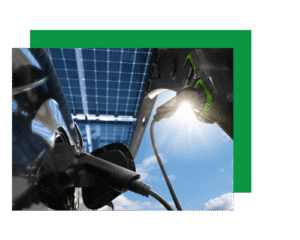
A solar carport could provide a useful location for workplace or customer charge points. Solar generation may contribute to charging vehicles when they are parked during the day. The actual amount of solar power available will vary with weather, season, demand and the number of vehicles charging.
Businesses should consider how many charge points they need now and whether demand may grow. A suitable design needs to account for the carport, solar panels, electrical infrastructure and charging equipment together. Battery storage may also be worth assessing where the business needs to use some of its solar electricity outside generating hours.
The canopy can offer protection from rain, hail and direct sunshine. This may be welcome for employees, visitors and customers, particularly at sites where vehicles remain parked for much of the day.
Shelter is not the main financial case for a solar carport, but it can add practical value to a project. Businesses should consider how the structure would affect access, visibility, lighting and the overall experience of using the car park.
Generating renewable electricity at the premises can form part of a business’s wider energy and sustainability plans. It may help demonstrate action to employees, customers and other stakeholders. Any environmental claims should be based on the system’s actual performance and the organisation’s reporting method.
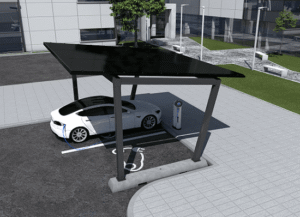
A solar carport is a substantial structure as well as an energy system. A careful assessment should cover the following.
The design needs to work with the number and arrangement of parking spaces, traffic flow, vehicle height and access for emergency services. The installer may also need to assess ground conditions and determine how the canopy will be supported.
The project should keep the car park usable during construction and minimise disruption to the business. It is sensible to discuss phasing, temporary closures and safe access before work begins.
The size of the solar system should reflect how much electricity the business uses and when it uses it. The existing electrical infrastructure and grid connection may affect what can be installed, how much power can be used on site and whether any electricity can be exported.
A detailed survey can identify the information needed to develop a realistic design and financial forecast. Avoid relying on a generic savings figure. Costs and returns vary with system size, equipment, installation requirements, energy tariffs and the business’s consumption.
In England, permitted development rights can cover solar canopies in certain non domestic off street car parks. The rights have conditions and limits, so they do not mean every car park project can proceed without planning checks. For example, the relevant rules include a maximum height of four metres and restrictions relating to nearby homes. Drainage also needs consideration where the canopy is installed above a permeable surface. Check the proposal with the local planning authority before work begins.
The Government has also identified solar canopies on car parks as an area with potential for further deployment. Its Solar Roadmap refers to exploring that potential. This reflects growing policy interest, but businesses should base decisions on the requirements that apply to their specific site.
A commercial project needs a plan for installation, testing and handover. The business should understand how the work will affect parking and normal operations, who is responsible for each part of the installation, and what maintenance the system may require.
Solar carports also need appropriate design for the site’s weather exposure and operating conditions. A qualified installer can explain the proposed equipment, expected performance, warranties and aftercare.
No. A site may have limited space, shading, ground constraints or a grid connection that affects the project. Some businesses may get better value from rooftop solar, or from a combination of roof mounted panels and a smaller carport system.
The right comparison considers the whole site. A survey should look at the building, parking area, electricity use, future plans and any EV charging requirements. It can then show whether a carport is feasible and how it compares with other commercial solar options.
Save Energy UK designs and installs commercial solar systems for businesses, including projects across Dorset. Its portfolio includes commercial installations for organisations such as Bowmill Engineering, Bay Tree Montessori and Applewood Hotel. The company also offers solar carports and works with manufacturer IRFTS. Businesses considering a car park project can ask Save Energy UK to assess the site and discuss an appropriate commercial solar solution.
For some businesses, a solar carport could turn a practical parking area into a more productive part of the site. It may combine renewable electricity, vehicle shelter and support for EV charging in one structure.
The value depends on the details. The car park must suit the design, the system must match the business’s energy needs, and planning, grid capacity and installation requirements must be checked. A site assessment is the best way to understand whether a solar carport is a sound investment for your premises.
Save Energy UK works with commercial customers in Dorset and across the South Coast. If you are considering solar for your business car park, contact the team to discuss your site, energy use and project requirements.
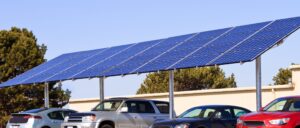
They may be possible in existing non domestic car parks, subject to the site, design and planning requirements. A survey can establish whether the layout, ground conditions and electrical infrastructure are suitable.
Yes. A solar carport can be designed alongside EV charge points. The amount of solar electricity available for charging will depend on generation, vehicle demand and the wider energy use of the site.
Some solar canopies in non domestic off street car parks may qualify for permitted development rights. Conditions and limits apply, so businesses should confirm the position with their local planning authority before starting work.