
Call us today
01202 986262
For owners of larger homes, choosing a solar battery is rarely as simple as finding a system with enough capacity to keep the lights on in the evening. A substantial property can have considerable electricity demands, particularly when modern technologies such as electric vehicles, heat pumps, air conditioning and electric cooking are added to everyday household consumption.
This is where the EcoFlow PowerOcean becomes particularly interesting.
Designed as a modular home energy storage system, the PowerOcean gives homeowners considerable flexibility over how much electricity they can store. Rather than committing to a fixed amount of battery storage, the system can be configured around the requirements of the property and expanded where appropriate.
For homeowners considering solar panels and battery storage in Dorset and across the South Coast, the important question is whether that flexibility translates into a genuinely suitable system for a large home.
In many cases, the answer is yes.
The size of a property does not automatically determine how much electricity it consumes. A large but highly efficient home occupied by two people could use considerably less electricity than a smaller property occupied by a busy family.
Nevertheless, larger homes frequently have greater energy requirements.
There may be more lighting, additional televisions and computers, several refrigeration appliances and a greater number of rooms requiring heating or cooling. A household may also have one or more electric vehicles, a heat pump, air conditioning, an electric range cooker, a hot tub or other equipment with substantial electricity requirements.
These demands become especially important when choosing a solar battery.
The objective should not simply be to install as much battery capacity as possible. Instead, your solar panels, battery storage, inverter and household consumption should be considered together.
A properly specified battery can store surplus solar electricity generated during the day so that it is available when the property needs it. This can help households consume a greater proportion of the renewable electricity they generate themselves rather than exporting it and subsequently importing electricity from the grid.
For a large home, having sufficient capacity to make that strategy practical can be particularly valuable.
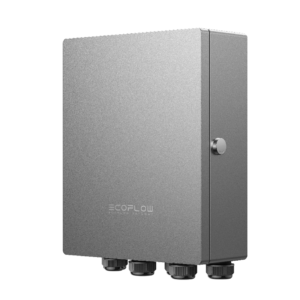
The EcoFlow PowerOcean is a modular home battery storage system designed to work alongside solar generation and household electricity consumption.
One of its most significant characteristics is its modular design.
Individual PowerOcean LFP battery modules have a nominal capacity of 5.02 kWh. EcoFlow states that its single phase system can accommodate up to six battery modules with one inverter, providing up to approximately 30 kWh of battery capacity.
For properties with particularly substantial electricity requirements, EcoFlow also offers a three phase configuration. The three phase PowerOcean can support up to 12 battery modules with one inverter. Its inverter range offers AC output options of 6 kW, 8 kW, 10 kW and 12 kW, with a maximum photovoltaic input of 24 kW.
This scalability is one of the reasons PowerOcean deserves consideration for larger homes.
Perhaps the clearest advantage is the ability to configure storage around the property.
A household does not necessarily need 30 kWh of battery storage simply because it occupies a large home. Equally, a household with an electric vehicle, heat pump and substantial solar array may find that a relatively small battery does not make the best use of the electricity available from its panels.
PowerOcean allows an installer to approach this more intelligently.
With 5.02 kWh battery modules and the ability to combine multiple modules, capacity can be selected according to actual and anticipated electricity consumption.
This can also be useful when considering future requirements. A homeowner who expects to purchase an electric vehicle or install other electrical technology should take those plans into account when discussing the design of the system.
Battery capacity is only part of the equation. A larger household can also have significant simultaneous power demands.
Imagine an evening when dinner is being prepared using electric appliances, an electric vehicle is charging, the washing machine is running and several other appliances are being used throughout the house.
This is why professional system design matters.
The single phase PowerOcean hybrid inverter provides AC output of up to 6 kW, while the three phase system provides inverter options reaching 12 kW. The appropriate configuration will depend upon the electrical supply, solar installation and requirements of the individual property.
For homeowners with unusually high electricity requirements, Save Energy UK can assess the property and recommend a system configuration based upon how electricity is actually being used.
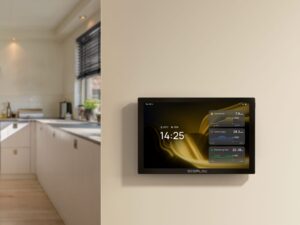
Battery longevity is naturally an important consideration when investing in home energy storage.
EcoFlow uses lithium iron phosphate battery chemistry in the PowerOcean and states that its cells are engineered for more than 10,000 cycles. The company also lists a 15 year warranty for both the PowerOcean battery and inverter.
The equipment carries an IP66 rating and is designed for indoor or outdoor installation.
For homeowners planning to use battery storage regularly over many years, these are meaningful considerations.
For many households, the greatest appeal of home battery storage is the ability to retain more of the electricity produced by their solar panels.
Without battery storage, surplus solar generation may be exported when the household is unable to use it. Later in the evening, when solar generation has fallen, the property may need to import electricity again.
Battery storage changes that relationship.
Surplus electricity can instead be directed into the battery and used later when household consumption exceeds solar generation.
This can be particularly useful for larger homes because electricity consumption may continue well into the evening.
Rather than considering solar panels and battery storage as separate purchases, Save Energy UK can design them as one integrated home energy system.
That means looking at how much electricity the household consumes, when it consumes it, how much solar electricity the proposed array is likely to generate and how much storage is appropriate.
There is no single correct battery capacity for a large property.
Two apparently similar houses can require very different systems.
Before recommending an EcoFlow PowerOcean battery configuration, it is sensible to consider annual electricity consumption, typical daily consumption, evening and overnight demand, the size of the solar array and whether the household uses significant electrical equipment.
Future requirements should also form part of that conversation.
For example, a household currently heated by gas might intend to install a heat pump. Another family may expect to replace two petrol cars with electric vehicles. Someone working permanently from home may have significantly greater daytime electricity consumption than a household that is empty between nine and five.
This is precisely why simply purchasing the largest available battery is not necessarily the right approach.
An oversized battery may offer capacity that the household seldom uses. An undersized system, by contrast, could limit the amount of surplus solar electricity that can be retained for later.
The better solution is to have your energy requirements assessed professionally.
Save Energy UK can examine your household consumption and discuss your plans before recommending an appropriate solar and battery storage configuration.
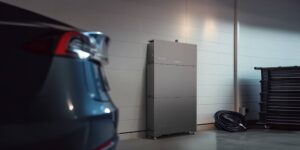
The electrification of the home is making battery capacity increasingly important.
Electric vehicles can add considerable electricity consumption to a household, while heat pumps transfer another significant element of domestic energy use from fossil fuels to electricity.
Neither automatically means that an enormous battery is required.
The timing of electricity consumption matters just as much as the total amount consumed.
For example, an electric vehicle may be charged using solar electricity during periods of strong daytime generation. Alternatively, charging may be scheduled around an appropriate electricity tariff. A heat pump has an entirely different consumption pattern.
The solar array, battery and household loads therefore need to be considered as a complete system.
For larger homes adopting several electrical technologies, the modular nature of PowerOcean provides useful flexibility.
Tesla Powerwall 3 is another strong option for homeowners considering premium battery storage.
In the UK, Powerwall 3 provides 13.5 kWh of nominal battery energy. Tesla lists on grid output of up to 11.04 kW depending upon local conditions, while its UK technical documentation confirms that the system can be expanded using additional Powerwall 3 units and Expansion units.
PowerOcean takes a different approach to capacity.
Rather than beginning with a 13.5 kWh battery, EcoFlow uses smaller 5.02 kWh modules. A single phase PowerOcean installation can provide up to approximately 30 kWh with one inverter, while the three phase architecture can accommodate considerably more battery modules.
Neither approach is inherently better for every property.
Tesla Powerwall 3 offers substantial capacity and power within an integrated system and remains an attractive choice for many households. EcoFlow PowerOcean, however, may appeal particularly to homeowners who value more granular capacity choices or who have substantial and potentially changing energy requirements.
The right choice should ultimately be determined by the property rather than the badge on the battery.
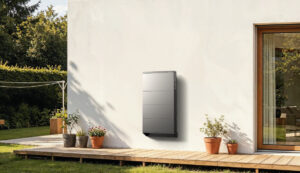
A well designed solar and battery installation can reduce the amount of electricity a household needs to purchase from the grid, although the results will vary considerably between properties.
Battery storage can allow a household to retain surplus solar electricity and use it later. Depending upon the electricity tariff and system configuration, batteries can also provide opportunities to manage when electricity is imported from the grid.
However, credible savings calculations should be based upon the individual household.
Claims about enormous universal savings may sound appealing, but electricity consumption, solar generation, tariffs and household behaviour differ too much for a single figure to be meaningful.
Save Energy UK can assess these factors when preparing a quotation, giving you a clearer understanding of how an EcoFlow battery system could perform within your own home.
For many larger homes, absolutely.
Its modular 5.02 kWh batteries make it possible to tailor capacity more closely to household requirements, while the availability of single phase and three phase configurations gives the system considerable scope for different properties.
The more important question is not simply whether PowerOcean is capable of supporting a large home.
It is whether a particular PowerOcean configuration is right for your large home.
That distinction matters.
A household with modest electricity consumption and no electric vehicle will have very different requirements from a family running two electric cars, a heat pump, air conditioning and numerous high consumption appliances.
Professional specification helps ensure you are paying for the battery capacity you can genuinely use.
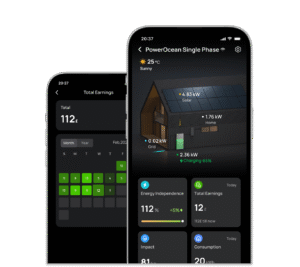
Potentially, yes. PowerOcean is available in single phase and three phase configurations and offers modular battery storage. EcoFlow’s three phase inverter options extend to 12 kW AC output, making the range particularly interesting for properties with substantial electricity requirements.
Each PowerOcean LFP battery module has a nominal capacity of 5.02 kWh. Multiple modules can be combined to create a larger storage system.
Yes. Modularity is one of its principal attractions. The single phase configuration supports up to six battery modules with one inverter, while the three phase system supports up to 12 modules with one inverter. The precise configuration should be determined by a qualified installer.
EcoFlow PowerOcean has many of the characteristics that make sense for a large modern home. It offers modular battery storage, single phase and three phase options, LFP battery technology and the ability to build a system around substantial household energy requirements.
Yet the quality of the battery is only half of the equation.
The real value comes from specifying the right system.
If you own a larger home in Dorset, along the South Coast or within Save Energy UK’s wider service area, speak to the team about your electricity consumption, solar potential and future energy plans.
Whether you already have solar panels, are planning a completely new installation or want to prepare your home for an electric vehicle, heat pump or greater future electricity consumption, Save Energy UK can help you determine whether EcoFlow PowerOcean is the right choice.
Contact Save Energy UK today to get a free solar and battery quote and discover the PowerOcean configuration that could work for your home.