
Call us today
01202 986262
If your business operates from several premises, deciding where to install solar panels can involve more than checking which roof has the most space. Each site may have different energy demands, building constraints and opportunities to generate and use renewable electricity.
A commercial solar portfolio assessment helps bring those details together. It gives a business a clearer view of how solar could work across its premises, which sites may be suitable and what to consider when planning the next steps.
For businesses in Dorset and across the South Coast, this kind of review can help turn an initial interest in commercial solar into a practical plan.
A commercial solar portfolio assessment is a structured review of the properties a business owns or operates. It considers each site individually while also looking at the organisation’s wider energy requirements and goals.
The purpose is to understand where a solar installation may be appropriate and how different sites could contribute to a broader energy strategy. This does not mean every building will necessarily be suitable for panels. A careful assessment helps identify the differences between sites before investment decisions are made.
Save Energy UK’s commercial solar service includes preliminary site assessment, bespoke system design and installation. Its team designs systems around the needs of each business, with the aim of making effective use of the available space and energy. Save Energy UK
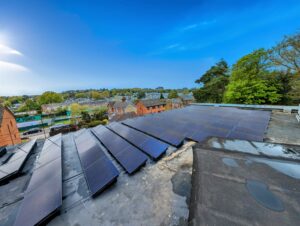
Every commercial premises has its own characteristics. An assessment may consider:
The business’s electricity bills and consumption data help show how much power each site uses and when it uses it. A site that consumes a substantial amount of electricity during daylight hours may be able to use more of the energy generated by its solar panels directly.
Operating patterns matter too. A warehouse, office, manufacturing site and hospitality venue may all have different energy demands, even if their buildings appear similar.
The roof’s size, layout and condition can affect how much solar equipment it may accommodate. Shading from nearby buildings or trees may also influence potential generation.
A site assessment can identify questions that need further investigation, such as whether the roof is suitable for the proposed system and whether other building considerations may affect the design.
Looking at several sites together can reveal where energy use is concentrated and which premises may be priorities for further investigation. A company might, for example, have one site with high daytime consumption and another with more limited roof space.
Understanding those differences can help decision makers compare options using consistent information.
A commercial solar system should be considered in the context of how a business operates. Planned changes to a site, shifts in opening hours or new equipment could affect future electricity use.
Discussing these plans during the assessment can help ensure that solar proposals reflect the business’s likely needs, rather than relying only on current consumption.
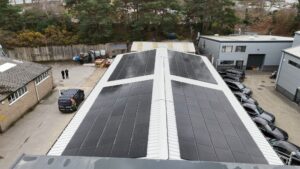
Considering premises as a portfolio can help a business make more informed decisions about where to focus its time and investment.
A review can help compare sites, identify buildings that may merit a closer technical survey and highlight information that is still needed. It can also give senior decision makers a more consistent basis for discussing possible projects across different parts of the organisation.
The assessment does not remove the need for site specific design. Each installation still needs to reflect the building, energy use and operational requirements of that location. Instead, the portfolio view helps the business understand how those individual decisions fit into a wider plan.
A commercial solar portfolio assessment may be useful for organisations that operate from more than one premises, such as businesses with several offices, warehouses, workshops, retail units or manufacturing sites.
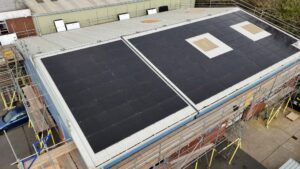
It may also help companies with several buildings at one location. For example, Save Energy UK completed a 320 kilowatt solar installation across four buildings at Bowmill Engineering in Poole. The project included 834 solar panels and was designed around the company’s energy demands. Poole
That project shows why looking at buildings together can matter. The final design needs to account for each roof while supporting the needs of the business as a whole.
The more useful information available at the outset, the easier it can be to understand a portfolio’s potential. A business may find it helpful to gather:
An installer can explain what information is useful and whether any additional surveys or technical checks are needed.
No. The purpose is to evaluate the circumstances at each site, not to assume that every building should receive the same system.
One property may have suitable roof space and energy use that aligns well with solar generation. Another may need further investigation or may not be an immediate priority. Comparing sites can help a business decide where a detailed design or survey would be worthwhile.
The right system size and configuration also depend on the site. Solar panels, battery storage and other equipment should be considered in relation to actual requirements. A tailored assessment helps establish what may suit the business before decisions are made.
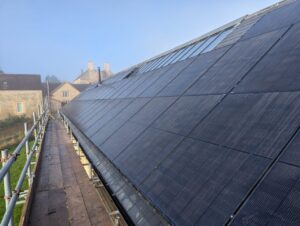
A commercial solar portfolio assessment can help your organisation understand its options across multiple premises and decide which sites to investigate further. It combines the wider view needed for planning with attention to the practical requirements of each building.
Save Energy UK has designed, installed and maintained solar PV and battery storage systems for more than 21 years, with commercial projects across Dorset and the wider UK. Save Energy UK
If your business operates from several sites in Dorset or across the South Coast, contact Save Energy UK to discuss your premises and commercial solar requirements. The team can help you explore the next steps towards a system designed around your business.
No. It can be relevant to any organisation considering solar across multiple commercial premises. The number of sites and their energy requirements will shape the scope of the review.
Each building has its own characteristics, so site specific information is important. A portfolio review can compare the premises together, while further technical checks may be needed for individual sites.
Battery storage can be considered where it may suit the business’s electricity use and operational needs. Whether it is appropriate depends on the site and the way energy is consumed.
The next step may be a more detailed survey and system design for suitable sites. Save Energy UK can discuss the information available and explain how to explore a commercial solar installation for your premises.