
Call us today
01202 986262
Home battery storage represents a considerable investment. Therefore, it is entirely reasonable to ask how long a battery will last before committing to an installation. Some homeowners worry that they will need to replace the system after only a few years. Fortunately, a high quality modern battery should offer a much longer working life.
Battery technology has developed significantly in recent years. Manufacturers now produce systems with generous warranties, sophisticated management software and durable battery chemistry. With professional design and installation, a home battery can remain a valuable part of your energy system for many years.
However, longevity varies between products and properties. Capacity, charging habits, temperature and household consumption can all influence performance. Choosing the right battery from the outset is consequently more important than simply selecting the largest or least expensive option.
Many modern home batteries can provide around ten to fifteen years of useful service. However, this does not mean that every battery will stop working as soon as it reaches a particular age.
Batteries usually lose capacity gradually. For example, an older system may continue operating correctly but store less electricity than it did when new. This gradual decline differs from a sudden mechanical failure.
Manufacturers often describe battery longevity through two measures. The first is the warranty period. The second is the expected number of charging cycles.
A cycle occurs when a battery uses energy equal to its total capacity. It does not necessarily involve one complete charge followed by one complete discharge. Two separate discharges of 50 per cent would ordinarily amount to one full cycle.
Consequently, the number of years a battery lasts will depend partly on how frequently the household charges and discharges it. A system used intensively every day may complete cycles more quickly than one reserved mainly for occasional backup power.
A warranty provides valuable protection, but it is not the same as a promise that the battery will retain its original capacity indefinitely. Every battery experiences some natural deterioration.
Manufacturers may warrant a system for a particular number of years, cycles or energy throughput. They may also guarantee that the battery will retain a stated proportion of its original capacity under specified conditions.
Homeowners should therefore read the complete warranty rather than looking only at the number of years advertised. Installation standards, internet connectivity, operating conditions and usage may influence the cover available.
The installer also matters. A professional installer can explain the warranty conditions, commission the system correctly and ensure that its location meets the manufacturer’s requirements.
Several connected factors determine how well a battery performs as it ages.
Many contemporary home batteries use lithium iron phosphate cells. This chemistry has become a popular choice because it offers a long cycle life, good thermal stability and dependable performance.
Both EcoFlow PowerOcean systems use lithium iron phosphate technology. Nevertheless, battery chemistry alone does not guarantee longevity. Cell quality, cooling, management software and system design remain equally important.
Repeatedly placing unnecessary strain on a battery can accelerate deterioration. Modern battery management systems help by regulating how deeply the battery charges and discharges.
The system should also match the household’s energy requirements. An undersized battery may work intensively without providing enough useful capacity. Conversely, an excessively large battery could leave the homeowner paying for capacity that they seldom use.
A detailed assessment can establish how much electricity the property consumes and when that consumption occurs. This information allows the installer to recommend a more appropriate capacity.
Extreme temperatures can affect battery performance. Manufacturers consequently specify suitable operating conditions and installation requirements.
The system’s enclosure rating will determine its resistance to water and dust, but this does not make every outdoor position equally suitable. A qualified installer should consider exposure, ventilation, access and the manufacturer’s instructions before selecting a location.
A battery management system monitors important conditions such as cell temperature, charging levels and electrical performance. It can protect the battery against deep discharge, overcharging and overheating.
Smart controls can also decide when to store, use or export electricity. This allows the system to respond more intelligently to solar generation, household demand and electricity tariffs.
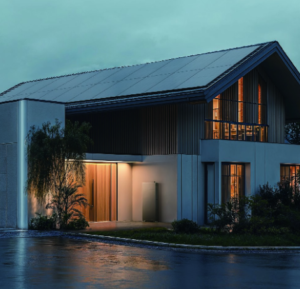
Save Energy Residential supplies advanced EcoFlow home battery systems for households across Dorset and the South Coast.
The original EcoFlow PowerOcean uses 5 kWh lithium iron phosphate battery modules. EcoFlow states that the batteries offer more than 6,000 charging cycles and an official warranty of 15 years. The modular arrangement allows homeowners to begin with a suitable capacity and expand the system if their requirements change. Its battery management system continuously monitors temperature and cell health. EcoFlow provides the current PowerOcean specifications here.
The newer EcoFlow OCEAN 2 develops this approach further. Each battery module has a nominal capacity of 5.02 kWh. One inverter can support as many as six modules, giving a maximum capacity of approximately 30 kWh. EcoFlow states that its cells are engineered for more than 10,000 cycles and that the product carries a 15 year warranty. The system also has an IP66 rating and integrated energy management technology. Full OCEAN 2 information is available from EcoFlow.
These figures suggest that modern home batteries do not necessarily need frequent replacement. However, cycle figures describe cell durability under specified conditions. They do not mean that every system will deliver precisely the same performance in every home.
The right choice between PowerOcean and OCEAN 2 will depend on the property, existing equipment, required capacity and plans for future expansion. Save Energy Residential can assess these considerations before recommending a system.
Battery storage and domestic solar panels work particularly well together. Solar panels generate electricity during daylight hours, when a household may not need all of it. A battery can retain surplus generation for use during the evening or at another suitable time.
This can help a household use more of its own renewable electricity. It may also reduce the amount of energy purchased from the National Grid. The actual saving will depend on system size, generation, consumption and the household’s electricity tariff.
Save Energy Residential has demonstrated this principle through genuine installations. At one BH15 property, the company installed a 4.35 kW solar array with 13.6 kWh of battery capacity. The system was designed to support electricity use at night and reduce reliance on the grid. The published forecast estimated 84 per cent energy self sufficiency with battery storage, although results always depend on generation and consumption. You can read the BH15 residential case study for further details.
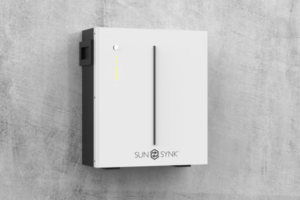
You can install certain home batteries without solar panels. In this arrangement, the battery charges from the grid rather than from solar generation.
A household on a suitable time based tariff may charge the battery when electricity costs less and use the stored energy during more expensive periods. A compatible backup arrangement may also provide electricity to selected circuits during a power cut.
However, financial savings are not automatic. Tariffs can change, and every charge and discharge involves some energy loss. An installer should examine the property’s consumption pattern and the intended purpose of the system before recommending battery storage without solar panels.
For many homes, combining solar panels and battery storage provides the most complete solution. Nevertheless, a battery only installation can still suit households that cannot install solar panels or intend to add them later.
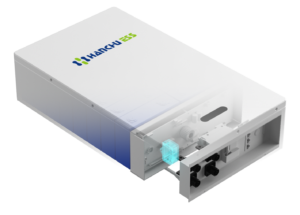
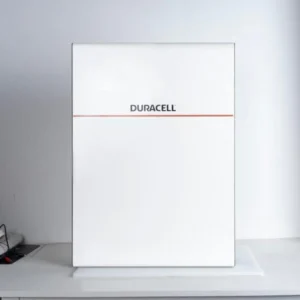
Save Energy Residential also supplies systems such as Tesla Powerwall 3 and Hanchu ESS. These products offer different capacities, warranties, controls and expansion options.
Tesla Powerwall 3, for example, provides 13.5 kWh of nominal battery energy and carries a ten year warranty, subject to Tesla’s terms. Meanwhile, Hanchu ESS offers modular storage options that may suit different household requirements.
No single battery will suit every property. A household with an electric vehicle, heat pump or high evening demand may need a different solution from a smaller home with modest consumption. Therefore, comparison should extend beyond lifespan alone. Usable capacity, power output, compatibility, warranty cover and expansion potential all deserve careful attention.
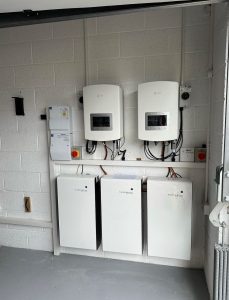
A decline in capacity does not always mean that immediate replacement is necessary. However, homeowners should arrange a professional assessment if they notice:
Never attempt to open or repair a home battery yourself. Battery systems contain high voltage electrical components and require qualified attention.
Sometimes, the battery may only need a software update, configuration change or repair. In other cases, adding capacity may provide a more appropriate solution than replacing the entire system.
Home battery prices vary considerably. Capacity, inverter requirements, backup equipment, electrical work and installation complexity all influence the final quotation.
For that reason, a generic online price may prove misleading. A lower initial cost does not necessarily represent better value if the battery is unsuitable for the household or offers limited expansion.
A professional survey gives you a clearer understanding of the required capacity, expected usage and available installation options. It also allows projected savings to reflect your actual electricity consumption rather than a general national average.

Not necessarily. The end of a warranty does not determine the exact end of the battery’s useful life. A battery may continue operating afterwards, although its available capacity will probably have declined.
Many modern home batteries are designed to provide around ten to fifteen years of service. Actual longevity depends on the product, installation, environment and usage.
Some modular systems allow additional capacity. Compatibility rules apply, so homeowners should seek professional advice before expanding an existing installation.
EcoFlow states that OCEAN 2 cells are engineered for more than 10,000 cycles, compared with more than 6,000 cycles for PowerOcean. Both systems have a stated 15 year warranty. However, suitability depends on more than cycle life.
Modern home batteries do not usually require replacement after only a few years. Established systems now offer durable battery chemistry, intelligent protection and warranties extending well beyond a decade.
However, lasting value begins with the right design. Capacity, location, household demand and future energy plans all influence which system will perform most effectively.
Save Energy Residential has completed more than 5,000 installations and has over 21 years of experience designing, installing and maintaining solar and battery storage systems. If you are considering EcoFlow PowerOcean, OCEAN 2 or another home battery, the team can provide advice tailored to your property.
Contact Save Energy to arrange your free survey and request a free quotation for home battery storage in Dorset, Bournemouth, Poole or elsewhere on the South Coast.