Over 20 years as your solar system specialists
"We pride ourselves on good products, good pricing and good backup service"
Tel: 01202 986262
Supporting


Across the United Kingdom, sustainability is no longer a fashionable idea discussed only in boardrooms. It has become a measurable expectation. Investors, regulators, customers, and supply chain partners increasingly examine how companies operate and how responsibly they use resources. One of the clearest ways a business can demonstrate its commitment to responsible growth is through its Environmental Social and Governance performance, often referred to as an ESG score.
Energy consumption sits at the centre of this conversation. Businesses rely heavily on electricity to power offices, warehouses, manufacturing facilities, and retail premises. Yet the way that electricity is generated can have a profound impact on carbon emissions and environmental performance. For many organisations, switching to commercial solar panels is one of the most effective and visible ways to improve ESG outcomes.
For companies across the South Coast and the Midlands, solar energy offers a practical solution that strengthens sustainability credentials while also delivering long term financial savings. By generating clean electricity on site, businesses reduce their reliance on fossil fuels and demonstrate a genuine commitment to environmental responsibility.
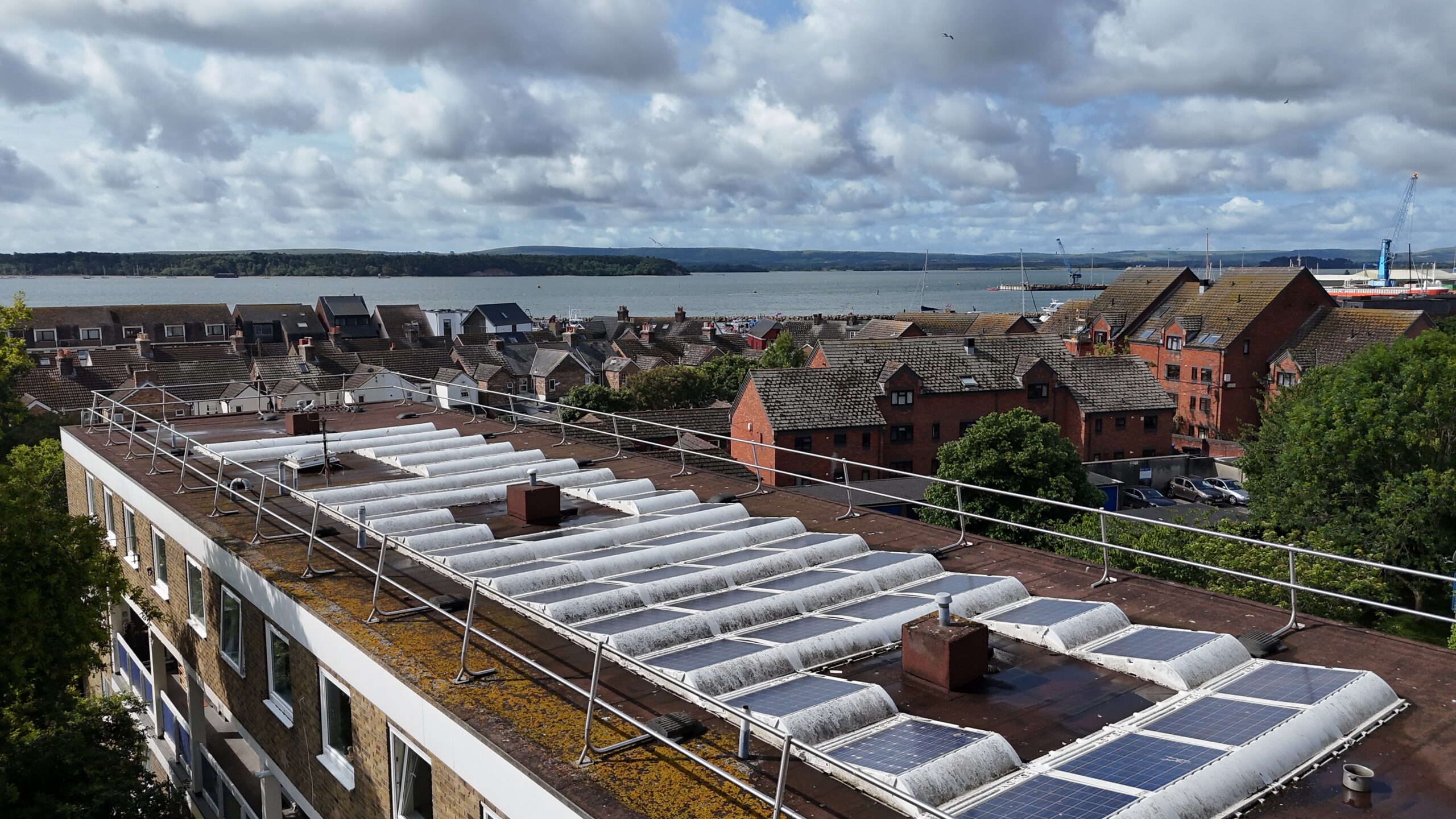
An ESG score measures how responsibly a company operates across three core areas.
The environmental element assesses how a business impacts the natural world. This includes carbon emissions, energy consumption, waste management, and the use of renewable energy.
The social element focuses on how a company treats people. It considers employee wellbeing, community engagement, and ethical supply chains.
The governance element evaluates leadership and accountability. It examines transparency, compliance, risk management, and ethical decision making.
Many investors and large organisations now use ESG scores when deciding who to partner with, invest in, or purchase from. Businesses that demonstrate strong environmental responsibility are increasingly seen as more stable and forward thinking.
Energy consumption is one of the most visible aspects of the environmental category. Reducing emissions through renewable energy adoption can therefore make a measurable difference to a company’s ESG performance.
The environmental component of ESG focuses heavily on carbon emissions and energy sources. Solar power directly addresses both.
When businesses install solar panels they generate electricity from sunlight rather than fossil fuels. This immediately lowers the carbon footprint associated with their operations.
Solar energy also reduces reliance on the national grid. Much of the electricity supplied through traditional grids is still generated using gas or other carbon intensive sources. Producing energy on site therefore cuts emissions associated with imported electricity.
Solar power already plays a growing role in the United Kingdom’s energy system. In 2025 it contributed around 6.4 per cent of the country’s annual electricity generation and continues to expand each year as installations increase.
For businesses, the environmental benefits are clear. A well designed commercial solar system can offset significant quantities of carbon emissions each year while producing clean electricity for decades.
The result is measurable environmental progress that can be clearly reported in sustainability reports and ESG disclosures.

Many companies now publish long term environmental strategies, often centred around net zero targets. Solar power plays a vital role in achieving these ambitions.
Renewable energy allows organisations to reduce their Scope two emissions, which refer to indirect emissions from purchased electricity. By producing power on site, businesses can significantly cut the emissions associated with their daily operations.
Solar installations also demonstrate tangible progress towards sustainability commitments. Rather than relying solely on offset schemes or future plans, companies can show physical evidence of change through renewable infrastructure.
For organisations seeking to strengthen their ESG credentials, visible action matters. Solar panels installed on rooftops or commercial buildings send a powerful message to employees, clients, and stakeholders that sustainability is more than a marketing statement.
They represent a long term investment in responsible energy use.
While environmental improvements are important, the financial advantages of solar energy are equally compelling.
Electricity costs have risen sharply in recent years, creating significant pressure on operating budgets. Commercial solar panels allow businesses to generate their own electricity at a much lower cost than purchasing power from the grid.
Solar electricity can often be produced for only a few pence per kilowatt hour, while grid electricity may cost several times more.
Because businesses typically consume most of the electricity they generate during the day, solar energy can dramatically reduce energy bills. Many commercial systems achieve a return on investment within three to five years while continuing to produce electricity for more than two decades.
Lower energy costs improve profitability, but they also strengthen ESG performance by demonstrating efficient resource management.
In addition, programmes such as the Smart Export Guarantee allow businesses to sell surplus electricity back to the grid, creating an additional revenue stream.
Taken together, these advantages make solar energy both a financial and environmental asset.

Modern commercial solar systems are often paired with advanced battery storage solutions. Technologies such as Tesla batteries and Qcell energy storage systems allow businesses to store surplus electricity generated during the day.
Instead of exporting all excess power to the grid, stored electricity can be used later when demand rises or when solar production falls.
This approach increases the overall efficiency of a solar installation. Businesses can rely more heavily on their own clean energy while reducing dependence on grid electricity during peak periods.
Battery storage also provides greater energy stability, particularly for organisations with fluctuating power demands. Warehouses, manufacturing facilities, and large commercial buildings can maintain smoother energy usage throughout the day.
From an ESG perspective, energy storage strengthens the environmental impact of solar systems by ensuring more renewable electricity is used on site.
Across the South Coast and the Midlands, commercial solar adoption is accelerating.
Rising electricity costs, growing environmental awareness, and pressure from investors are all driving companies towards renewable energy solutions. Many organisations now view solar energy not simply as a sustainability initiative but as a strategic investment.
Commercial solar installations are particularly effective for businesses with large roofs or high daytime electricity demand. Warehouses, manufacturing facilities, offices, and retail sites can all benefit from generating their own electricity.
Across the United Kingdom there are now more than two hundred thousand non residential solar installations, reflecting the rapid growth of the commercial solar sector.
Businesses that adopt solar energy early often gain a competitive advantage. Lower operating costs improve resilience during periods of energy price volatility, while strong ESG performance strengthens relationships with investors and clients.
For many organisations, solar energy has become a defining feature of modern business strategy.
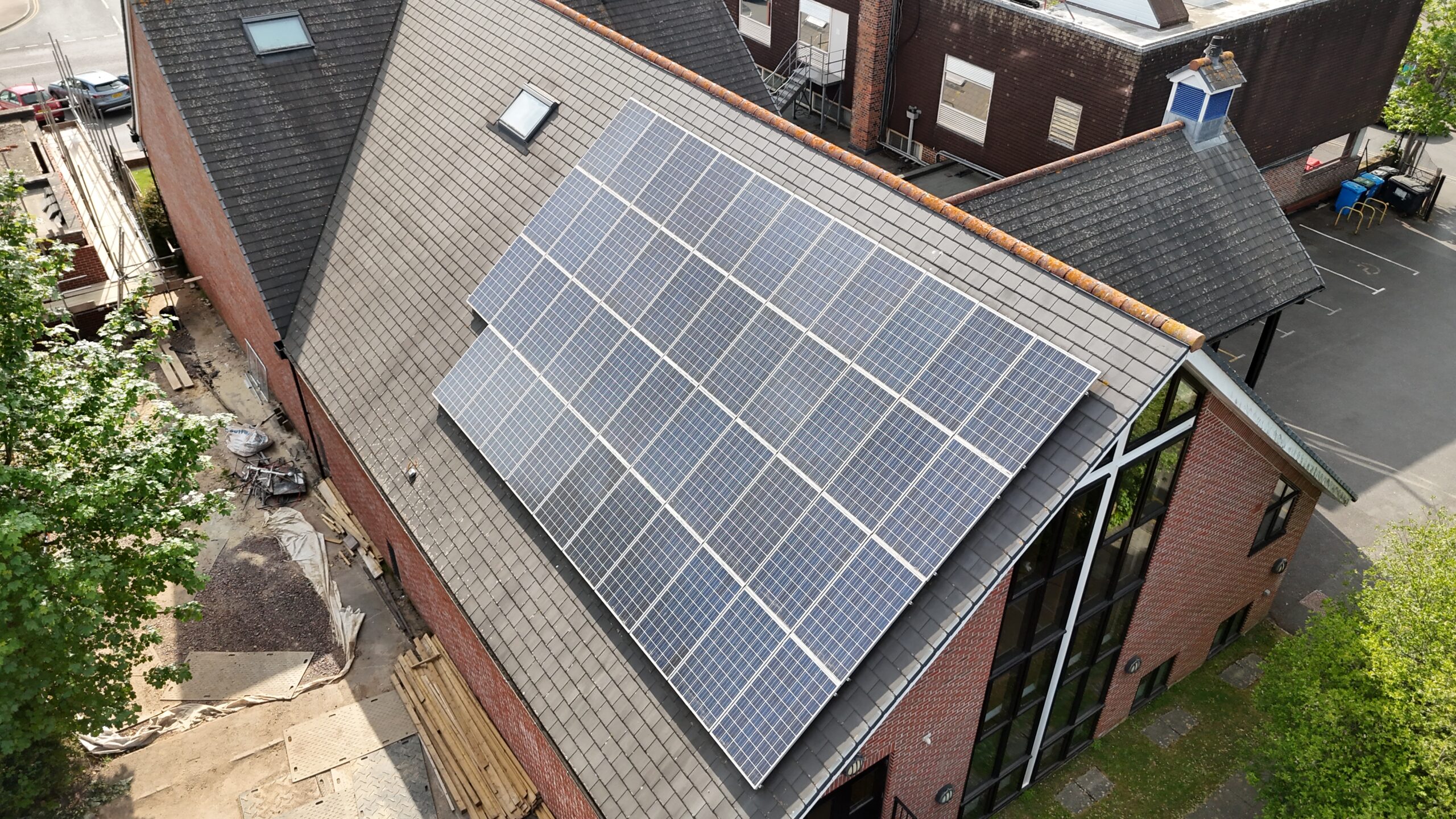
Installing commercial solar panels is a structured process designed to ensure each system delivers maximum value.
The journey typically begins with a site assessment. Specialists examine roof space, energy usage patterns, and building orientation to determine the most effective system design.
Next comes energy analysis. Engineers review historical electricity consumption to design a solar installation that aligns with business demand.
Once the design is approved, installation can begin. Modern systems are typically installed with minimal disruption to daily operations.
After installation, monitoring software allows businesses to track energy generation and consumption in real time. This ensures that the system performs efficiently and delivers the expected financial and environmental benefits.
Working with experienced commercial solar installers ensures that every stage of the process is carefully managed, from design to long term maintenance.
Improving ESG performance is no longer optional for modern businesses. It is an essential part of responsible leadership and long term growth.
Solar energy provides one of the most effective ways to achieve measurable environmental progress while also delivering financial benefits. By generating renewable electricity on site, companies reduce carbon emissions, lower energy costs, and demonstrate genuine commitment to sustainability.
For businesses across the South Coast and the Midlands, commercial solar panels represent an opportunity to future proof operations while strengthening environmental credentials.
If your organisation is looking to reduce energy costs and improve ESG performance, the next step is simple.
Contact Save Energy UK to explore how a commercial solar installation could transform your business energy strategy and support your sustainability goals.