Over 20 years as your solar system specialists
"We pride ourselves on good products, good pricing and good backup service"
Tel: 01202 986262
Supporting


For many years, commercial solar was viewed as something reserved for multinational companies with vast premises and equally vast budgets. Images of sprawling solar farms and enormous warehouse rooftops covered in panels helped create the impression that solar energy was beyond the reach of smaller organisations.
Today, however, that perception is increasingly outdated.
Advances in technology, falling equipment costs and rising energy prices have transformed the commercial solar market. Businesses of all sizes are now exploring renewable energy as a practical way to reduce operating costs, improve sustainability and gain greater control over their energy consumption.
Whether you run a small office in Bournemouth, a retail unit in Poole, a farm in rural Dorset or a manufacturing facility in Christchurch, commercial solar may be far more accessible than you think.
No, commercial solar is not only for large corporations. Modern commercial solar systems can be designed for businesses of almost any size, from small offices and shops to schools, farms and industrial facilities. Falling installation costs, attractive returns on investment and flexible finance options have made commercial solar a viable solution for organisations across Dorset and the wider United Kingdom.
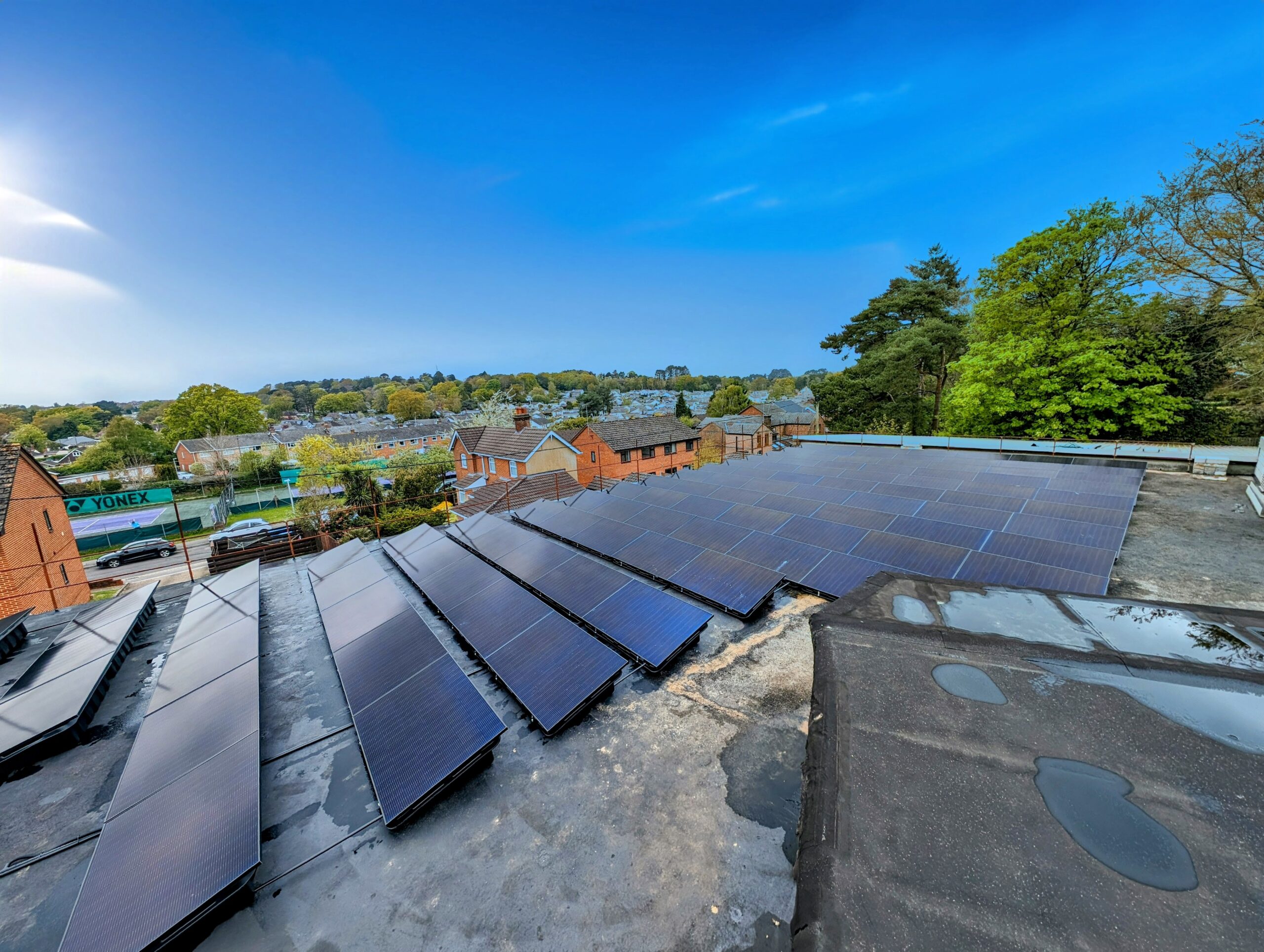
The belief that commercial solar is reserved for large organisations stems from the early days of solar adoption.
Historically, solar technology was considerably more expensive than it is today. Installation costs were often prohibitive for smaller businesses, and the technology itself was less efficient. As a result, large corporations with significant capital resources were among the first to invest.
There is also a misconception that businesses require enormous roofs or extensive land holdings to generate meaningful savings. While larger installations naturally produce more electricity, smaller systems can still deliver substantial financial and environmental benefits.
The reality is that commercial solar has evolved significantly over the past decade, opening the door to a much broader range of organisations.
The commercial solar sector has matured rapidly throughout the United Kingdom.
Solar panel efficiency has improved considerably, allowing businesses to generate more electricity from a smaller installation footprint. At the same time, installation costs have fallen dramatically, making renewable energy increasingly accessible.
Energy prices have also become a major factor in driving adoption. Many organisations have experienced significant increases in operational costs due to fluctuating electricity prices. Commercial solar offers an opportunity to reduce reliance on the grid while creating greater financial certainty.
As environmental considerations become increasingly important, businesses are also recognising the value of demonstrating a commitment to sustainability. Customers, investors and stakeholders are placing greater emphasis on responsible business practices, and renewable energy plays an important role in achieving those objectives.
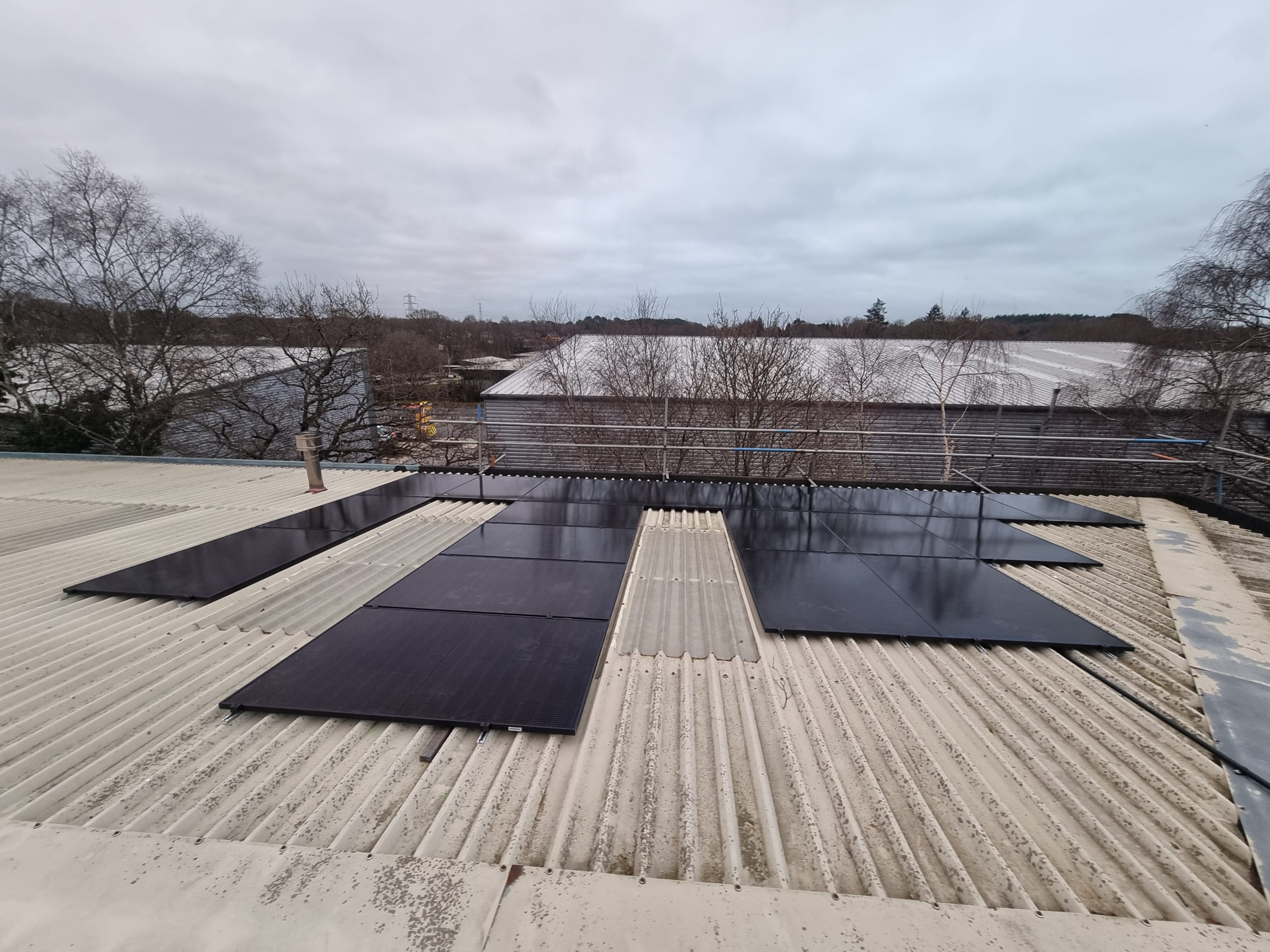
Absolutely.
Small and medium sized enterprises often stand to gain significantly from commercial solar installations because energy costs typically represent a notable portion of their overheads.
Benefits include:
A modest office building, independent retailer or local hospitality venue may not require a large scale installation to achieve meaningful savings.
Commercial solar systems are designed around actual energy consumption, available roof space and business objectives. This means installations can be tailored to suit the specific needs of each organisation.
One of the greatest strengths of commercial solar is its versatility.
Many different sectors can benefit, including:
Office buildings often consume significant amounts of electricity during daylight hours when solar panels are generating power most effectively.
Shops and retail units can offset a large proportion of their daytime electricity usage through commercial solar panels.
Large roof areas make warehouses particularly well suited to solar installations.
Agricultural businesses frequently have extensive roof space and substantial energy demands, making solar a highly attractive investment.
Manufacturers can reduce operational costs while supporting sustainability objectives.
Educational institutions often seek long term cost savings and environmental leadership, making commercial solar a natural fit.
Hotels, restaurants and leisure facilities often operate throughout the day and can make excellent use of solar generated electricity.
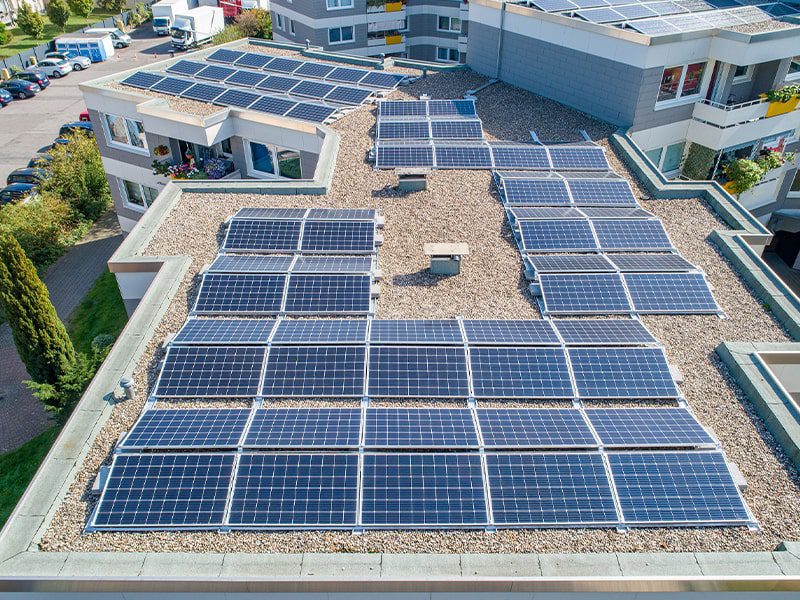
Many businesses assume they lack sufficient space for a commercial solar installation.
In reality, modern solar technology is remarkably flexible.
The amount of roof space required depends on factors such as:
Even relatively modest commercial premises can often accommodate a system capable of generating meaningful savings.
A professional assessment can determine the most effective configuration based on your building and energy requirements.
The cost of commercial solar installation varies according to system size, site requirements and energy objectives.
While every project is unique, many businesses achieve a return on investment within a relatively attractive timeframe.
Key factors influencing return include:
Unlike many business expenditures, solar panels continue generating value year after year. Once installed, they can provide decades of electricity generation with relatively low maintenance requirements.
For many Dorset businesses, the long term savings can significantly outweigh the initial investment.
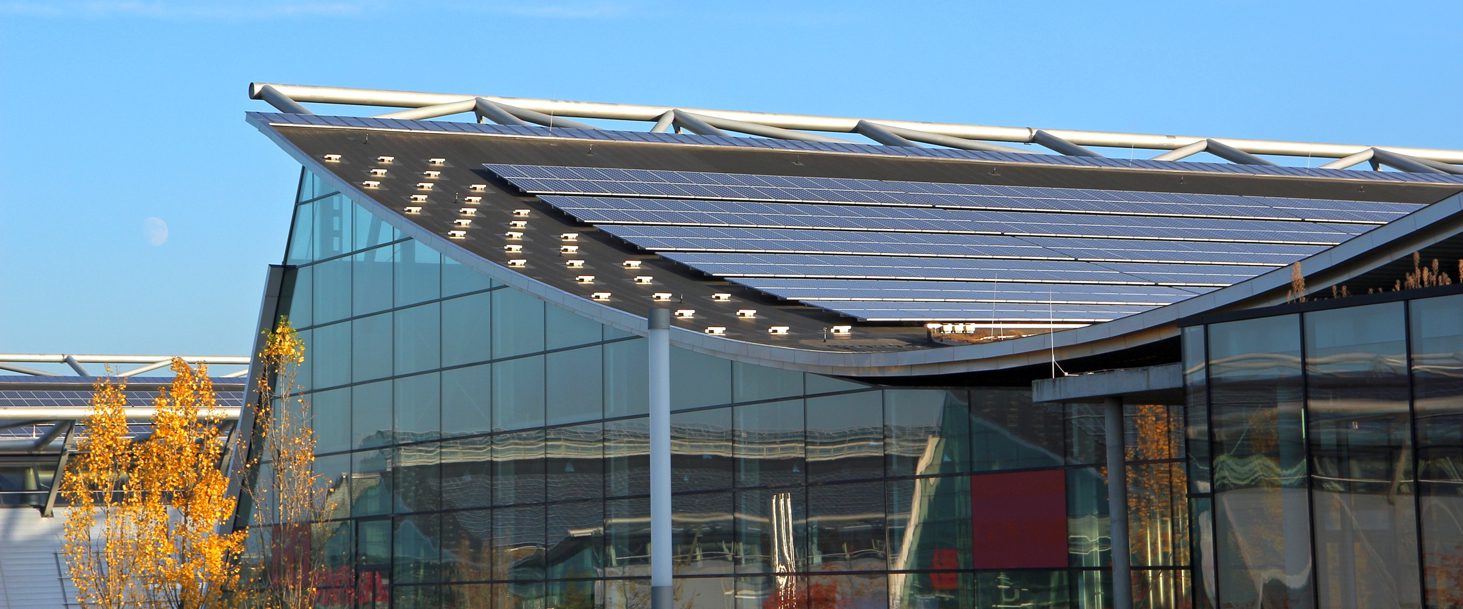
A common misconception is that businesses must pay the entire installation cost upfront.
In practice, several financing options may be available.
These can include:
Such options can help organisations begin benefiting from solar energy while preserving working capital.
A tailored financial assessment can identify the most suitable approach based on individual business circumstances.
Battery storage is becoming an increasingly important component of commercial renewable energy systems.
While solar panels generate electricity during daylight hours, batteries allow businesses to store excess energy for later use.
This can significantly improve self consumption rates and increase overall savings.
Solutions such as the Tesla Powerwall and advanced Qcells Battery systems are helping businesses maximise the value of their renewable energy investment.
Benefits of commercial battery storage include:
As battery technology continues to improve, storage is becoming an increasingly attractive addition to commercial solar installations.
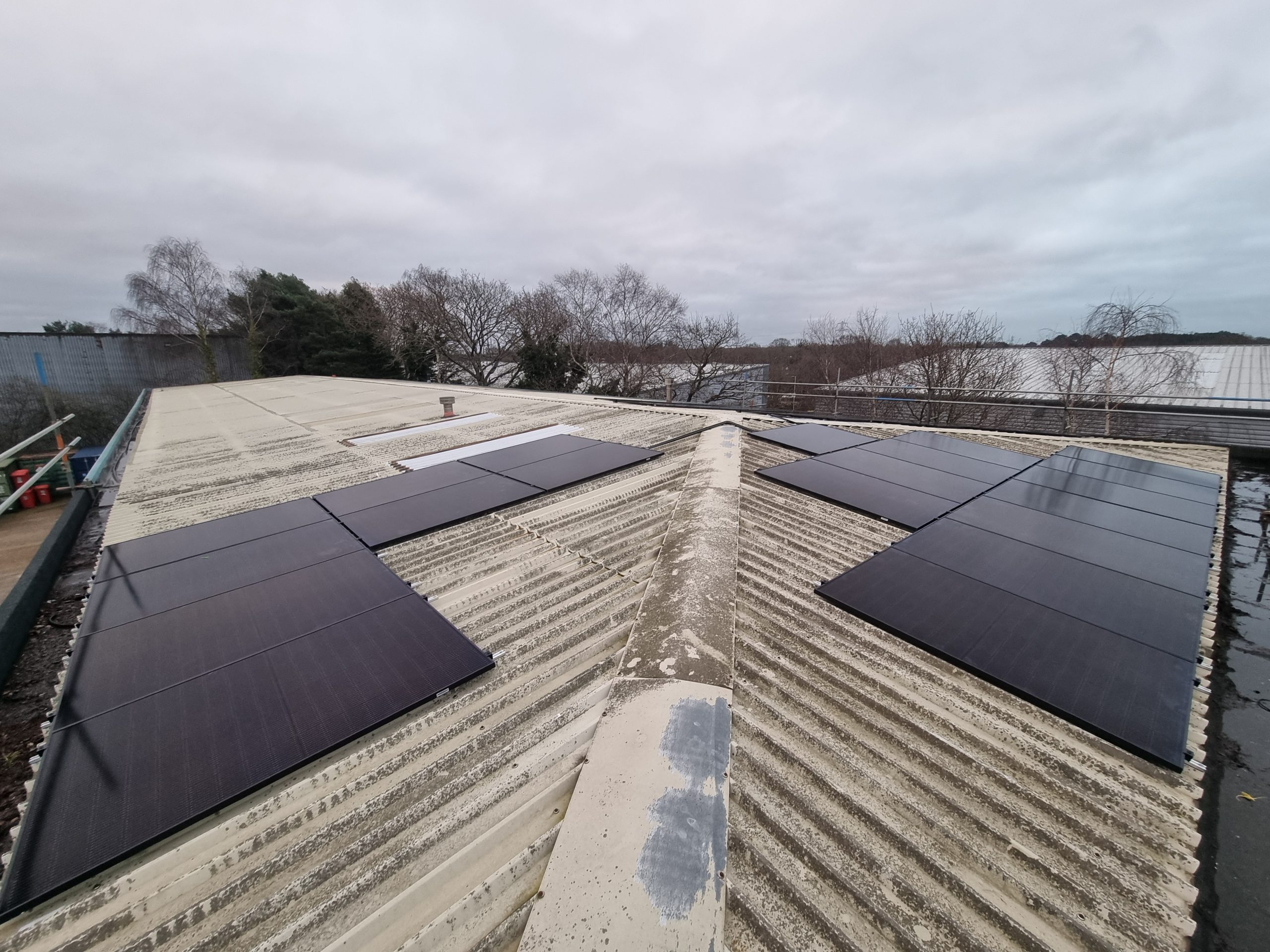
This is perhaps the most persistent misconception. Businesses of many sizes are successfully adopting commercial solar across the UK.
Costs have reduced significantly over the past decade, while financing options have expanded.
Modern solar technology performs effectively throughout the UK, including Dorset.
Commercial solar systems are generally low maintenance and highly reliable.
Many businesses achieve substantial long term reductions in electricity expenditure.
Businesses across Dorset are uniquely positioned to benefit from renewable energy investment.
Whether considering Solar Panels Bournemouth, Solar Panels Poole or Solar Panels Christchurch, local organisations face many of the same challenges, including rising energy costs and increasing sustainability expectations.
Commercial solar offers a practical solution to both.
From agricultural enterprises in rural Dorset to hospitality venues along the coast, businesses are discovering that renewable energy can provide measurable financial and environmental advantages.
As energy markets continue to evolve, organisations that invest in solar today may place themselves in a stronger position for the future.
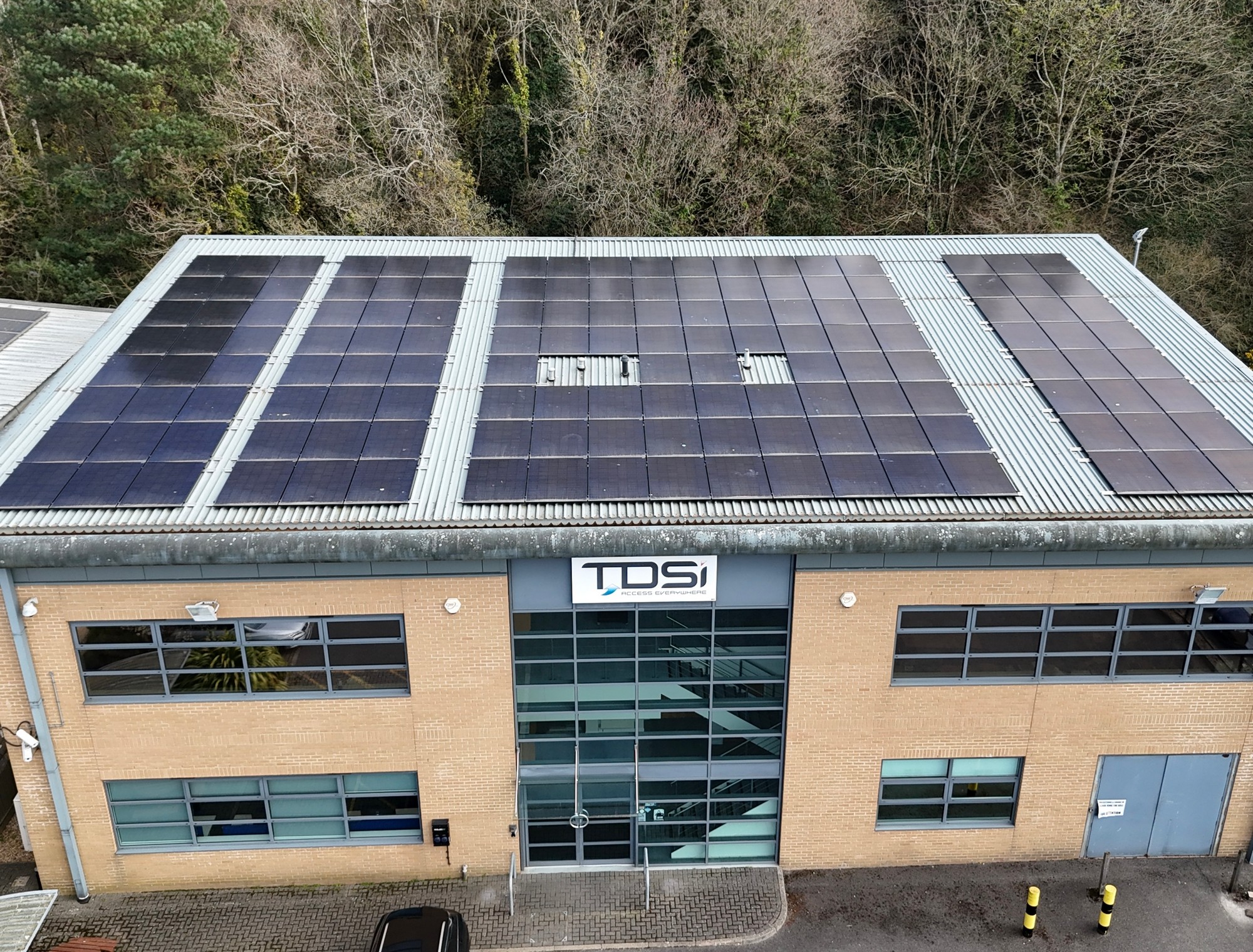
Choosing the right commercial solar partner is just as important as choosing the right technology.
Save Energy UK provides tailored renewable energy solutions designed around the unique requirements of each client.
Businesses choose Save Energy UK because of:
Every project begins with a detailed assessment to ensure businesses receive a solution that aligns with their operational objectives and long term goals.
Yes. Commercial solar systems can be tailored to businesses of virtually any size.
Most commercial solar panels are designed to operate effectively for 25 years or more.
Yes. Many businesses experience significant reductions in electricity costs after installation.
Yes. Solar panels continue generating electricity throughout the year, although output naturally varies with weather conditions and daylight hours.
Commercial solar is no longer the exclusive domain of large corporations. Advances in technology, falling costs and growing energy demands have made solar power a practical and financially attractive solution for organisations of all sizes.
Whether you operate a small office, a retail premises, a farm, a warehouse or a larger commercial facility, solar energy has the potential to reduce operating costs, improve sustainability and strengthen long term resilience.
If you are considering commercial solar for your business, contact Save Energy UK today for a free consultation and site assessment. Our team can help you explore the most effective solution for your property, energy usage and future ambitions.