Over 20 years as your solar system specialists
"We pride ourselves on good products, good pricing and good backup service"
Tel: 01202 986262
Supporting


Businesses across Bournemouth and the South Coast are facing a difficult reality. Energy prices remain unpredictable, operational costs continue to rise and many companies are under increasing pressure to improve sustainability without compromising profitability. Against this backdrop, commercial solar battery storage has rapidly shifted from a niche renewable technology into a serious financial consideration for forward thinking organisations.
For many business owners the key question is no longer whether renewable energy is worthwhile. It is whether commercial battery storage can deliver a measurable return on investment within a realistic timeframe.
The answer, in most cases, is yes.
When properly designed and installed, commercial solar battery storage systems can significantly reduce electricity costs, improve energy resilience and create long term protection against future market volatility. Yet the true value of battery storage extends far beyond simple utility bill reductions.
Understanding the real return on investment requires a closer look at how these systems work, how savings are generated and why businesses throughout the UK are increasingly viewing energy independence as a commercial necessity rather than a luxury.

Commercial battery storage systems allow businesses to store excess electricity generated by solar panels during daylight hours and use that energy later when demand is higher or electricity prices increase.
Without battery storage, surplus solar energy is often exported back to the grid for a relatively modest return through the Smart Export Guarantee. While export payments can provide value, they are frequently far lower than the cost of purchasing electricity from the grid during peak periods.
Battery systems solve this imbalance by allowing businesses to retain and use more of the energy they generate themselves.
For a warehouse in Bournemouth operating long evening shifts, for example, stored solar power can offset expensive evening electricity consumption. A hospitality venue on the South Coast may use stored power during busy evening service periods when grid prices are highest. Offices can reduce reliance on imported electricity during peak demand hours throughout the working week.
The commercial benefits become increasingly attractive as electricity prices continue to fluctuate.
Only a few years ago, battery technology remained prohibitively expensive for many organisations. Installation costs were high and payback periods often stretched well beyond a decade.
Today the landscape looks very different.
Advancements in lithium battery technology, improvements in solar efficiency and rising UK electricity prices have significantly strengthened the financial case for commercial battery storage.
At the same time, businesses are becoming more aware of the hidden costs associated with grid dependence. Short term energy spikes, network instability and growing operational uncertainty have encouraged organisations to seek greater control over their energy usage.
According to recent UK energy market data, commercial electricity prices have experienced substantial increases over the past several years, particularly during periods of wholesale market instability. This has accelerated interest in renewable energy solutions across industrial, retail and commercial sectors.
For many businesses, every kilowatt hour stored and reused represents direct protection against future price volatility.
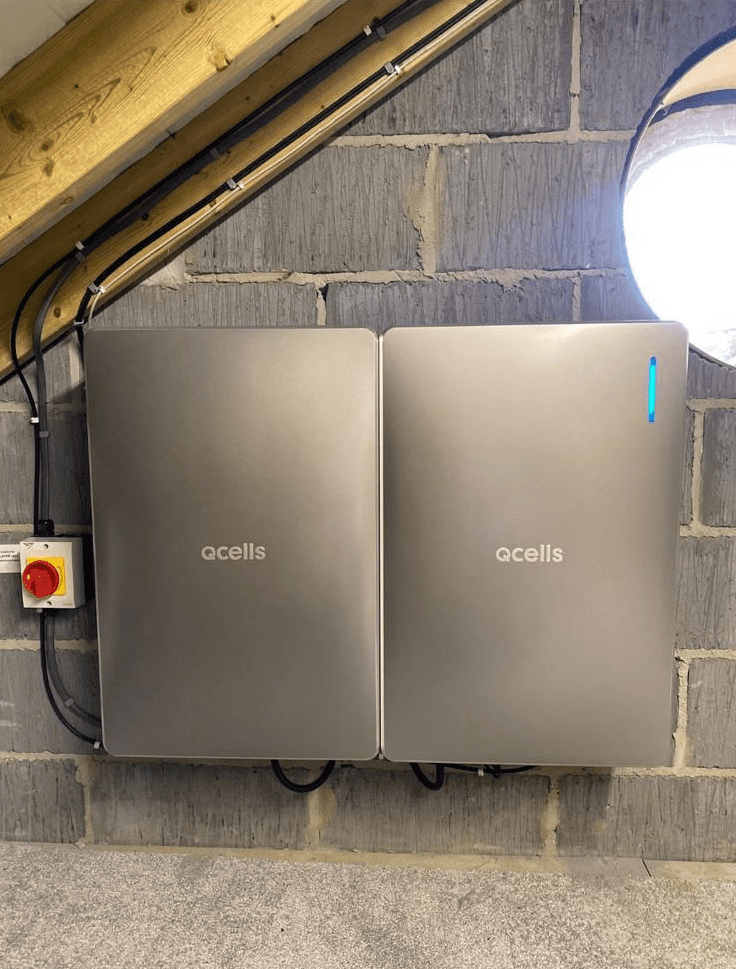
Calculating return on investment involves far more than simply comparing installation costs against monthly energy savings.
A properly assessed commercial battery storage system considers several financial variables simultaneously.
These typically include:
• Reduction in grid electricity purchases
• Peak demand savings
• Export income through the Smart Export Guarantee
• Long term electricity inflation
• Battery lifespan and warranty periods
• Maintenance costs
• Operational energy patterns
• Solar generation capacity
A business investing £80,000 into a commercial solar and battery storage system may initially reduce annual electricity costs by £14,000. However, as energy prices continue to rise over time, those annual savings often increase considerably.
Over a ten year period the cumulative financial return can become substantial.
Many businesses underestimate the impact of avoided future energy inflation. Yet this is often one of the most valuable financial advantages of renewable energy investment.
Rather than remaining exposed to unpredictable market increases, businesses effectively secure a portion of their future energy costs at today’s rates.
Commercial solar battery storage systems in the UK commonly achieve payback periods between five and nine years depending on the scale of the installation and the operational characteristics of the business.
Several factors influence how quickly savings accumulate.
Businesses with high daytime electricity usage often achieve the strongest returns. Warehouses, manufacturing facilities and industrial operations typically consume significant amounts of power throughout the day, allowing them to maximise self consumption of solar energy.
Where battery systems are added, businesses can continue benefiting from stored electricity well into evening operating hours.
Hotels, restaurants and retail premises often experience high electricity demand during peak tariff periods. Battery storage allows these businesses to offset expensive evening consumption using stored solar energy generated earlier in the day.
This can dramatically improve overall energy efficiency.
Modern office environments increasingly rely on energy intensive infrastructure including air conditioning systems, server equipment and charging facilities. Battery storage helps reduce reliance on expensive imported electricity during working hours.
For many Bournemouth businesses operating from larger office premises, these savings can become highly attractive over time.

No two businesses will experience identical returns because every property operates differently.
Several key variables determine how financially effective a battery storage system becomes.
Businesses operating during evenings or early mornings often benefit significantly because stored solar energy can replace costly imported electricity outside daylight hours.
Commercial electricity tariffs frequently include higher rates during periods of peak demand. Battery storage enables businesses to reduce consumption during these expensive periods.
This strategy, commonly known as peak shaving, can produce major financial savings.
Oversized systems can unnecessarily increase installation costs while undersized batteries may limit overall savings potential. Proper system design is therefore essential.
Battery storage performs best when paired with an appropriately sized commercial solar installation capable of generating surplus daytime energy.
Perhaps the most overlooked factor is future electricity pricing. As energy costs rise, the value of stored solar power rises alongside it.
This means ROI frequently strengthens over time.
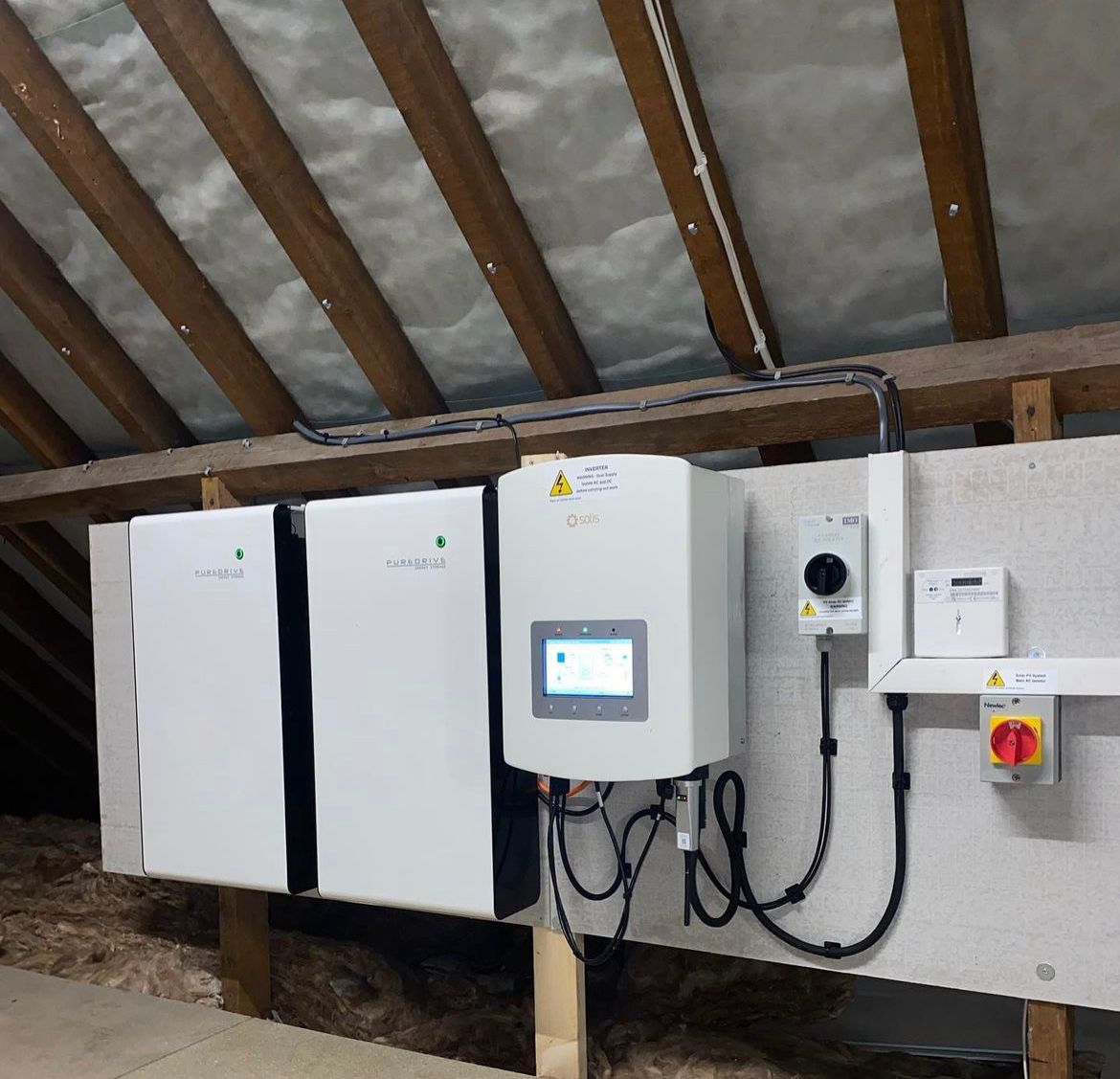
The UK commercial energy market remains deeply uncertain. Wholesale volatility, infrastructure pressures and geopolitical instability continue to influence pricing.
For South Coast businesses operating with narrow margins, rising electricity costs can place considerable strain on profitability.
Commercial battery storage offers something increasingly valuable in modern business planning: predictability.
Instead of remaining entirely dependent on external energy suppliers, organisations gain greater control over when and how electricity is used.
For many businesses this operational resilience is now just as important as direct financial return.
Battery pricing has fallen significantly over recent years while energy costs have risen sharply. The financial equation has changed considerably.
Many commercial systems now achieve payback within a commercially attractive timeframe, particularly where energy demand is high.
Modern lithium battery systems commonly carry warranties ranging from ten to fifteen years depending on usage patterns and manufacturer specifications.
Small and medium sized businesses are increasingly achieving strong returns through carefully sized commercial systems.
For many organisations across Bournemouth and the South Coast, the financial case for commercial solar battery storage has become increasingly compelling.
Businesses are no longer simply investing in renewable technology. They are investing in long term operational resilience, energy stability and future cost control.
With electricity prices expected to remain volatile and sustainability expectations continuing to rise, battery storage represents an increasingly strategic commercial decision.
The businesses achieving the strongest returns are typically those acting before energy pressures intensify further.
Commercial solar battery storage is not merely about saving money today. It is about protecting profitability for years to come.
Most modern commercial lithium battery systems last between ten and fifteen years depending on usage patterns, maintenance and manufacturer quality.
Many UK businesses achieve payback periods between five and nine years depending on energy usage and system design.
Yes. Battery systems can store lower cost solar energy and use it during expensive peak tariff periods.
Businesses may benefit from capital allowances, tax efficiencies and Smart Export Guarantee payments depending on the system and installation.
Absolutely. SMEs, offices, hospitality venues and retail premises can all benefit from properly designed battery storage systems.
As commercial energy costs continue rising, businesses that take control of their electricity usage are placing themselves in a far stronger long term position.
Save Energy UK helps businesses across Bournemouth and the South Coast design intelligent commercial solar and battery storage systems tailored to their operational needs, energy demands and growth plans.
Whether you are exploring renewable energy for the first time or looking to improve the performance of an existing commercial solar installation, expert guidance can make a substantial difference to your long term return on investment.
Contact Save Energy UK today for a free commercial solar assessment and discover how battery storage could transform your business energy strategy.