| Unit 20, Glenmore Centre, Poole, Dorset BH12 4FB | Mon–Fri 9:00am – 5:00pm
01202 986262 Get a Free Quote

How Does Solar Improve Your Company’s ESG Score?

Introduction

Across the United Kingdom, sustainability is no longer a fashionable idea discussed only in boardrooms. It has become a measurable expectation. Investors, regulators, customers, and supply chain partners increasingly examine how companies operate and how responsibly they use resources. One of the clearest ways a business can demonstrate its commitment to responsible growth is through its Environmental Social and Governance performance, often referred to as an ESG score.

Energy consumption sits at the centre of this conversation. Businesses rely heavily on electricity to power offices, warehouses, manufacturing facilities, and retail premises. Yet the way that electricity is generated can have a profound impact on carbon emissions and environmental performance. For many organisations, switching to commercial solar panels is one of the most effective and visible ways to improve ESG outcomes.
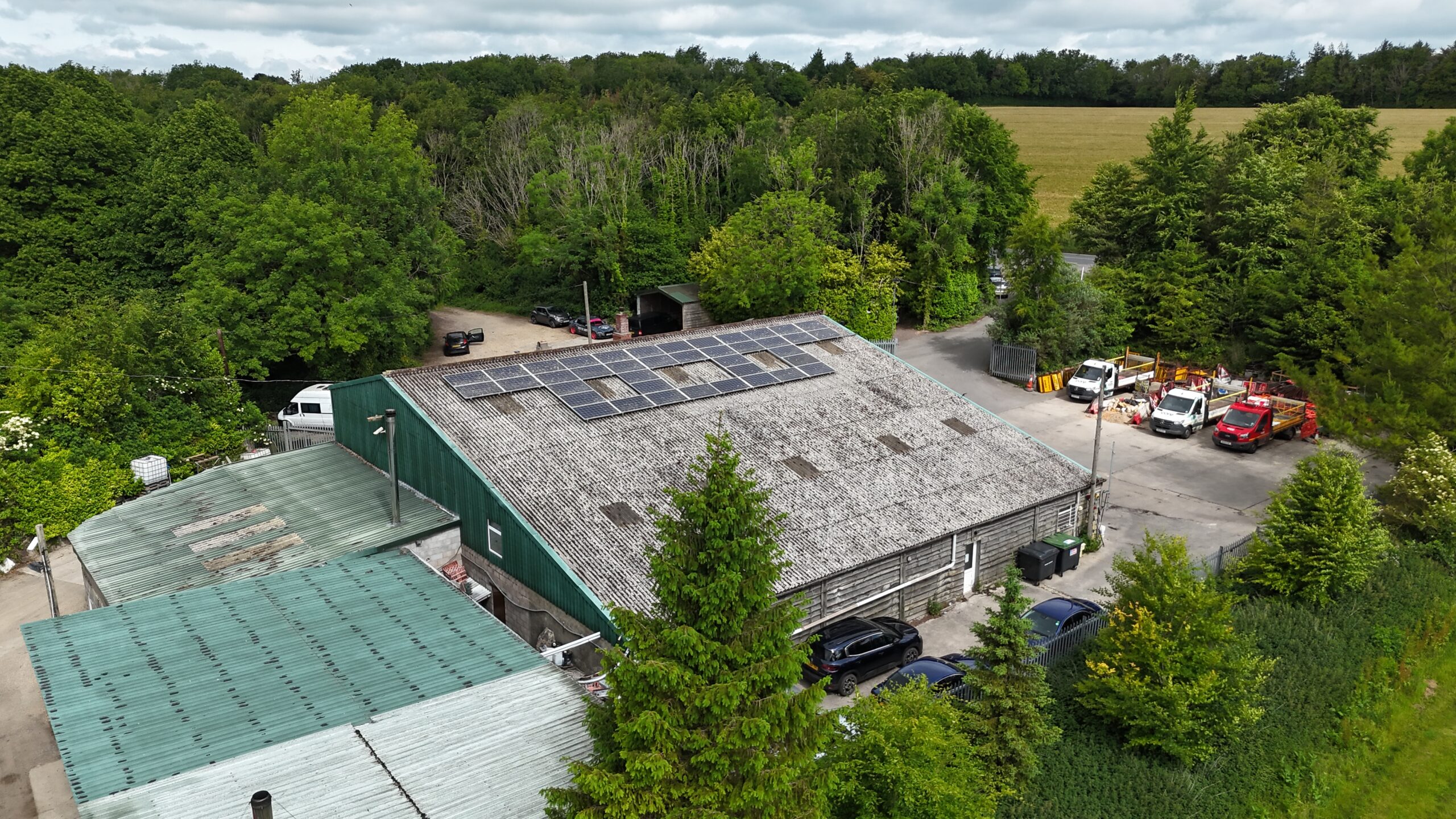
For companies across the South Coast and the Midlands, solar energy offers a practical solution that strengthens sustainability credentials while also delivering long term financial savings. By generating clean electricity on site, businesses reduce their reliance on fossil fuels and demonstrate a genuine commitment to environmental responsibility.

What Is an ESG Score?

An ESG score measures how responsibly a company operates across three core areas.

The environmental element assesses how a business impacts the natural world. This includes carbon emissions, energy consumption, waste management, and the use of renewable energy.

The social element focuses on how a company treats people. It considers employee wellbeing, community engagement, and ethical supply chains.

The governance element evaluates leadership and accountability. It examines transparency, compliance, risk management, and ethical decision making.

Many investors and large organisations now use ESG scores when deciding who to partner with, invest in, or purchase from. Businesses that demonstrate strong environmental responsibility are increasingly seen as more stable and forward thinking.

Energy consumption is one of the most visible aspects of the environmental category. Reducing emissions through renewable energy adoption can therefore make a measurable difference to a company’s ESG performance.

How Solar Improves the Environmental Pillar of ESG

The environmental component of ESG focuses heavily on carbon emissions and energy sources. Solar power directly addresses both.

When businesses install solar panels they generate electricity from sunlight rather than fossil fuels. This immediately lowers the carbon footprint associated with their operations.

Solar energy also reduces reliance on the national grid. Much of the electricity supplied through traditional grids is still generated using gas or other carbon intensive sources. Producing energy on site therefore cuts emissions associated with imported electricity.

Solar power already plays a growing role in the United Kingdom’s energy system. In 2025 it contributed around 6.4 per cent of the country’s annual electricity generation and continues to expand each year as installations increase.

For businesses, the environmental benefits are clear. A well designed commercial solar system can offset significant quantities of carbon emissions each year while producing clean electricity for decades.

The result is measurable environmental progress that can be clearly reported in sustainability reports and ESG disclosures.

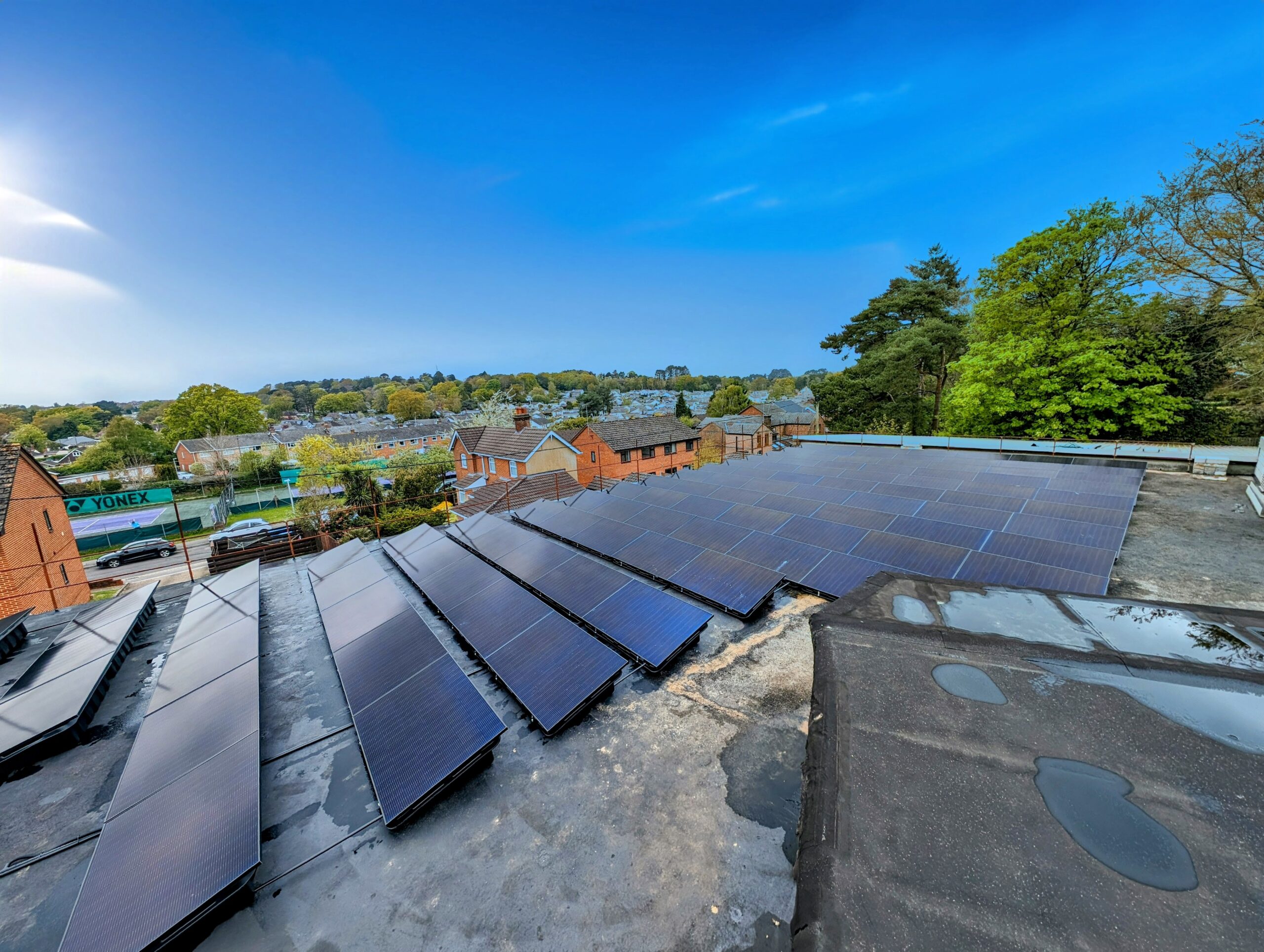
residential solar panels

How Solar Supports Corporate Sustainability Goals

Many companies now publish long term environmental strategies, often centred around net zero targets. Solar power plays a vital role in achieving these ambitions.

Renewable energy allows organisations to reduce their Scope two emissions, which refer to indirect emissions from purchased electricity. By producing power on site, businesses can significantly cut the emissions associated with their daily operations.

Solar installations also demonstrate tangible progress towards sustainability commitments. Rather than relying solely on offset schemes or future plans, companies can show physical evidence of change through renewable infrastructure.

For organisations seeking to strengthen their ESG credentials, visible action matters. Solar panels installed on rooftops or commercial buildings send a powerful message to employees, clients, and stakeholders that sustainability is more than a marketing statement.

They represent a long term investment in responsible energy use.

Financial and Operational Benefits for Businesses

While environmental improvements are important, the financial advantages of solar energy are equally compelling.

Electricity costs have risen sharply in recent years, creating significant pressure on operating budgets. Commercial solar panels allow businesses to generate their own electricity at a much lower cost than purchasing power from the grid.

Solar electricity can often be produced for only a few pence per kilowatt hour, while grid electricity may cost several times more.

Because businesses typically consume most of the electricity they generate during the day, solar energy can dramatically reduce energy bills. Many commercial systems achieve a return on investment within three to five years while continuing to produce electricity for more than two decades.

Lower energy costs improve profitability, but they also strengthen ESG performance by demonstrating efficient resource management.

In addition, programmes such as the Smart Export Guarantee allow businesses to sell surplus electricity back to the grid, creating an additional revenue stream.

Taken together, these advantages make solar energy both a financial and environmental asset.

Battery Storage and Smarter Energy Use

Modern commercial solar systems are often paired with advanced battery storage solutions. Technologies such as Tesla batteries and Qcell energy storage systems allow businesses to store surplus electricity generated during the day.

Instead of exporting all excess power to the grid, stored electricity can be used later when demand rises or when solar production falls.

This approach increases the overall efficiency of a solar installation. Businesses can rely more heavily on their own clean energy while reducing dependence on grid electricity during peak periods.

Battery storage also provides greater energy stability, particularly for organisations with fluctuating power demands. Warehouses, manufacturing facilities, and large commercial buildings can maintain smoother energy usage throughout the day.

From an ESG perspective, energy storage strengthens the environmental impact of solar systems by ensuring more renewable electricity is used on site.

Why Businesses Across the South Coast and Midlands Are Switching to Solar

Across the South Coast and the Midlands, commercial solar adoption is accelerating.

Rising electricity costs, growing environmental awareness, and pressure from investors are all driving companies towards renewable energy solutions. Many organisations now view solar energy not simply as a sustainability initiative but as a strategic investment.

Commercial solar installations are particularly effective for businesses with large roofs or high daytime electricity demand. Warehouses, manufacturing facilities, offices, and retail sites can all benefit from generating their own electricity.

Across the United Kingdom there are now more than two hundred thousand non residential solar installations, reflecting the rapid growth of the commercial solar sector.

Businesses that adopt solar energy early often gain a competitive advantage. Lower operating costs improve resilience during periods of energy price volatility, while strong ESG performance strengthens relationships with investors and clients.

For many organisations, solar energy has become a defining feature of modern business strategy.

How to Start Your Commercial Solar Journey

Installing commercial solar panels is a structured process designed to ensure each system delivers maximum value.

The journey typically begins with a site assessment. Specialists examine roof space, energy usage patterns, and building orientation to determine the most effective system design.

Next comes energy analysis. Engineers review historical electricity consumption to design a solar installation that aligns with business demand.

Once the design is approved, installation can begin. Modern systems are typically installed with minimal disruption to daily operations.

After installation, monitoring software allows businesses to track energy generation and consumption in real time. This ensures that the system performs efficiently and delivers the expected financial and environmental benefits.

Working with experienced commercial solar installers ensures that every stage of the process is carefully managed, from design to long term maintenance.

Conclusion

Improving ESG performance is no longer optional for modern businesses. It is an essential part of responsible leadership and long term growth.
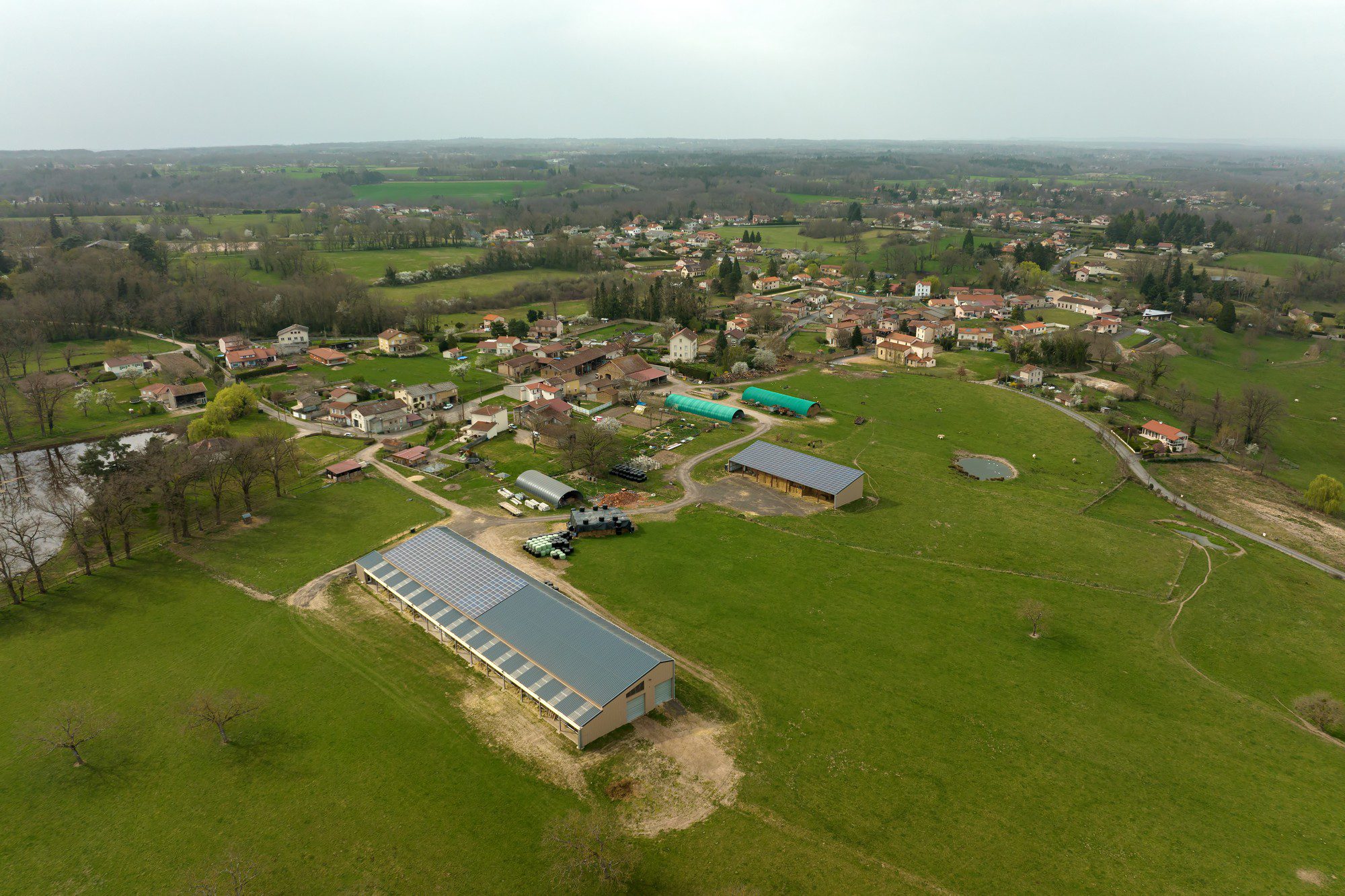
Solar energy provides one of the most effective ways to achieve measurable environmental progress while also delivering financial benefits. By generating renewable electricity on site, companies reduce carbon emissions, lower energy costs, and demonstrate genuine commitment to sustainability.

For businesses across the South Coast and the Midlands, commercial solar panels represent an opportunity to future proof operations while strengthening environmental credentials.

If your organisation is looking to reduce energy costs and improve ESG performance, the next step is simple.

Contact Save Energy UK to explore how a commercial solar installation could transform your business energy strategy and support your sustainability goals.

Is Solar a Smart Investment for Farms and Agricultural Businesses?

Practical Solutions

Farming has always been an industry shaped by changing conditions. Weather, crop prices and market demand are all factors farmers must navigate carefully. In recent years, however, one challenge has become increasingly significant for agricultural businesses across Dorset and the wider South Coast. Energy costs have risen sharply, placing additional pressure on farms that already operate on tight margins.

As a result, many farmers are now exploring renewable energy as a practical solution. Solar power has emerged as one of the most attractive options, offering long term cost savings, energy independence and a more sustainable approach to powering agricultural operations. For farms with large roofs, open land and substantial electricity demands, solar panels can represent a particularly compelling investment.

The question many farmers ask is simple. Is solar truly a smart financial decision for farms and agricultural businesses? In many cases the answer is yes.
The Rising Energy Costs Facing Agricultural Businesses

Agriculture is an energy intensive industry. Farms rely on electricity to power refrigeration systems, lighting, irrigation equipment, machinery, grain dryers, milking parlours and storage facilities. Many operations run equipment for long hours, especially during harvest or peak production periods.
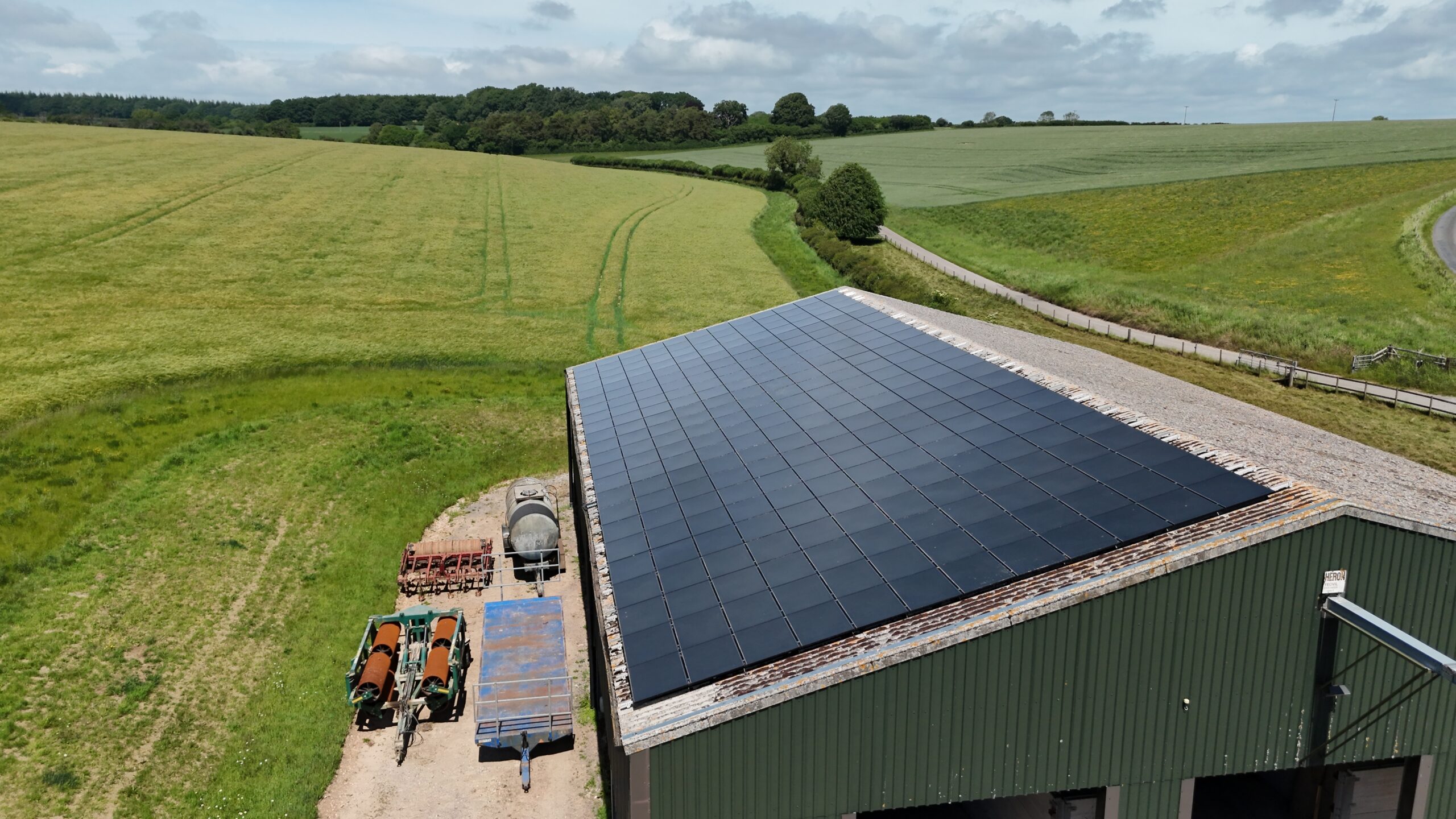
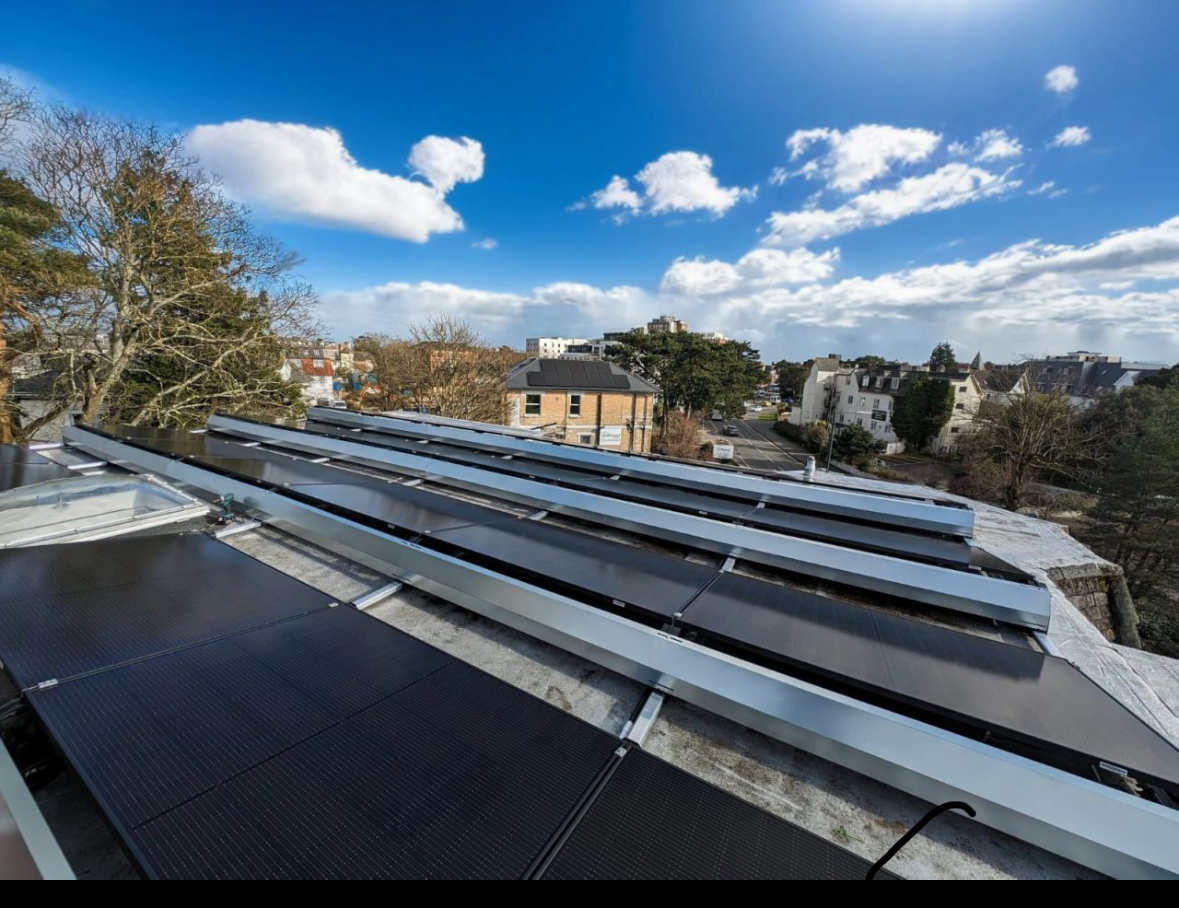
With electricity prices rising across the United Kingdom, energy has become one of the most significant overheads for agricultural businesses. For farms in Dorset and the South Coast, where operations may include dairy farming, arable agriculture or food processing, these costs can quickly accumulate.

Reducing reliance on grid electricity can therefore make a meaningful difference to the long term financial stability of a farm. Solar panels provide a way to generate electricity directly on site, allowing agricultural businesses to produce their own power and reduce exposure to fluctuating energy prices.

Why Solar Energy Is Becoming Popular in Agriculture

Solar energy has gained considerable popularity in the farming sector over the past decade. Unlike many other renewable technologies, solar panels are relatively straightforward to install and require minimal ongoing maintenance.

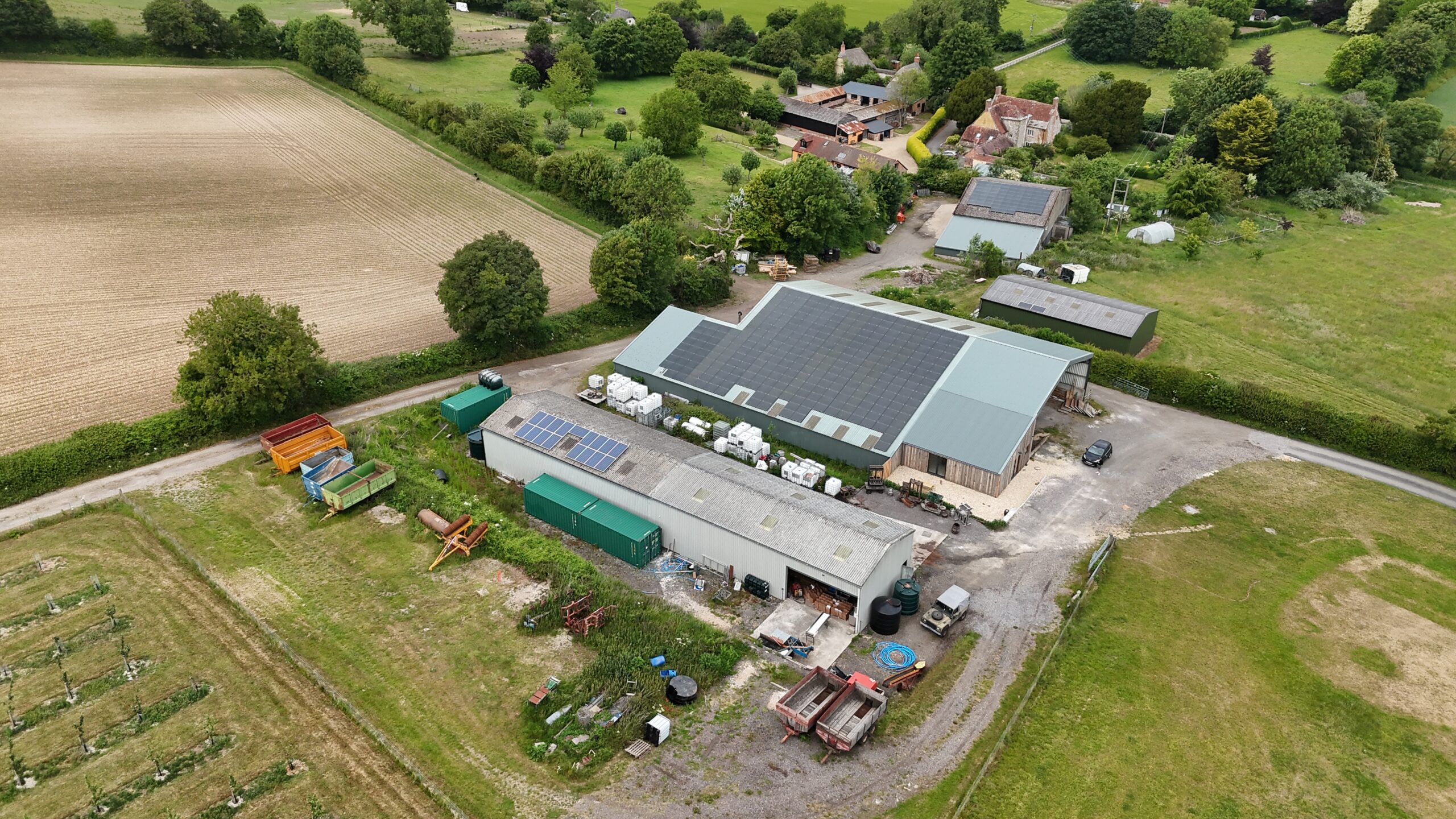
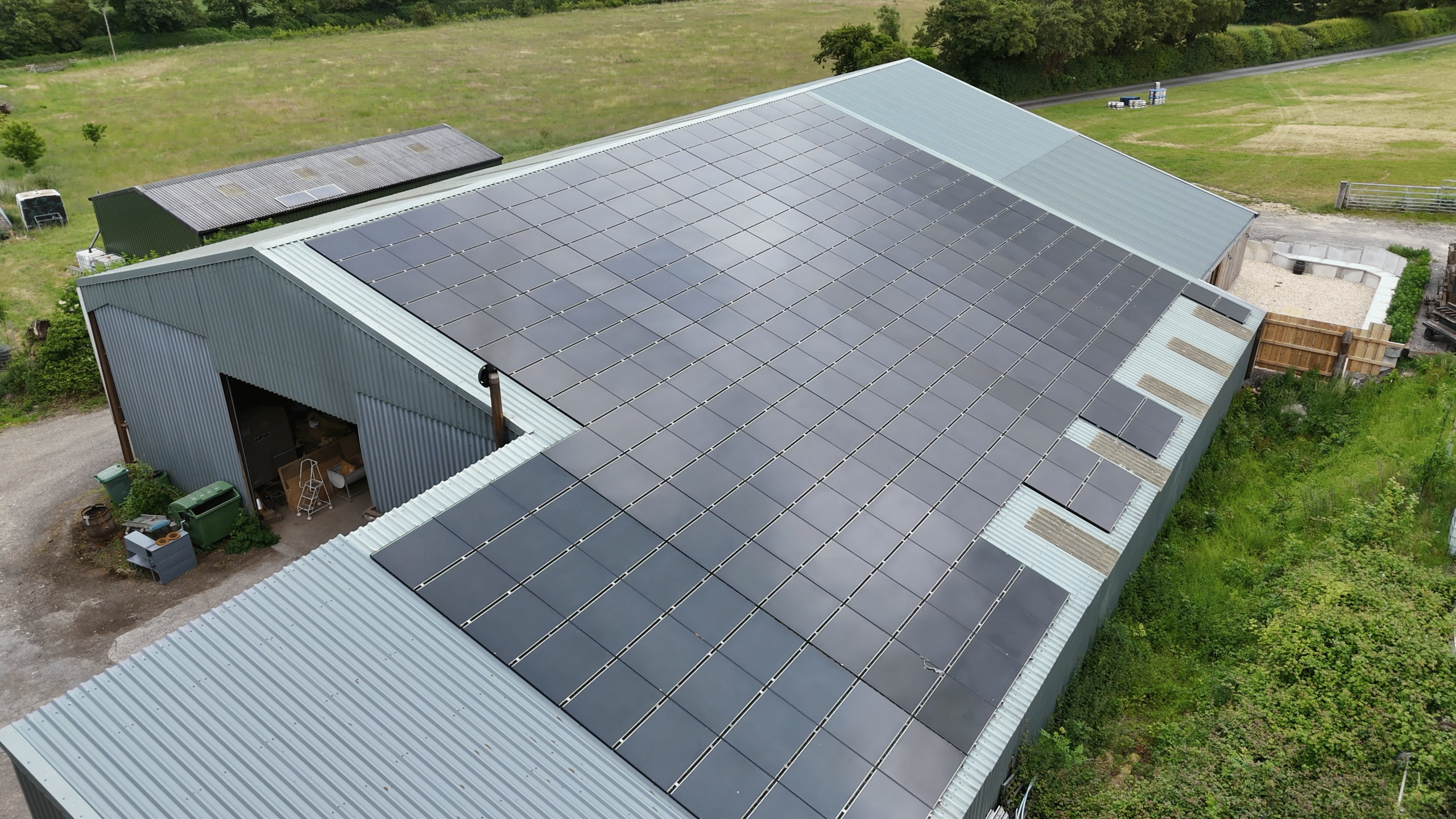
Farms are uniquely well suited to solar energy. Agricultural properties often have several features that make solar installations highly effective. Large barn roofs, storage buildings and unused land provide excellent locations for solar arrays. These spaces typically receive unobstructed sunlight, making them ideal for capturing solar energy.

In addition, farms tend to consume electricity during daylight hours when solar panels are producing the most energy. Milking equipment, cooling systems and processing machinery are often used during the day, meaning a large proportion of the generated electricity can be used directly on site.

This alignment between energy production and energy consumption is one of the reasons agricultural solar installations can deliver strong financial returns.

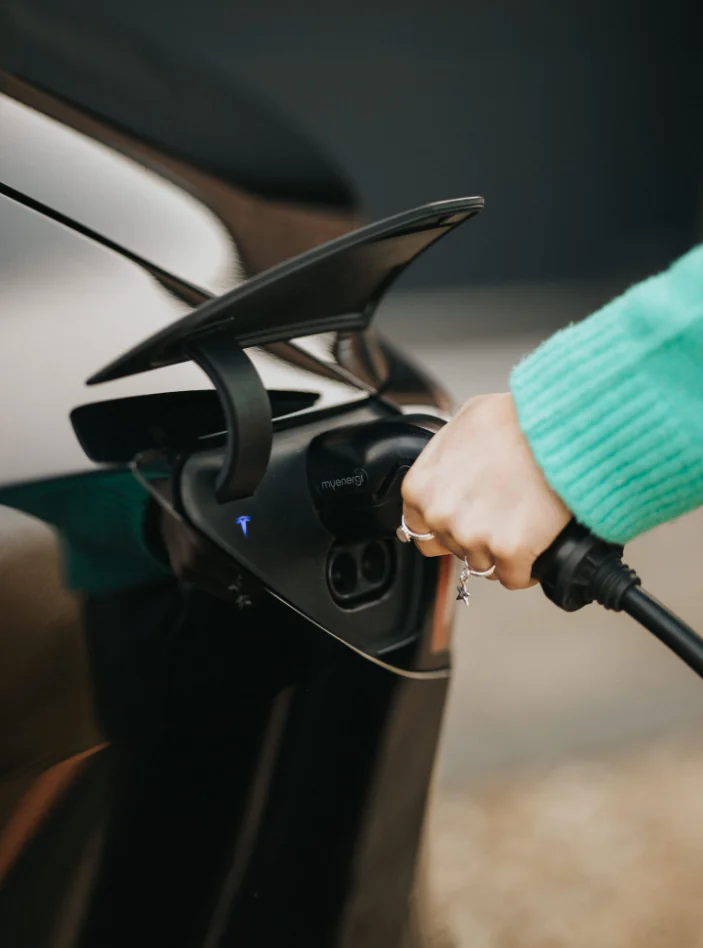
commercial solar panel installation

The Key Benefits of Solar Panels for Farms

Installing solar panels for farms can offer a range of practical benefits beyond simple cost reduction.

Lower Operating Costs

One of the most immediate advantages of agricultural solar panels is the reduction in electricity bills. By generating power on site, farms can significantly lower the amount of electricity they need to purchase from the grid.

Over time these savings can be substantial, particularly for businesses with high energy usage.

Protection from Energy Price Volatility

Energy prices have become increasingly unpredictable. By investing in farm solar panels in the United Kingdom, agricultural businesses gain greater control over their energy supply and reduce their exposure to future price increases.

This stability allows farmers to plan more effectively and manage their operating budgets with greater confidence.

Sustainable Farming Practices

Many agricultural businesses are keen to improve their environmental credentials. Solar energy provides a clean and renewable source of electricity that helps reduce carbon emissions.

For farms supplying supermarkets or food manufacturers, demonstrating sustainable practices can also strengthen business relationships and support long term contracts.

Improved Land and Building Use

Agricultural properties often include large roof areas that are otherwise unused. Installing solar panels on barns or storage facilities allows farmers to make productive use of these spaces without affecting day to day operations.

In some cases ground mounted systems can also be installed on suitable areas of land while still allowing agricultural activity around them.

Using Farm Buildings and Land for Solar Installations

One of the reasons solar panels for farms are so effective is the availability of suitable installation locations. Barn roofs, livestock housing and machinery storage buildings frequently provide large south facing surfaces that receive excellent sunlight.

These roofs often have the structural strength required to support solar panels, making them an efficient and practical location for installation.

Ground mounted systems can also be an option where roof space is limited. Agricultural land that is difficult to cultivate or rarely used may be suitable for solar arrays, providing an additional income generating asset for the farm.

A professional solar assessment can help determine the most suitable installation approach based on the layout of the property, energy usage and long term business goals.

Solar Battery Storage for Agricultural Businesses

While solar panels generate electricity during daylight hours, farms may require energy at other times of day. This is where solar battery storage becomes particularly valuable.

Solar batteries store excess electricity produced during sunny periods so it can be used later when solar generation is lower. For agricultural businesses this can be extremely useful, particularly during early morning or evening operations.

Battery storage allows farms to make the most of the electricity they generate, further reducing reliance on the national grid. It also provides an additional layer of resilience by offering backup power during grid interruptions.

For many agricultural businesses combining solar panels with battery storage creates a highly efficient and reliable energy system.

Understanding the Return on Investment

One of the most important considerations for any agricultural business is financial return. Solar panels represent a capital investment, but the long term savings they provide can make them highly attractive.

Many farms see significant reductions in their electricity bills immediately after installation. Over time these savings accumulate, helping to offset the initial installation cost.

In many cases agricultural solar installations can achieve payback within several years, after which the electricity generated is effectively free for the remainder of the system’s lifespan.

Solar panels are also extremely durable. Modern systems often continue generating electricity for twenty five years or more, making them a long term asset for the farm.

For farms with high energy usage the financial benefits can be particularly strong.

Government Incentives and Support

The United Kingdom government has introduced various initiatives designed to encourage the adoption of renewable energy. While specific schemes may change over time, there are often opportunities for farms and agricultural businesses to benefit from financial support or favourable export arrangements.

In some cases farms can receive payments for surplus electricity exported back to the grid. This can create an additional revenue stream and further improve the financial case for solar energy.

Agricultural businesses considering solar installation should always explore the available incentives and support schemes when planning their project.

Why Dorset Farms Are Well Suited to Solar Energy

Farms in Dorset and across the South Coast are particularly well positioned to benefit from solar power. The region receives a healthy level of sunlight throughout the year compared with many other parts of the United Kingdom.

Combined with the large roof spaces commonly found on agricultural buildings, this creates excellent conditions for solar energy generation.

In addition, many farms in the area operate diversified businesses including food production, farm shops, cold storage or processing facilities. These operations often require a consistent supply of electricity, making solar an especially practical solution.

As more agricultural businesses in the region adopt renewable energy, solar power is becoming an increasingly familiar sight across the Dorset countryside.

A Sensible Investment for the Future of Farming

For many farms and agricultural businesses, solar energy represents far more than an environmental statement. It is a practical financial decision that can deliver measurable long term benefits.

Solar panels allow farms to reduce operating costs, protect themselves from volatile energy prices and strengthen their commitment to sustainable farming practices. With suitable roofs, available land and significant electricity demands, agricultural properties are often ideal candidates for solar installations.

As energy costs continue to rise, the ability to generate reliable power on site will become increasingly valuable for rural businesses.

Conclusion

Solar energy is rapidly becoming one of the most effective ways for farms and agricultural businesses to manage rising energy costs while improving sustainability. With large roof spaces, consistent energy demand and access to open land, many farms are perfectly suited to solar installations.

By investing in solar panels and battery storage, agricultural businesses can generate their own electricity, reduce operating expenses and build greater resilience for the future.

Contact Save Energy UK

If you are a farm owner or agricultural business in Dorset or the South Coast and are considering solar energy, the team at Save Energy UK can help.

Contact Save Energy UK today for a free solar assessment and discover how solar power could transform the energy efficiency and profitability of your farm.

Should UK Businesses Lease or Buy Commercial Solar Panels

Energy Costs

Energy costs remain one of the most pressing concerns for businesses across England. From manufacturing units in Dorset to office developments across the South West, rising electricity prices and mounting sustainability obligations are forcing directors to reassess how their power is sourced and financed. Commercial solar panels offer a credible and increasingly compelling solution. The question is not whether solar makes sense, but whether it is wiser to lease or to buy.

For many organisations the decision rests upon capital allocation, tax efficiency, cash flow priorities and long term strategy. Each route carries distinct financial and operational implications. This guide sets out a clear and considered comparison to help businesses in Dorset and surrounding areas determine which approach best aligns with their commercial objectives.

Why Commercial Solar Panels Make Financial Sense

Before examining finance structures, it is worth recognising why commercial solar panels have become such an attractive investment.

Electricity prices in the United Kingdom have risen sharply in recent years, and volatility remains a concern. By generating electricity on site, businesses can reduce reliance on the grid and protect themselves from future price shocks. A well designed commercial system can reduce electricity bills by a significant margin, often between thirty and sixty per cent depending on usage patterns.

For many Dorset businesses, particularly those operating warehouses, hospitality venues, agricultural facilities or office parks, roof space is underutilised. Installing commercial solar panels transforms that unused asset into a productive energy source.

In addition to financial savings, solar generation supports environmental commitments and strengthens a company’s public profile. Increasingly, clients and supply chains favour partners who demonstrate credible sustainability credentials.

Buying Commercial Solar Panels Outright

Purchasing commercial solar panels outright involves paying the full installation cost upfront, either from retained profits or financed through a loan or asset finance agreement.

Typical Costs in England

System costs vary according to size and complexity. As a broad guide:

  • A small commercial system of around fifty kilowatts may cost between forty five thousand and sixty thousand pounds

  • A medium sized system of one hundred to two hundred kilowatts may range from ninety thousand to one hundred and eighty thousand pounds

  • Larger industrial installations will scale accordingly

While the capital requirement is significant, the financial return can be equally substantial.

Return on Investment and Payback

For many Dorset businesses with strong daytime electricity usage, payback periods commonly fall between four and seven years. After this point, electricity generated is effectively free aside from minimal maintenance costs.

Given that commercial solar panels typically have a lifespan exceeding twenty five years, the long term return can be considerable. Internal rates of return frequently outperform traditional low risk investments.

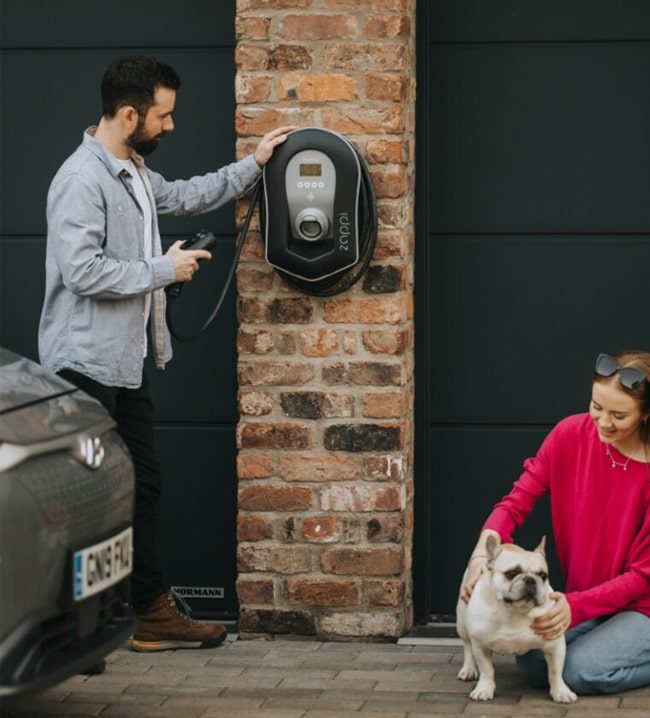
tesla solar panel installation

Tax Benefits and Capital Allowances

One of the most compelling arguments for purchasing is tax efficiency. Under current United Kingdom tax rules, businesses may claim capital allowances on qualifying plant and machinery. The Annual Investment Allowance enables many firms to deduct the full cost of solar equipment from taxable profits in the year of purchase, subject to prevailing limits.

This can materially reduce corporation tax liability in the first year, improving overall project economics. For up to date guidance, businesses should consult official information published on GOV.UK.

Asset Ownership and Balance Sheet Impact

Owning commercial solar panels means the system becomes a company asset. It can enhance the value of commercial premises and strengthen sustainability credentials. From a balance sheet perspective, the investment is treated as capital expenditure and depreciated over time.

For organisations with healthy cash reserves or access to competitive finance, ownership often delivers the strongest long term financial outcome.

Leasing Commercial Solar Panels

Leasing removes the need for substantial upfront capital. Instead, a third party funds and installs the system, and the business pays either a fixed lease fee or purchases electricity generated at an agreed rate.

There are two common structures.

Power Purchase Agreements

Under a Power Purchase Agreement, often referred to as a PPA, a provider installs commercial solar panels on the business premises at little or no upfront cost. The business then agrees to purchase the electricity produced at a predetermined rate, typically lower than grid prices.

This arrangement can deliver immediate savings without capital investment. However, long term savings are usually lower than under outright ownership.

Asset Finance and Green Loans

Some organisations opt for asset finance or dedicated green business loans. These structures allow the business to spread the cost over several years while still retaining ownership.

Monthly repayments are offset against energy savings, easing pressure on cash flow while preserving the long term benefit of ownership.

Operational Expenditure Versus Capital Expenditure

Leasing arrangements are typically treated as operational expenditure rather than capital expenditure. For businesses seeking to conserve capital for expansion, recruitment or other strategic investments, this can be advantageous.

However, over the full term of the agreement, total payments may exceed the cost of purchasing the system outright.

Cash Flow Considerations

For small and medium sized enterprises in Dorset, cash flow often determines the decision more than theoretical return.

Buying requires significant initial outlay but delivers higher savings over time. Leasing reduces immediate financial strain and provides predictable monthly costs, though the lifetime return may be lower.

A careful assessment of projected electricity usage, available capital and borrowing capacity is essential. Modelling should consider future energy price increases, as higher grid prices strengthen the case for ownership.

Maintenance and Responsibility

Commercial solar panels require minimal maintenance. Occasional inspections and inverter servicing are typically sufficient.

Under a lease or PPA, maintenance responsibilities are often retained by the provider. With ownership, responsibility lies with the business, though many companies choose to engage a specialist for ongoing support.

In practice, maintenance costs represent a small fraction of overall savings.

Which Option Suits Dorset Businesses Best

There is no universal answer.

Businesses with strong balance sheets, stable premises and long term operational plans often benefit most from purchasing commercial solar panels outright. The tax advantages, superior lifetime returns and asset ownership provide compelling value.

Conversely, companies prioritising liquidity or operating from leased premises may prefer a leasing structure or PPA. This approach allows immediate participation in renewable energy without significant capital exposure.

Each site is unique. Roof structure, energy profile, export potential and planning considerations all influence the optimal solution.

Frequently Asked Questions

Are commercial solar panels a good investment for businesses in Dorset

For many organisations, yes. Strong daytime energy consumption and rising electricity costs mean commercial solar panels can deliver attractive financial returns and environmental benefits.

How long does it take for commercial solar panels to pay for themselves

Typical payback periods range from four to seven years depending on system size, usage and available tax allowances.

Is leasing commercial solar panels cheaper than buying

Leasing requires less upfront capital and can produce immediate savings. However, buying usually delivers greater total savings over the lifespan of the system.

Can businesses claim tax relief on solar panels

Yes. Under current rules, qualifying businesses may claim capital allowances, including the Annual Investment Allowance, subject to prevailing legislation.

Conclusion

The decision to lease or buy commercial solar panels rests upon financial priorities, tax position and long term strategy. Both routes can reduce energy costs and strengthen sustainability credentials for businesses across Dorset and surrounding areas.

Ownership typically yields the highest lifetime return and valuable tax advantages. Leasing offers flexibility and preserves capital. The most prudent course is to undertake a detailed site assessment and financial appraisal tailored to your organisation.

Save Energy UK provides independent, expert guidance to businesses throughout Dorset and the wider region. If you are considering commercial solar panels and would value a clear assessment of leasing versus purchasing for your premises, our team would be pleased to offer considered and practical advice.

Top 10 Industries in the UK That Benefit Most from Commercial Solar Installation

Unpredictable Electricity Pricing

Rising energy costs continue to place sustained pressure on British businesses. Across England and particularly in Dorset, commercial property owners are facing unpredictable electricity pricing, tighter margins and growing expectations around environmental responsibility. In this climate, commercial solar installation is no longer viewed as an optional sustainability measure. It has become a strategic investment.

For organisations with substantial daytime energy demand, solar panels offer a practical route to stabilising expenditure, reduce reliance on the grid and improve long term resilience. When paired with solar batteries, businesses can further enhance control over energy usage and future proof operations against volatility in the wider solar energy UK market.

Below are the 10 industries in the United Kingdom that stand to benefit most from commercial solar installation, with particular relevance to enterprises operating in Bournemouth, Poole, Weymouth, Dorchester and the wider Dorset region.

1. Manufacturing and Industrial Facilities

Manufacturing sites are among the highest energy consumers in the commercial sector. Heavy machinery, production lines and ventilation systems require continuous power throughout working hours.

Commercial solar installation allows factories to offset a significant proportion of daytime electricity demand. Given that production activity often aligns with peak solar generation, the financial return can be compelling. With current solar panel cost trends and available capital allowances, many facilities achieve payback within three to six years.

Solar batteries can further support operations by storing surplus generation for later use, helping maintain productivity during grid interruptions. For industrial estates in Poole and Dorchester, roof space is rarely a limitation, making solar panel installation particularly attractive.

2. Agriculture and Farming Enterprises

Dorset’s agricultural sector remains a cornerstone of the regional economy. Farms consume substantial energy through refrigeration, irrigation, lighting and processing equipment.

Commercial solar presents farmers with an opportunity to convert unused barn roofs into productive assets. Given the seasonal nature of many operations, solar batteries provide flexibility by storing excess generation during peak sunlight hours.

With careful system design, solar energy UK solutions can dramatically reduce operational overheads while enhancing sustainability credentials. This is increasingly valuable for farms supplying major retailers who demand environmental accountability.

3. Warehousing and Distribution Centres

Large scale warehouses in Bournemouth and Poole often feature expansive roof areas that are ideally suited to solar panels. Distribution centres operate long hours with significant lighting and mechanical handling requirements.

Commercial solar installation reduces reliance on high tariff daytime electricity and improves cost predictability. As logistics firms compete in tight margin markets, controlling solar panel cost through efficient system sizing can translate directly into stronger profitability.

Solar batteries can support electric vehicle fleet charging, further enhancing long term savings.

4. Hospitality and Hotels

Hotels, restaurants and coastal hospitality venues in Weymouth face substantial energy consumption due to heating, cooling, kitchens and laundry facilities.

Commercial solar enables hospitality businesses to align energy generation with peak daytime usage. In a sector where guest expectations include environmental awareness, visible solar investment also strengthens brand perception.

With carefully structured financing such as asset finance or power purchase agreements, hospitality operators can reduce upfront expenditure while benefiting from immediate savings.

5. Retail Parks and Supermarkets

Retail premises require constant lighting, refrigeration and climate control. For supermarkets in Dorset and across England, electricity costs represent a considerable operating expense.

Solar panel installation can offset a meaningful portion of this demand, particularly during peak shopping hours when sunlight is abundant. With the addition of solar batteries, excess generation can be retained for evening trading.

Given rising grid tariffs, commercial solar installation offers retailers a hedge against long term price instability.

6. Office Buildings and Corporate Campuses

Modern office developments increasingly prioritise sustainability as part of corporate governance commitments. Energy intensive systems such as air conditioning, data infrastructure and lighting contribute significantly to operational costs.

Commercial solar supports businesses in meeting environmental targets while delivering measurable savings. For professional firms in Bournemouth and Dorchester, the reputational advantage of adopting renewable energy can enhance client confidence.

When combined with current tax incentives, the return on investment remains attractive.

7. Education Facilities

Schools, colleges and universities operate predominantly during daylight hours, aligning perfectly with solar generation patterns.

Commercial solar installation can substantially reduce public sector energy expenditure, freeing resources for educational investment. Solar batteries allow facilities to store surplus energy for evening events or community use.

Given the educational value of visible renewable infrastructure, institutions also benefit from enhanced community engagement.

8. Healthcare Facilities and Care Homes

Healthcare environments require dependable power for medical equipment, lighting and climate control. Care homes in Dorset face similar continuous energy demands.

Solar energy UK solutions can offset a portion of this consumption, reducing exposure to volatile grid pricing. Although healthcare facilities must maintain stringent reliability standards, professionally designed commercial solar systems integrate seamlessly with existing infrastructure.

With appropriate battery storage, resilience is further strengthened.

9. Leisure Centres and Sports Facilities

Swimming pools, gyms and sports complexes are particularly energy intensive due to heating and lighting requirements.

Commercial solar installation offers a means to reduce long term operating costs while demonstrating environmental responsibility to members and local authorities. Facilities with extensive roof space can achieve strong returns, particularly when systems are optimised to match daytime usage patterns.

10. Food Production and Processing

Food processing plants demand refrigeration, machinery operation and strict temperature control. Energy expenditure is therefore substantial.

By adopting commercial solar, producers can lower overheads while protecting margins in a competitive marketplace. Given the scrutiny placed on supply chain sustainability, renewable energy adoption strengthens compliance credentials.

When solar batteries are incorporated, producers gain additional control over peak demand charges and load management.

Understanding Solar Panel Cost for Businesses

One of the most common questions raised by commercial property owners concerns solar panel cost. While system pricing depends on size and site complexity, declining equipment costs and improved efficiency have made commercial solar installation increasingly accessible.

In many cases, structured finance options allow businesses to install solar panels with minimal upfront capital. Leasing arrangements and power purchase agreements enable immediate savings while spreading expenditure over time.

With electricity prices remaining elevated across solar energy UK markets, the economic rationale continues to strengthen.

Government Incentives and Tax Advantages

Businesses across England may benefit from capital allowances and other incentives that improve the financial case for solar panel installation. While schemes evolve over time, commercial solar remains aligned with national decarbonisation objectives.

Careful consultation ensures that companies in Dorset and beyond maximise available benefits.

The Strategic Advantage of Commercial Solar

Beyond immediate savings, commercial solar installation provides long term strategic resilience. Organisations reduce dependence on grid volatility, improve environmental credentials and demonstrate leadership within their sectors.

For many enterprises, the decision is no longer whether to invest in solar panels, but when.

Frequently Asked Questions

How much does commercial solar installation cost in the UK

Costs vary depending on system size and site conditions, but many businesses achieve payback within three to six years.

Are solar batteries necessary for commercial solar

Solar batteries are not essential but significantly enhance energy independence and maximise savings.

Take the Next Step with Save Energy UK

For businesses across Bournemouth, Poole, Weymouth, Dorchester and the wider Dorset region, commercial solar installation represents a practical, forward thinking investment.

Save Energy UK provides comprehensive assessments, tailored system design and professional solar panel installation to ensure maximum return on investment.

If you are ready to reduce operating costs and strengthen your organisation’s long term resilience, request a free commercial solar assessment today and discover how solar energy can transform your business.

Installing Solar Panels on Commercial Property Planning Grid Connection and Performance Explained

Commercial Property Owners

For commercial property owners across Dorset and the Midlands, the shift towards solar energy is no longer a speculative environmental gesture. It is a strategic decision grounded in financial prudence, operational resilience and long term asset value. With electricity prices remaining volatile and corporate sustainability expectations rising, commercial solar installation has become one of the most effective ways to save electricity while strengthening energy security.

Installing solar panels on a commercial property, however, involves more than mounting modules on a roof. Planning regulations, grid connection approvals, system performance modelling and cost forecasting must all be carefully assessed. What follows is a comprehensive explanation of how commercial solar works in practice and what businesses in England should expect from the process.

Why Commercial Solar Makes Strategic Sense

Commercial solar differs significantly from domestic systems. While solar panels on a home are typically designed to offset household consumption, commercial property installations are engineered around higher load profiles, daytime energy demand and complex infrastructure.

For businesses operating warehouses, manufacturing facilities, offices, retail parks or agricultural buildings in Dorset and the Midlands, solar panels can transform unused roof space into a productive energy asset. Commercial solar systems often range from 30 kilowatts peak to several hundred kilowatts peak depending on roof area and consumption patterns. Larger sites may even exceed one megawatt.

Unlike smaller domestic arrays, commercial solar installation focuses on maximising return on investment through scale, efficient system design and demand alignment. When properly specified, such systems can reduce grid dependency, hedge against future price rises and materially lower operating expenditure.

Planning Permission and Permitted Development in England

In many cases, installing solar panels on a commercial property falls within permitted development rights in England. This means formal planning permission may not be required, provided certain conditions are met.

Panels must not protrude excessively beyond the plane of the roof and installations should minimise visual impact. Properties located within conservation areas, listed buildings or sites of special interest may require additional approvals. Ground mounted commercial solar systems are subject to further restrictions regarding height, footprint and proximity to boundaries.

Before proceeding, it is essential to conduct a planning review specific to the property location in Dorset or the Midlands. A professional installer will assess whether the system qualifies under permitted development or whether a formal planning application is advisable.

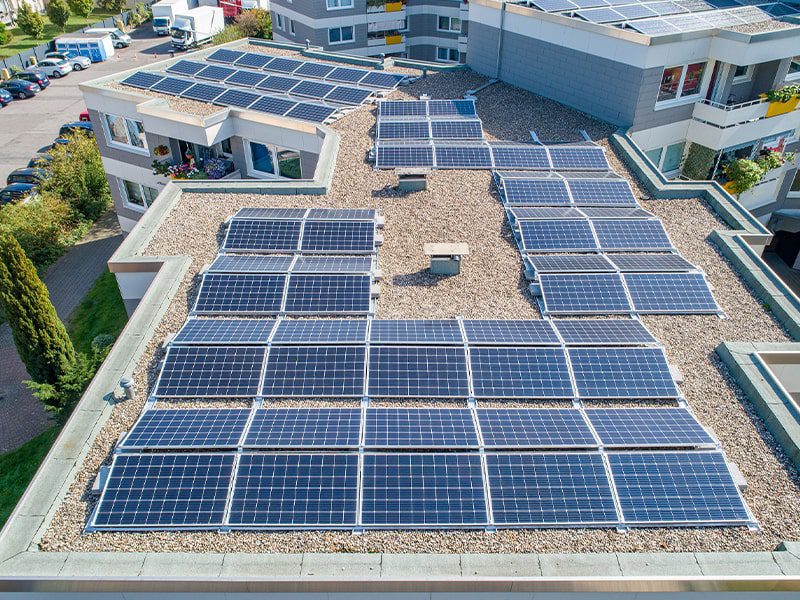
residential solar panels

The Grid Connection and DNO Approval Process

One of the most critical stages in any commercial solar installation is the grid connection process. Unlike small domestic systems, most commercial arrays require formal approval from the local Distribution Network Operator.

The DNO assesses the capacity of the local network to accept additional generation. Depending on system size, the installer will submit either a G98 or G99 application. For larger systems, detailed engineering information, protection settings and export capacity data must be provided.

Export limitations may be imposed where local infrastructure cannot accommodate full generation output. In such cases, systems can be configured with export limiting devices to restrict power sent to the grid. This allows the commercial property to benefit from self consumption while remaining compliant with network constraints.

The grid connection stage can take several weeks or months depending on system size and network complexity. Early engagement with the DNO is therefore essential to avoid project delays.

System Sizing and Design Considerations

Effective commercial solar installation begins with careful system sizing. This involves analysing half hourly electricity consumption data to understand load patterns, peak demand and seasonal variation.

Key considerations include roof orientation, pitch, structural integrity and shading. South facing roofs typically yield optimal performance, though east west configurations can improve generation spread across the day, aligning more effectively with business operating hours.

System capacity is expressed in kilowatts peak. A warehouse in Dorset with substantial daytime usage might accommodate a 200 kilowatts peak system, while a medium sized office in the Midlands may require 50 kilowatts peak.

Performance ratios, inverter efficiency and module degradation rates must also be factored into design modelling. Most modern solar panels degrade at approximately 0.4 to 0.5 per cent per year, meaning systems can continue producing efficiently for over 25 years.

Solar Panel Cost for Commercial Property

Solar panel cost for commercial property varies according to scale, roof complexity, access requirements and grid connection conditions. As a general principle, larger systems benefit from economies of scale, reducing the cost per installed kilowatt.

Costs typically include modules, inverters, mounting systems, electrical infrastructure, labour, DNO application fees and commissioning. Additional structural reinforcement may be required for older buildings.

While initial capital expenditure can appear significant, commercial solar must be evaluated against long term savings. Businesses that consume the majority of generated electricity on site can achieve payback periods commonly ranging between four and seven years, depending on energy tariffs and system size.

Beyond payback, electricity generated by the system effectively reduces future energy procurement costs, improving operational margins and increasing property value.

Performance Expectations and Long Term Output

Commercial solar systems in southern England benefit from favourable irradiation levels. Dorset in particular offers strong annual yield potential. A well designed system may produce between 850 and 1,000 kilowatt hours per installed kilowatt annually, depending on site conditions.

Monitoring platforms allow businesses to track real time generation, consumption and export data. This visibility enhances operational control and supports broader energy efficiency solutions.

By integrating generation data into corporate reporting, organisations can also demonstrate measurable progress towards carbon reduction targets.

The Role of Solar Batteries in Commercial Systems

Solar batteries are increasingly integrated into commercial solar installations. While not essential in every case, they offer strategic advantages.

Battery storage enables businesses to retain surplus generation during low demand periods and deploy it during peak tariff windows. This reduces reliance on grid electricity and improves self consumption ratios.

In regions where export capacity is restricted by the DNO, solar batteries can mitigate curtailment losses. Instead of limiting output, excess generation is stored and later utilised on site.

When aligned with smart energy management systems, battery storage further enhances resilience and operational flexibility.

Commercial Solar Compared with Domestic Systems

Solar panels on a home are typically smaller in scale and designed primarily for household consumption patterns. Domestic installations often prioritise aesthetic integration and modest export levels.

By contrast, commercial solar installation demands rigorous structural assessment, detailed load analysis and formal grid approval. Financial modelling is more complex, and system scale introduces additional engineering considerations.

The underlying technology remains consistent, but the commercial environment requires greater technical precision and regulatory coordination.

solar storage

Regulatory Compliance and Quality Assurance

All commercial solar systems in England should comply with current electrical standards and be installed by accredited professionals. MCS certification remains a key benchmark of quality, while adherence to grid protection standards ensures safe integration with the distribution network.

A reputable installer will provide comprehensive design documentation, commissioning certificates and performance projections. Ongoing maintenance and periodic inspection safeguard long term output and warranty protection.

Strengthening Energy Strategy Through Solar Energy UK

For businesses seeking to save electricity and future proof their operations, commercial solar represents a cornerstone of modern energy efficiency solutions. Rising energy costs and sustainability obligations are unlikely to diminish. By investing in solar energy UK infrastructure today, commercial property owners secure predictable operating costs and tangible environmental benefits for decades to come.

Across Dorset and the Midlands, commercial property presents significant untapped potential for solar panels. With proper planning, diligent grid coordination and intelligent system design, solar panel installation can convert underutilised roof space into a long term strategic asset.

If you are considering commercial solar for your premises, now is the time to act. Contact Save Energy UK to request a detailed commercial solar quote and begin the process of transforming your property into a high performing renewable energy asset.

How can hotels and hospitality venues cut costs with solar panel installation UK

Energy Prices

Running a hotel or hospitality venue in the UK has never been more challenging. Energy prices have risen sharply in recent years, and many hotels, restaurants, leisure centres, spas and event venues are facing high running costs that continue to increase year on year. From heating and lighting to laundry facilities, kitchens, pools and guest rooms, the energy demand inside a hospitality business is significantly higher than in most other sectors. This makes it one of the industries that can benefit the most from solar panel installation in the UK.

Across the South Coast and the surrounding regions, more hospitality venues are looking for long term solutions that reduce their energy bills, improve sustainability and support better financial stability. Solar energy UK systems, especially when paired with modern solar batteries, are becoming a popular investment for hotels and leisure operators who want to cut costs without compromising the quality of their guest experience.

This guide explains how commercial solar installation can help hospitality venues reduce expenses, improve resilience and take control of their energy use.

Why hospitality venues face high energy costs

Hotels and hospitality businesses have one of the highest levels of energy consumption of any commercial sector. This is because they operate for long hours, serve large numbers of guests and rely heavily on heating, cooling, lighting and hot water throughout the day.

Typical areas of high energy use include:

  • Guest rooms and suites

  • Commercial kitchens

  • Laundry rooms

  • Swimming pools and spa facilities

  • Gym and leisure equipment

  • Heating and ventilation

  • Exterior and interior lighting

  • Conference and events spaces

According to data shared by the UK Government, hospitality makes up a significant share of commercial energy consumption nationwide. For many venues, energy spending accounts for a large percentage of operational expenses. This is why more business owners are searching for reliable ways to reduce long term energy costs.

How solar panels help hotels and hospitality venues cut costs

Solar panels install clean renewable energy directly from daylight. Once installed, a hospitality venue gains access to a continuous source of low cost electricity. This reduces the amount of power drawn from the National Grid and helps lower monthly energy bills immediately.

The main cost saving benefits include:

Reduction in daytime grid consumption

Hotels and leisure venues operate throughout daylight hours, which means they have ideal usage patterns for solar energy UK systems. The electricity generated by solar panels is used instantly on site, reducing the need to buy expensive power from the grid.

Solar batteries maximise evening and night time savings

Many hospitality businesses want to save money outside of daylight hours, especially during evenings when venues are busy. Solar batteries are the most effective solution, as they store excess daytime energy and release it when needed.

This supports areas such as:

  • Evening lighting

  • Heating and hot water

  • Restaurant service

  • Bar operations

  • Events and celebrations

A combined solar and battery system gives businesses more independence and helps reduce their exposure to peak energy prices.

Predictable long term running costs

Commercial solar installation provides long lasting financial stability. Once the panels are fitted, the electricity they generate is free. For large venues with constant energy demand, the savings become substantial over time. This makes solar one of the most dependable ways to build long term resilience against rising energy costs in the UK.

Lower solar panel cost compared to previous years

The solar panel cost of commercial systems has decreased significantly in the past decade. At the same time, panels have become more efficient, more durable and more effective in low light. This means hotels and venues can now access higher performance systems with quicker payback times compared to older installations.

Technical explanation in simple terms

Solar energy can sound complicated, but the basic process is very straightforward. Here is an accessible explanation written for the standard reader.

How solar panels generate electricity

Solar panels contain photovoltaic cells. When daylight reaches these cells, they produce direct current power. This is converted into usable alternating current electricity through an inverter, which then powers the building.

What an inverter does

The inverter is the control centre of a solar installation. It manages power flow, ensures safe operation and provides a real time overview of how much electricity is being produced. Hotels often use three phase inverters, which spread power across multiple circuits to handle large loads more efficiently.

How solar batteries work

A solar battery stores the extra electricity that your panels generate during the day. The stored energy is then used later in the evening or at night, allowing the business to depend less on grid power.

This is particularly valuable for:

  • Night time guests

  • Evening events

  • Restaurants and bars

  • Heated pools and leisure facilities

What determines savings

The level of savings a hospitality venue will achieve depends on:

  • Roof size and available space

  • Daily energy usage

  • Local weather patterns

  • System size

  • Battery capacity

Hotels generally achieve a strong return because they use a consistent amount of energy throughout the year.

Return on investment for hotels and hospitality venues

Many hospitality owners ask how long it takes for solar to pay for itself. While exact figures vary, UK commercial solar installations typically reach payback within a reasonable timeframe, and some venues on the South Coast report faster returns due to high annual sunlight levels.

Areas that contribute to quicker ROI include:

  • High daylight energy consumption

  • Increasing grid electricity prices

  • Efficient solar batteries

  • Government tax incentives

  • Reduced carbon related costs for ESG reporting

Because hospitality venues use so much power, they often see larger savings than smaller commercial properties.

Government incentives and financial support

Hotels and hospitality venues in the UK currently have access to several financial benefits that support the adoption of solar energy. These benefits can greatly reduce the overall solar panel cost and improve return on investment.

Some examples include:

Capital allowances and tax relief

Businesses can usually claim allowances which provide tax relief when they invest in energy saving plant and machinery.

Zero VAT on certain solar technologies

Some energy saving technologies may fall under reduced VAT rules depending on the installation type and business structure.

Export payments

If a venue generates more electricity than it uses, some systems allow the surplus to be exported back to the grid, offering additional savings.

These incentives make it even more attractive for venues to move toward clean energy solutions.

Environmental and ESG benefits for hospitality venues

The hospitality industry is under increasing pressure to improve sustainability and demonstrate responsible environmental practices. Solar panels and solar batteries provide real and measurable ESG advantages, including:

  • Lower carbon emissions

  • Reduced reliance on fossil fuels

  • Improved sustainability ratings

  • Better public perception

  • Stronger positioning for eco conscious guests

Many travellers now prefer staying in hotels that demonstrate genuine environmental responsibility. Solar energy supports this shift and aligns with community expectations across the South Coast and wider UK regions.

Energy security and operational resilience

Energy security is a growing concern for many UK businesses. Power outages and unpredictable price fluctuations can create major challenges for hospitality venues, especially those with guests who expect comfort and reliability at all times.

Solar batteries improve resilience by providing an on site energy supply that remains available even during grid disruptions. This allows essential systems to keep running such as lighting, heating, refrigeration and guest services.

For venues that host weddings, conferences and events, operational continuity is a crucial advantage.

Hotels and leisure venues across the South Coast often enjoy excellent sunlight exposure. Counties such as Dorset, Hampshire, Sussex and parts of Devon receive higher than average daylight hours each year. This leads to strong energy production and supports faster returns on investment for commercial solar installation.

Because many South Coast hospitality venues are located in scenic coastal or rural areas, they also tend to have large rooftops or land space suitable for solar systems.

Request a Quote

If you own or manage a hotel or hospitality venue and want to understand how solar panels, solar batteries and commercial solar installation could help reduce your long term running costs, Save Energy UK can offer clear guidance tailored to your location and business needs. Exploring solar energy UK options is a practical step toward reducing bills, improving sustainability and gaining greater control over your future energy use.

What Is the Payback Period for Solar Panels on Industrial Sites in Dorset

An Industrial Site

If you run an industrial site in Dorset or anywhere along the South Coast, you have probably noticed just how unpredictable energy prices have become. Business owners and site managers are dealing with electricity bills that seem to creep up every quarter, and in some cases jump dramatically without warning. Because of this, many industrial units are now looking at solar power as a way to take back some control and cut down their long term costs. The question nearly everyone asks first is a very simple one. How long does it actually take for solar panels to pay for themselves.

The good news is that the payback period for industrial scale solar has become noticeably shorter over the past few years. Even better, the South Coast is one of the best parts of the country for consistent solar generation. So if you are based in Dorset, Bournemouth, Poole, Weymouth, Dorchester or anywhere nearby, you are already starting from an advantageous position.

Let us look at how the payback period is worked out, what the numbers usually look like and what you can realistically expect for your own site.

What the Payback Period Actually Means

When people talk about the payback period, they simply mean the amount of time it takes for the savings from your solar panels to match the amount you invested in having the system installed. Once you pass that point, the energy your panels produce essentially becomes free for the rest of the system’s lifespan. Most commercial solar panels last between twenty five and thirty years, so once the initial investment has been recovered, the savings continue for a very long time.

To understand this clearly, think of it as a balance. On one side is the cost of the equipment, everything involved in the installation and any electrical work needed to connect the system safely to your site. On the other side is the amount of money you save each year because you are purchasing less electricity from the grid. If you also export unused electricity back to the network, that income is added to your savings too. When the saving side outweighs the cost side, the investment has officially paid for itself.

It is a very straightforward concept, but it is extremely important for industrial sites because your electricity usage is generally much higher than a typical office or small business. Higher usage usually means faster payback.

What the Payback Period Looks Like for Dorset Industrial Sites

Most industrial sites in Dorset see a payback period somewhere between four and seven years. That is a surprisingly short amount of time when you consider that the panels will continue generating electricity for decades after that.

The exact place your site falls in this range depends on several things. The size of your roof or available land plays a big part, because larger systems can generate more electricity. Your daily operating hours also matter. Many warehouses, workshops and factories use the majority of their electricity during daylight, which is perfect because it means you are using the solar power as it is being produced.

The Dorset climate also helps more than many people realise. Although Dorset is known for being mild rather than intensely sunny, the South Coast actually receives very reliable solar radiation throughout the year. In the world of solar, steady and consistent sunlight often performs better than intense heat, so this part of the country is well suited to solar generation.

A Look at Typical Installation Costs

To give you a sense of what a commercial solar system normally costs, here are some approximate examples. These are not exact figures, but they do give a realistic picture of the investment involved.

A one hundred kilowatt system for a smaller industrial unit often falls somewhere in the region of ninety to one hundred and thirty thousand pounds. A two hundred and fifty kilowatt system for a mid sized warehouse might be closer to one hundred and eighty to two hundred and sixty thousand pounds. Larger sites, such as manufacturing buildings or distribution centres, may install systems of five hundred kilowatts or even one megawatt. These can range anywhere from three hundred and fifty thousand pounds for the lower end through to nine hundred thousand pounds for the biggest systems.

These numbers can vary depending on how easy your roof is to work on, what type of panels and inverters you choose and how much electrical integration is needed. Industrial buildings do often have one advantage though. Their roofs tend to be large and uncluttered, which usually makes installation simpler and more efficient.

What You Can Expect to Save Each Year

This is often the part that surprises business owners the most. The savings from industrial solar are substantial because your energy consumption is already high. Even a medium sized solar system can make a noticeable dent in your annual electricity bill.

A one hundred kilowatt system generally produces somewhere around ninety five thousand to one hundred and ten thousand kilowatt hours each year. For most industrial sites, that translates into annual savings of roughly twenty to thirty thousand pounds. A two hundred and fifty kilowatt system often saves forty five to seventy thousand pounds each year. A five hundred kilowatt system tends to save around ninety to one hundred and thirty five thousand pounds. A one megawatt system can provide yearly savings in the region of one hundred and eighty to two hundred and seventy thousand pounds.

These numbers include both the energy you use on site and any income you earn from exporting surplus electricity. The exact figure will depend on your tariff, your usage pattern and whether you choose to add battery storage.

Commercial Solar Installation

How Battery Storage Changes the Payback Period

More and more industrial users are choosing to include battery storage with their solar installation. Popular options include Qcell battery systems and commercial configurations of the Tesla Powerwall. Batteries can make a meaningful difference to your payback period because they allow you to store excess energy instead of exporting it.

This means your site can use solar generated power well into the evening or during periods of low sunlight. It increases your self consumption and reduces how much energy you need to buy from the grid at peak times. For many businesses, this can shorten the payback period by one or two years while also improving energy resilience across the site.

What Affects How Quickly Solar Pays for Itself

There are a few things that influence your final payback period. The first is the cost of electricity. The more you currently pay per kilowatt hour, the faster solar becomes financially attractive.

Your daily energy usage pattern also plays a role. Sites that operate heavily during daylight hours will use more of their solar power directly, which means bigger savings. Export tariffs can also add a useful income stream when your system generates more than you use.

Equipment quality matters too. Higher efficiency panels and well sized inverters can produce better long term performance. Roof orientation and shading are equally important. A clear, open roof that faces the right direction will always generate more electricity than a shaded or complex roof.

Finally, government schemes and grants, whenever available, can give your return on investment a noticeable boost.

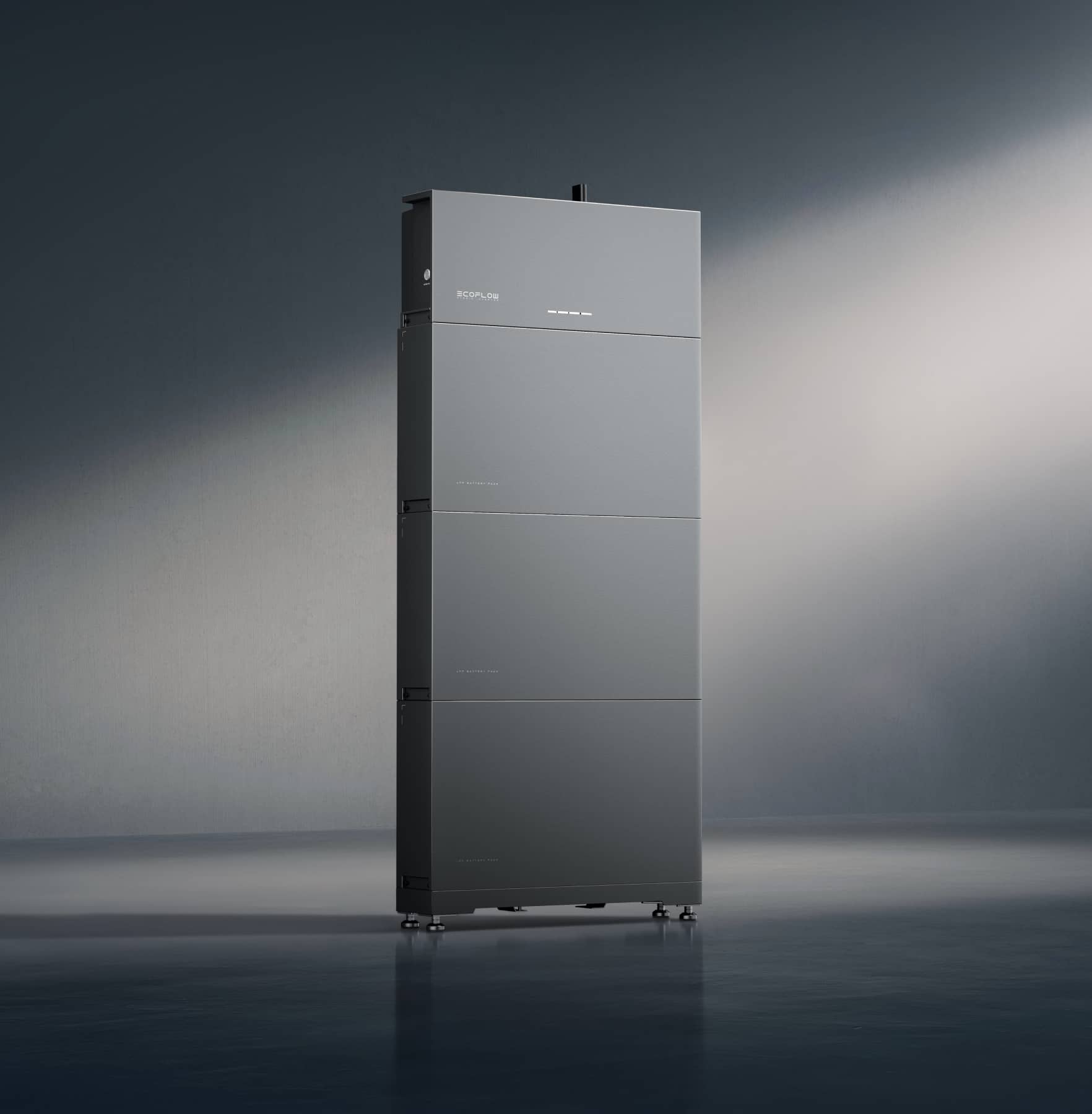
eco flow

Why Dorset Is a Great Location for Industrial Solar

Businesses across Dorset and the wider South Coast benefit from several naturally favourable conditions. The region receives a steady amount of sunlight throughout the year, which leads to reliable energy generation. Industrial buildings in the area also tend to have large roof spaces that are perfect for solar panels.

Energy prices have been rising consistently, so every kilowatt hour you produce onsite becomes increasingly valuable. Many local businesses are also working towards sustainability goals or formal ESG commitments. Installing solar helps achieve those targets while also reducing operational costs.

The coastal climate is another surprisingly helpful factor. Solar panels operate more efficiently in cooler temperatures. Dorset’s mild climate means panels generate strong output without overheating, which can happen in very hot climates.

The Long Term Value of Solar for Industrial Sites

One of the most attractive aspects of solar power is that it continues generating free energy long after the system has paid for itself. Since most systems last between twenty five and thirty years, industrial sites usually enjoy decades of reduced energy bills. Over that time, the total savings can reach into the millions, especially for larger operations.

Solar also reduces exposure to sudden energy price spikes, helps businesses become more resilient and contributes to lower carbon emissions. It can even improve the value of your building, since buyers increasingly look for energy efficient properties with predictable running costs.

In Summary

Industrial sites in Dorset and across the South Coast are in a strong position to benefit from solar energy. With payback periods commonly sitting between four and seven years, and often even faster for larger installations, solar has become one of the most reliable and financially sensible investments an industrial business can make.

If you would like to explore how this could work for your own site, the next step is simple. You can request a quote from Save Energy UK and get personalised figures based on your building, your electricity usage and your long term goals.

Is solar panel cost falling for commercial installations in the UK?

Is solar panel cost falling for commercial installations in the UK?

If you run a business in Britain, you have probably noticed two things in the last few years. Energy prices have been volatile and solar has been popping up on more rooftops across business parks and high streets. The big question many finance teams are asking this year is simple. Are solar panel costs actually falling for commercial projects in the UK, and if so, what does that mean for payback and return on investment

The short answer is yes, the price of the solar modules themselves has been falling. Global oversupply and intense competition among manufacturers drove a sharp drop in the price of panels through 2023 and 2024. Industry analysts reported record global deployment on the back of these low module prices, which stimulated demand in many markets. That trend has continued into 2025, although there are signs that prices are finding a more sustainable floor as manufacturers try to protect margins. For a UK business, that translates into better kit prices than we saw during the energy crisis peak, even if not every cost line is falling at the same rate.

It is useful to separate the total installed cost into two parts. First, the modules, which have indeed become cheaper. Second, everything else that makes a system work, often called balance of system. That includes mounting, cabling, inverters, design, labour, permitting and grid connection. Panel prices respond to global supply and demand and have been trending downward. By contrast, labour, grid fees and some materials have faced the same inflation and supply chain pressures seen across the wider economy. This mix means the total installed cost has not dropped as quickly as the headline module price, but the overall direction of travel is favourable for most commercial rooftops.

Business Energy Rates

Falling kit costs are only half the story. Your savings come from the electricity you do not buy from the grid. Business energy rates spiked after 2021 and although they have eased from the peak, they remain above the levels many firms were paying before the crisis. Ofgem reports that business electricity and gas prices have started to decline but are still higher than pre 2021 levels. That means every kilowatt hour you generate and use on site is still displacing comparatively costly grid power, which keeps the business case strong even when wholesale markets wobble.

The wider policy environment also matters. The Smart Export Guarantee allows small scale generators, including businesses, to receive payments for surplus electricity exported to the grid. The scheme covers systems up to five megawatts, so it comfortably includes most commercial rooftops and light industrial arrays. Export rates are set by suppliers rather than a fixed government tariff, so they vary and you should shop around. For many sites the export income is a helpful top up rather than the main driver, since the best returns usually come from using the power on site to offset grid imports.

Commercial Rooftop System

So where does this leave payback for a typical commercial rooftop system Most sites do not have the same profile, so any example needs to be treated as a guide rather than a promise. As a rule, higher day time consumption and regular five or six day operations improve the case, because more generation is consumed on site. A distribution centre with refrigeration or a manufacturer with steady production will often see a shorter payback than an office that empties at five in the afternoon. In practice we see many businesses targeting simple paybacks of four to seven years, depending on site consumption, system size, finance route and export arrangements. The recent softening in kit prices and the still elevated business energy rates are nudging projects toward the lower end of that range compared with the crisis years. Independent forecasts for business energy suggest prices may remain structurally above pre crisis levels through the decade, which further supports the long term rationale for self generation.

On the down side, global manufacturing capacity for modules has expanded rapidly, especially in Asia. That has created a buyer friendly market for panels in Europe, where wholesalers and installers have been able to secure better pricing and pass through savings to projects. On the up side, grid connection studies and approvals can add both time and cost, particularly for larger systems or sites in constrained areas. Construction inflation has also affected scaffolding, mounting hardware and labour rates. Finally, if a roof needs structural work or a replacement in the next few years, it may make sense to co ordinate that work with the solar project, which can change the cost profile but gives a better long term outcome.

Quality and Technology

What about quality and technology choice The fall in panel prices has not meant a race to the bottom on quality for reputable brands. Tier one manufacturers continue to deliver high efficiency modules with long product and performance warranties. The sweet spot for many commercial rooftops today is a moderate to high efficiency monocrystalline module in the four hundred to six hundred watt range, paired with a string inverter or a set of smaller inverters to give design flexibility.

Bifacial modules are worth considering on certain roof types and orientations, although their extra yield benefits are site specific. Inverters remain the brains of the system, so we always recommend strong brands with robust UK support. To maximise output across an irregular roof with different pitches or shading, module level optimisation can be considered, though it adds cost and should be evaluated case by case.

You might also be wondering if you should wait for prices to fall further. There is always a point where waiting can cost more than acting, especially when you are paying today’s power prices for every unit you import. Analysts have suggested that the steepest module price falls are behind us and that producers cannot sustainably sell below cost for long. While no one can perfectly time the market, most businesses gain more by securing a good price today, locking in a trusted installer and starting to reduce grid imports, rather than chasing the last few points of kit savings.

Commercial Solar Project

To get the best value from a commercial solar project in 2025, focus on four simple steps. First, map your consumption profile with hourly data if possible, so system sizing fits your demand rather than just your roof. Second, compare module and inverter options on lifetime yield and warranty strength rather than price alone.

Third, check grid export constraints and decide early whether to cap export, apply for a higher limit or pair with storage. Fourth, run a financial model that includes realistic energy price scenarios, export income under the Smart Export Guarantee and the correct tax treatment under capital allowances. These steps will give your board a confident, transparent case for investment.

In summary, yes, the cost of panels has been falling and that trend has improved the economics of commercial installations across the UK. Total installed costs have eased, although some site specific and grid related items can still add pressure.

Pair those lower kit prices with continued above trend business energy costs and the result is a stronger business case than many expected even a year ago. With sensible sizing, a good installer and a clear understanding of tax and export rules, most firms can expect compelling savings and a solid return on investment from a rooftop array commissioned this year.

Frequently asked questions

Can my business get paid for surplus electricity
Yes. Under the Smart Export Guarantee, many suppliers will pay you for each unit you export. Rates vary by supplier and tariff, so it is worth comparing offers.

Do capital allowances apply to solar
Yes, but solar is a special rate asset, so full expensing does not apply. Instead there is a fifty per cent first year allowance with the balance written down at the special rate. Your tax adviser can confirm the best route for your company.

Are energy prices going back to pre crisis levels
Prices have eased from the peak. However Ofgem and market updates show they remain higher than before 2021. This continues to support the case for on site generation.

Request a Quote

If you would like a tailored assessment for your site, Save Energy UK can model consumption, design the right system for your roof and present a clear business case with payback, incentives and finance options. Get in touch for a free consultation and a no obligation quote.

Can a Commercial Roof in Dorset Be Fitted with Solar Panels Under 12 Months?

Why Businesses Are Turning to Solar Power

If you own or manage a commercial building in Dorset or along the South Coast, you’ve probably thought about switching to solar power. It’s a smart move it saves money, improves sustainability, and boosts your business’s reputation. But one question often comes up: Can a commercial roof really be fitted with solar panels in under 12 months?

The short answer is yes. With the right team and careful planning, most commercial solar installations can be completed comfortably within a year. Let’s break down what that process looks like and what you need to know before getting started.

Energy costs in the UK have climbed steadily over the past few years. Many companies are now looking for long-term, reliable ways to take control of their energy use. Solar energy has become one of the best options because it offers real savings and long-term stability.

Installing commercial solar panels doesn’t just cut your energy bills. It also protects your business from price fluctuations, helps meet sustainability goals, and can even increase property value. For companies that care about environmental responsibility, solar energy is an easy win that makes both financial and ethical sense.

qcells solar panels

How the Solar Installation Process Works

Every commercial solar project follows a few essential steps. Understanding these can help you see how a project fits neatly into a 12-month window.

1. Consultation and Feasibility Study

The first stage involves assessing your site and energy needs. A specialist from Save Energy UK will visit your property to check the roof’s structure, angle, and available space. This early analysis usually takes a few weeks and helps determine the ideal system size and potential savings.

2. System Design and Proposal

Once the site is approved, engineers design a system that suits your roof and business goals. Using advanced design tools, they map out the layout and calculate expected performance. The proposal includes costs, projected savings, and timelines.

This stage ensures your system delivers the best possible output and that it meets all UK safety standards.

3. Planning Permission and Approvals

In most cases, commercial solar panels in Dorset and across the UK fall under “permitted development.” That means full planning permission isn’t required. However, larger systems or listed buildings may still need approval from the local council.

At the same time, your installation team applies for a grid connection with your local Distribution Network Operator (DNO). Depending on your location, this can take from six to sixteen weeks.

4. Procurement and Installation

Once permissions are in place, the installation begins. Equipment such as solar panels, inverters, and mounting systems are sourced from trusted suppliers. Installation usually takes four to eight weeks, depending on roof size and weather.

This is the exciting part when your solar panels start taking shape and your system begins to come to life.

5. Testing, Commissioning, and Handover

Finally, the system is tested to ensure everything runs smoothly and safely. Once approved, your installation is registered with Ofgem. You’ll receive all system documentation, warranties, and support details.

From start to finish, most commercial solar projects can be completed in around nine to twelve months often sooner when handled by an experienced company like Save Energy UK. What Can Affect the Timeline?

commercial solar panel

While a one-year timeframe is realistic, several factors can influence how long your project takes.

Planning Permissions:
Buildings in conservation areas or heritage zones may need more time for approval.

Grid Connection:
Some areas have limited grid capacity, which can delay connection dates. Early applications help prevent this.

Roof Condition:
If the roof needs reinforcement or repairs, this will add to the schedule but it’s essential for long-term safety.

Weather:
Installation teams work best in dry conditions, so extreme weather can cause short delays.

Save Energy UK’s project managers are experts at planning around these challenges, keeping your installation on track and within the expected timeframe.

The Cost and Value of Commercial Solar Panels

The cost of commercial solar panels in the UK typically ranges between £900 and £1,200 per kilowatt installed, depending on the size and complexity of the system.

While that’s an upfront investment, it quickly pays for itself. Most businesses see a full return within five to eight years, after which the energy produced is essentially free. Over a 25-year lifespan, that’s a huge saving.

Adding solar battery storage can make your system even more efficient. It allows you to store surplus energy during the day and use it later, reducing your reliance on the grid and cutting bills even further.

Why Dorset and the South Coast Are Ideal for Solar Power

Dorset, Hampshire, and the South Coast benefit from higher sunlight hours than much of the UK. This makes them excellent locations for solar energy systems. Towns such as Bournemouth, Poole, and Southampton are seeing rapid growth in commercial installations because of the clear financial and environmental benefits.

Save Energy UK’s local experience gives clients a big advantage. The team understands the planning requirements of local councils and knows how to streamline approvals and grid connections to keep projects moving.

Financing and Support Options

If you’re concerned about the cost of solar installation, there’s good news. A wide range of solar panel financing options are available to businesses in the UK. These include green business loans, lease agreements, and Power Purchase Agreements (PPAs).

Many of these plans allow you to spread the cost of your system while still benefiting from immediate energy savings. In some cases, the monthly energy savings outweigh the repayment amount, meaning you can become cash-flow positive from day one.

Save Energy UK helps businesses find the best financial option to make the switch to clean energy simple and affordable.

tesla

Are Solar Panels Worth It for Businesses?

Absolutely. Solar panels are one of the smartest long-term investments a business can make. They last between 25 and 30 years, require very little maintenance, and provide predictable, low-cost energy.

Beyond the financial benefits, solar energy also reduces your carbon footprint and enhances your brand’s reputation. Customers, clients, and investors increasingly prefer to work with businesses that prioritise sustainability.

So, are commercial solar panels worth it? Without question especially if you’re looking to future-proof your business against rising energy prices and environmental pressures.

Work With Save Energy UK

Save Energy UK is a trusted local expert in commercial solar panel installation across Dorset, Hampshire, and the South Coast. The team handles everything from consultation and design to installation and aftercare.

When you work with Save Energy UK, you get more than panels you get a complete energy solution built for your business’s future.

If you’re ready to take control of your energy costs and sustainability goals, now’s the time to act. Contact Save Energy UK today for a free consultation and site assessment, and see how quickly your commercial roof can start saving you money.

Is Commercial Solar Suitable for Small Companies?

Solar Isn’t Just for the Big Players Anymore

If you run a small business, you’ve probably looked at your energy bills recently and thought something has to change. With electricity prices still high and sustainability becoming more important to customers, solar energy is no longer just a nice idea; it’s a smart business move. But one of the biggest questions I hear from small business owners is this:
“Is commercial solar really for me, or is it only worth it for large companies?”

The short answer? It’s absolutely suitable for small businesses, and in many cases, the benefits are even greater. Let’s break it down.

Years ago, solar panels were mostly seen on big warehouses, supermarkets, or corporate buildings. Large companies had the budget, the space, and the motivation to go green for PR reasons.

But the technology has moved on massively. Solar panels are now more efficient, more affordable, and more adaptable than ever. Whether you own a small shop in Bournemouth, a café in Poole, or a local garage in Christchurch, solar power can make a genuine difference to your bottom line.

At Save Energy UK, we’ve seen a huge rise in smaller businesses taking advantage of commercial solar not just to save on bills, but to become more energy independent and future-proof against rising costs.

commercial solar panel

The Cost Factor and Why It’s More Affordable Than You Think

The first concern most business owners have is cost. It’s a fair question. Installing solar panels is an investment, and no one wants to overspend.

The good news is that solar panel installation costs have dropped dramatically in the last decade by as much as 60 to 70 percent. On top of that, small businesses can claim tax benefits and incentives to help offset the cost.

The Smart Export Guarantee (SEG) allows you to sell any unused electricity back to the grid, turning your rooftop into a mini power station that actually earns you money. Meanwhile, schemes like the Enhanced Capital Allowance (ECA) mean you can claim back a portion of your solar investment as a tax deduction.

Put simply, small businesses now have access to the same advantages that once only made sense for large corporations.

Space Isn’t a Problem

You don’t need acres of roof space to go solar. Modern commercial solar panels, including advanced options like Tesla solar panels and Qcell battery systems, are compact, efficient, and scalable. That means you can start small and expand your setup later if your business grows or your energy needs increase.

Even a modest installation can generate a meaningful amount of electricity. For many small offices, cafés, or workshops, that can cover a large portion of daily energy use, especially during daylight hours when your business is most active.

Commercial Solar Dorset - Supply and Installation services

Understanding the ROI for Small Businesses

Let’s talk about what really matters: the return on investment.

Most small businesses that install solar panels in the UK start to see a return within five to seven years, depending on system size and energy usage. After that, the energy you generate is essentially free. Considering that most panels last 25 years or more, you’re looking at roughly two decades of drastically reduced energy bills after the system has paid for itself.

When paired with solar battery storage, such as the Qcell battery or Tesla’s energy systems, you can store excess energy generated during the day and use it in the evenings. This means you rely less on the National Grid and protect yourself from future energy price spikes.

Government Incentives and Environmental Benefits

Aside from the financial perks, there’s a clear environmental and reputational benefit. Customers increasingly want to buy from businesses that care about sustainability.

By switching to solar panels for businesses, you’re showing that you’re proactive about reducing your carbon footprint. That’s something your clients, suppliers, and even staff will respect.

Plus, with the UK government’s net-zero goals, adopting renewable energy early gives your business a head start. Future incentives are likely to reward early adopters, and by acting now, you’re putting your business ahead of the curve.

The Role of Battery Storage and EV Chargers

If you really want to maximise your solar setup, pairing your system with battery storage and EV chargers is the way to go.

A solar battery system lets you store surplus electricity during the day and use it later, even when the sun isn’t shining. That’s especially useful for small businesses that operate after daylight hours, such as restaurants, salons, or small manufacturing units.

Adding EV chargers makes your business even more forward-thinking. Whether it’s to power your own company vehicles or to offer charging points for customers and employees, it’s another way to demonstrate your commitment to sustainability. It also adds convenience and a little extra revenue potential if you choose to make them publicly available.

At Save Energy UK, we design integrated systems that include solar panels, battery storage, and EV charging solutions. Everything works seamlessly together to reduce your bills and keep your energy use as efficient as possible.

Local Solar Expertise and Why It Matters

If you’ve searched for solar companies near me, you’ve probably noticed there’s no shortage of options. But working with a trusted local provider like Save Energy UK has major advantages.

We’re based right here on the South Coast and have completed installations across Bournemouth, Poole, Christchurch, and beyond. That means we understand the local climate, energy regulations, and building types, things that big national firms often overlook.

Plus, we offer end-to-end support: from initial consultation and design to installation and aftercare. No call centres, no subcontractors, just real people who care about helping your business save money and go greener.

Small Business Success in Action

Here’s an example. One of our recent clients, a small family-run printing business in Poole, installed a modest ten-panel commercial solar system with battery storage.

Within the first year, they cut their electricity bills by nearly 50 percent. During summer, they even export energy back to the grid through the Smart Export Guarantee, effectively turning a cost centre into a source of income.

That’s not unusual. We’ve seen similar results from cafés, workshops, and even small office spaces. Solar is no longer about size; it’s about smart use of space, energy, and investment.

Why Now Is the Time to Act

Every year you wait is another year of paying more than you need to for energy.

With energy prices unlikely to fall dramatically and technology only improving, there’s never been a better time for small businesses to invest in commercial solar panels. The sooner you install, the sooner you start saving and earning from your own clean energy generation.

At Save Energy UK, we can help you explore different options, from Tesla solar panels and Qcell battery systems to EV chargers and energy-efficient upgrades tailored to your property.

Let’s Make Your Business Energy Independent

If you’re a small business owner in Bournemouth, Poole, Christchurch or anywhere across the South Coast, and you’ve been wondering whether solar is right for you, the answer is yes.

No matter the size of your business, you can reduce your bills, lower your carbon footprint, and take control of your energy future.

Get in touch with Save Energy UK today for a free, no-obligation consultation. We’ll help you design a solar solution that suits your space, budget, and goals, and show you just how much you can save.