| Unit 20, Glenmore Centre, Poole, Dorset BH12 4FB | Mon–Fri 9:00am – 5:00pm
Our phone lines are currently not working. Please use our contact form or email us at info@saveenergyuk.co.uk. We apologise for any inconvenience this may cause.
01202 986262 Get a Free Quote

How Many Solar Panels Does a Commercial Building Need

Commercial Buildings

Commercial buildings across the UK are facing rising energy bills and increased pressure to demonstrate greener practices. Solar energy has become one of the most effective ways for businesses to reduce long term costs while also improving their sustainability profile. The question most decision makers ask at the very beginning is straightforward: how many solar panels does a commercial building actually need?

The answer is never the same for every business. There are many different factors that determine the size of a system, from how much energy the property consumes to how suitable the roof space is. Below we explore the main considerations in detail, look at typical ranges for different building types, and explain why a professional assessment is the best way to reach an accurate figure.
What Determines the Number of Panels

The number of solar panels a commercial property requires is shaped by several key factors. While it is easy to assume that roof space is the only limitation, the reality is more complex.

Energy consumption is always the starting point. A company that runs heavy machinery, climate control systems, and round the clock lighting will naturally need far more panels than a small office where staff mainly use computers and light appliances. Businesses should look closely at their annual energy bills to understand how many kilowatt hours they use over the course of a year.

Roof size and orientation also play a major role. A large, south facing roof with a clear angle and no shading from nearby buildings or trees will allow more panels to be installed and will generate greater efficiency. In contrast, a roof that faces east or west may still work well but will need careful planning to achieve the desired output.

Panel efficiency is another important factor. Not all panels are equal. Some of the latest models can produce far more electricity than older or cheaper products, which means fewer are needed to achieve the same level of energy generation. Choosing high quality panels can make the system more compact without reducing performance.

Operating hours should not be overlooked either. Companies that run mainly during daylight hours, such as retail shops or schools, can make direct use of the electricity as it is generated. Businesses that operate at night may need to add battery storage to maximise the benefit.
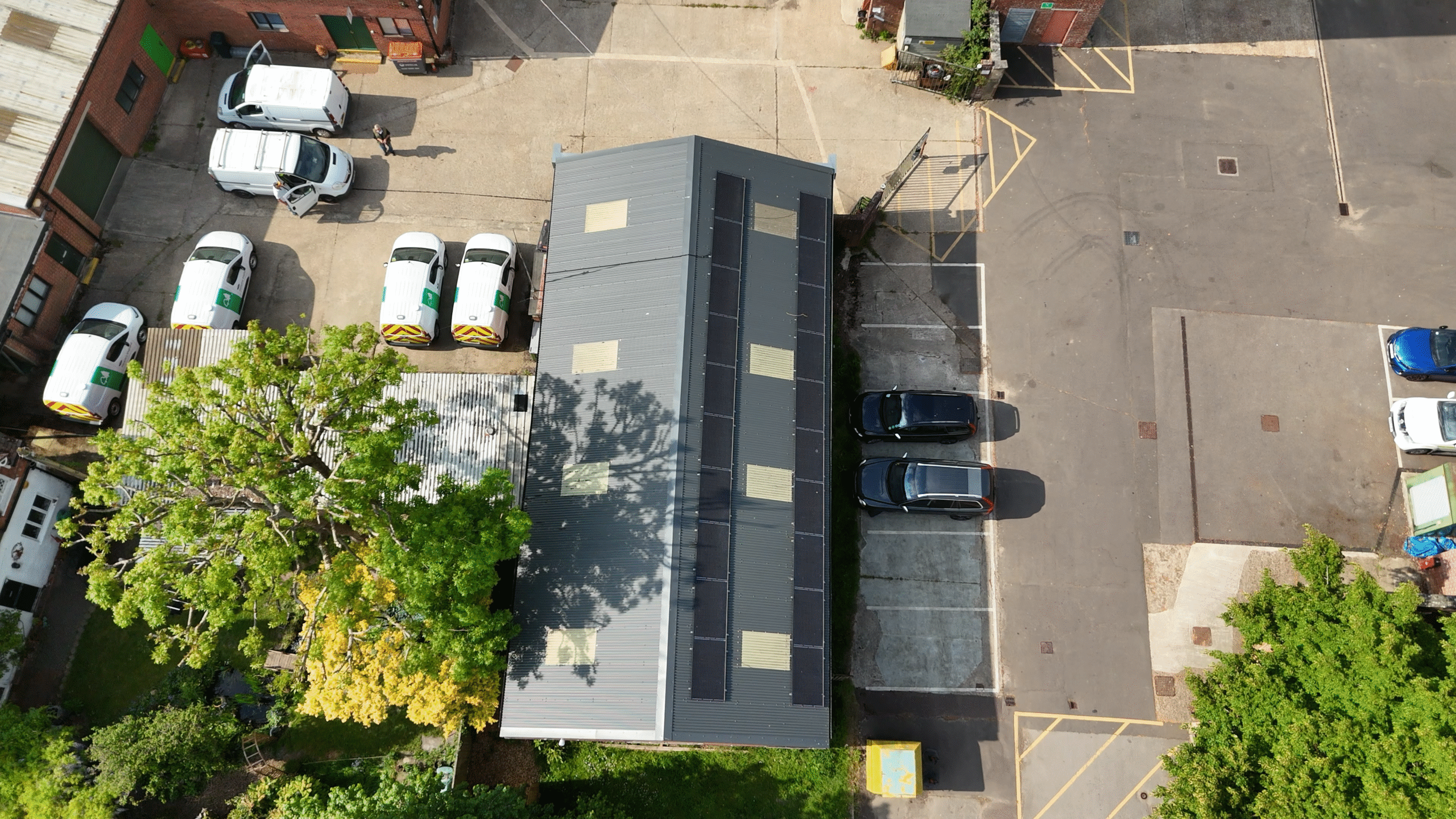
eco flow

Typical Ranges for Different Properties

Every commercial property is unique, but it is possible to provide a sense of scale by looking at typical ranges.

Small offices often have relatively low energy use. A two storey office with a handful of employees using computers, lighting, and basic heating or cooling may only need between 20 and 40 panels. This is often enough to make a meaningful dent in their energy bills while keeping the installation straightforward.

Retail units such as shops, cafes, and restaurants generally consume more power. Lighting, refrigeration, cooking equipment, and air conditioning all add up. Depending on the size and energy profile of the business, these properties may need between 50 and 100 panels to offset a significant portion of their usage.

Warehouses and factories sit at the other end of the scale. Large spaces with high ceilings, powerful lighting, and heavy machinery can consume vast amounts of electricity. It is not unusual for such properties to require several hundred panels spread across expansive roof areas. For some larger industrial sites, the number may even reach into the thousands.

Schools and community centres often fall somewhere in between. Their requirements depend on how many classrooms or halls need power, how many computers are in use, and whether sports facilities or kitchens add to the load. For many, the number of panels ranges from 80 to 200.

These figures are not absolute rules but they illustrate just how much variation exists depending on the type of property and the way it is used.
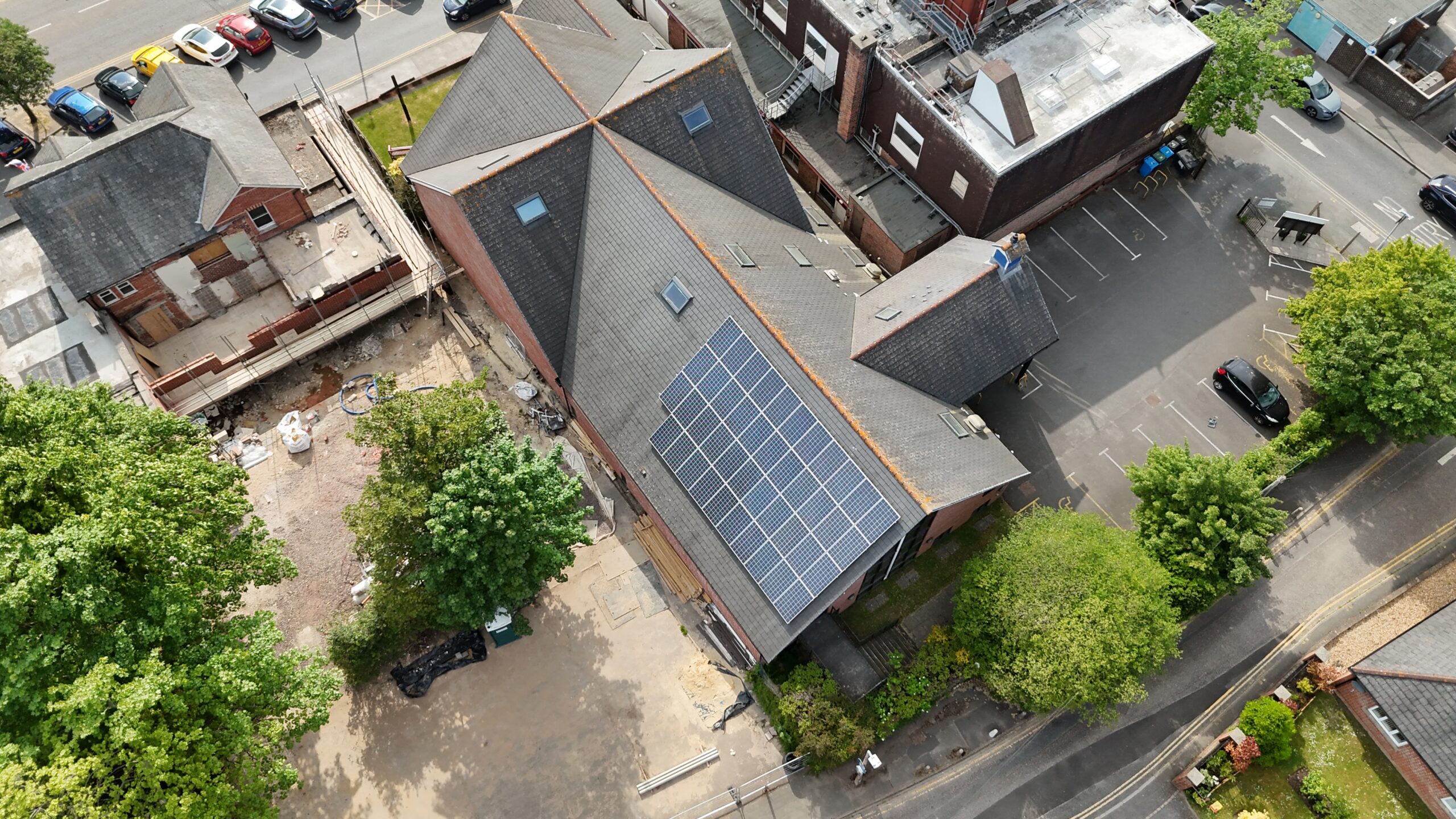
solar storage

Example Scenarios

To make this more tangible, it is helpful to consider a couple of simple scenarios.

Imagine a medium sized warehouse that uses around 100,000 kilowatt hours of electricity each year. A modern solar panel might generate roughly 400 watts. To cover the annual demand of this building, it could require somewhere between 250 and 300 panels, depending on how efficient those panels are and how suitable the roof is.

Now picture a small office building that consumes 20,000 kilowatt hours a year. Using the same type of panels, the system might only need around 50 to 60 units. This is still a sizeable installation but far more manageable and often achievable on a modest roof.

These examples demonstrate why businesses should not rely on rough estimates alone. Actual requirements can change significantly based on site conditions and the specific panels chosen.

Financial Considerations

Investing in a commercial solar system is a major decision, but it is one that pays off in the long term. The initial cost will depend on the number of panels, the type selected, the complexity of the installation, and whether extras such as battery storage are included.

In many cases, businesses achieve a payback period of between six and ten years. After that point, the system continues to generate electricity at very low cost for many years, providing an excellent return on investment.

There are also grants and incentives available that can reduce the upfront cost. Schemes change over time, but many businesses benefit from tax advantages or government backed support for renewable energy. In addition, producing your own power reduces exposure to unpredictable energy price rises, which has become a major concern in recent years.

When comparing the cost of installation against the savings, it is also important to factor in the potential boost to corporate image. Clients, customers, and partners increasingly expect businesses to show their commitment to sustainability, and solar energy is a visible and effective way to do this.
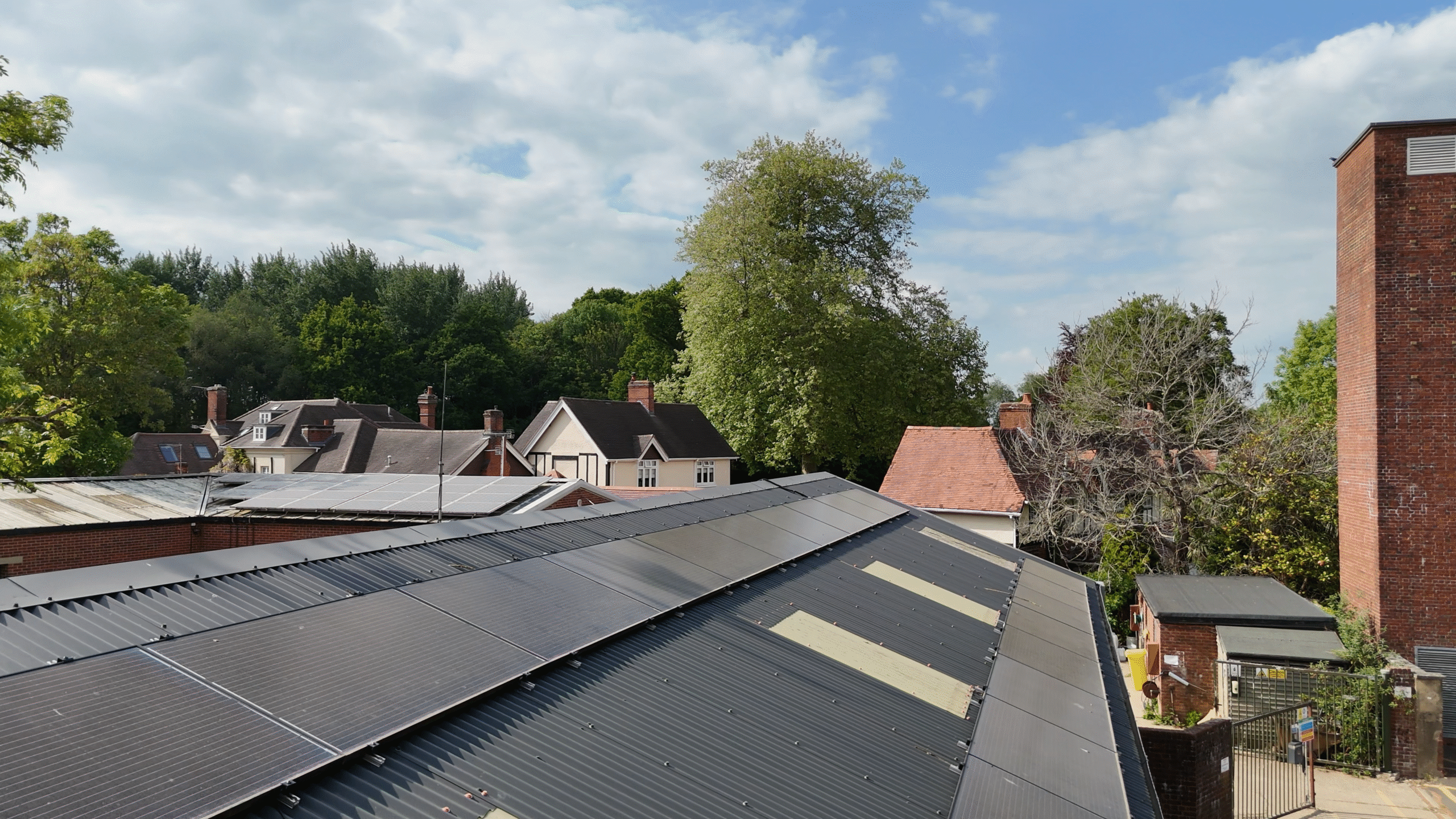
The Role of Modern Technology

The solar industry has advanced rapidly. Modern panels are far more efficient than those available even a decade ago, and new technologies make it easier to tailor systems to commercial needs.

Tesla solar panels and Qcell batteries, for example, offer excellent efficiency and the ability to store surplus electricity for later use. This is particularly valuable for businesses that may not use all their power during the day. With storage, excess energy produced in the afternoon can be used in the evening, reducing reliance on the grid even further.

Monitoring systems also allow businesses to track performance in real time. Managers can see exactly how much energy is being produced and how it is being used, making it easier to manage consumption and identify opportunities for further savings.

Why a Professional Assessment Matters

While rough figures and examples can provide guidance, only a professional assessment can give a truly accurate answer to how many solar panels a commercial building will need.

During an assessment, specialists look at every detail of the property. They examine the roof structure, orientation, shading, and available space. They review past energy bills to understand usage patterns, and they take into account business goals, whether that is maximising savings, reducing carbon output, or both.

The end result is a tailored proposal that sets out how many panels are needed, where they should be placed, how much energy they will generate, and what financial returns can be expected. This removes uncertainty and ensures that the system will deliver the performance the business requires.

The Benefits of Choosing a Local Provider

Selecting a local expert brings additional benefits. A company such as Save Energy UK has a deep understanding of the needs of businesses in Dorset and across the South Coast. They are familiar with the planning considerations, local climate, and the types of buildings in the region.

Working with a local provider also means easier access to ongoing support. Solar panels are low maintenance, but occasional servicing and inspections ensure the system continues to perform at its best. Having a nearby partner makes this process far simpler and provides reassurance that help is never far away.

Building a relationship with a trusted local firm also adds value. Businesses know they can pick up the phone, arrange a site visit, or speak to someone face to face whenever they need advice.
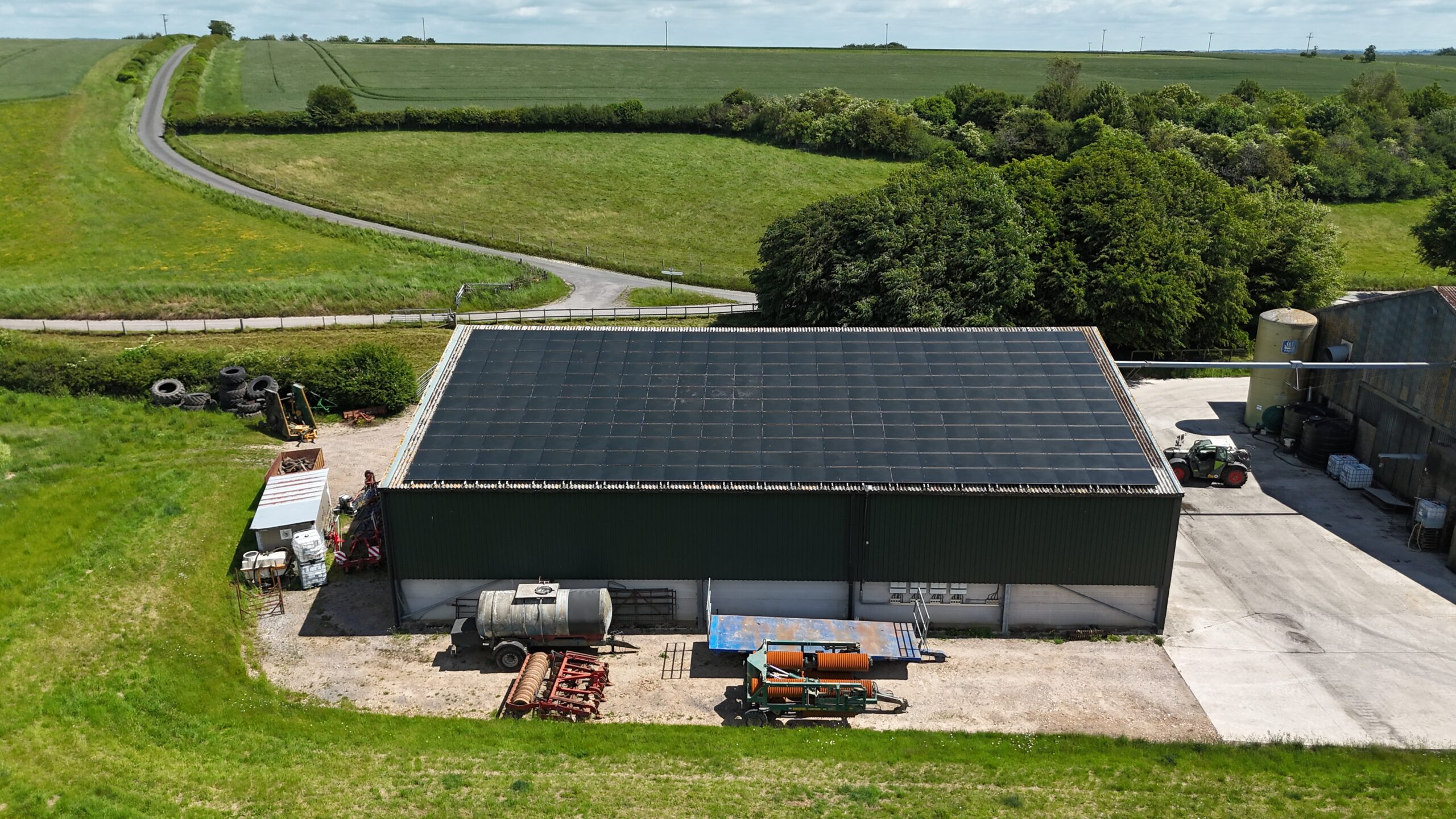
Conclusion

There is no universal answer to the question of how many solar panels a commercial building needs. The figure depends on energy use, roof space, panel efficiency, and the goals of the business. A small office might only need a few dozen panels, while a large warehouse could require several hundred or more.

If your business is based in Bournemouth, Poole, Christchurch or the surrounding area, Save Energy UK can provide the expert advice and professional installation you need. Get in touch today to arrange an assessment and discover how solar panels could transform your energy future.
What Regulations, Permits or Building Rules Apply to Commercial Solar in the UK?

Introduction

Commercial solar is booming in the UK as businesses search for ways to cut energy costs and reduce their carbon footprint. For companies across Dorset and the South Coast, installing solar panels is no longer just a sustainability goal,it’s a financial strategy. But while the benefits are clear, the path to installation is not always straightforward.

Before a single panel goes on your roof, there are rules to understand and approvals to secure. From planning permission to building regulations and grid connection requirements, commercial solar projects must comply with multiple layers of legislation. Knowing what to expect not only saves you time but also ensures your installation is legally compliant and future-proof.

In this guide, we’ll explain the key regulations, permits, and building rules that apply to commercial solar in the UK, so you can approach your project with confidence.

broadstone commercial

Do You Need Planning Permission for Commercial Solar Panels?

The first question most business owners ask is whether they need planning permission. The good news is that many commercial solar panel installations fall under permitted development rights, which allow certain types of work to go ahead without a full planning application.

That said, permitted development comes with conditions:

  • Panels installed on a pitched roof should not extend more than 20 centimetres from the roof surface.

  • On flat roofs, solar panels must not exceed one metre above the roofline.

  • Installations should be set back at least one metre from the roof edge or the ridge.

  • Panels should not be reflective in a way that causes nuisance to nearby properties.

If your building is listed, located in a conservation area, or close to a heritage site, the rules become stricter. In these cases, planning permission is almost always required, regardless of size or placement.

For ground-mounted systems, there are tighter restrictions. Anything covering more than nine square metres or standing taller than four metres usually requires a full planning application.

pro drainage commercial

Building Regulations and Compliance

Even if planning permission is not required, building regulations approval will almost always be necessary. Building regulations ensure that your solar installation is safe, structurally sound, and compliant with national construction standards.

Structural safety

Your roof must be able to handle the additional weight of solar panels, mounting frames, and wind or snow loads. A structural survey is typically carried out before installation. If reinforcement is needed, this work must be completed before panels are fitted.

Electrical safety

All wiring must comply with UK standards, specifically BS 7671 (the wiring regulations). Installers registered with a Competent Persons Scheme can self-certify their work, which speeds up the process. If your installer isn’t registered, you’ll need to arrange for building control officers to inspect and approve the system.

Fire safety and ventilation

Solar panels generate heat, so installations must allow for proper ventilation behind the modules. Materials used should also meet UK fire safety standards to reduce risks.

Key takeaway

Building regulations are there to protect your property and ensure installations are safe. Always use an accredited installer who understands compliance inside and out.

commercial solar panel

Grid Connection and DNO Approval

Commercial solar panels often produce more electricity than a business can use during daylight hours. That surplus energy is exported back to the National Grid. To do this, you need approval from your local Distribution Network Operator (DNO).

  • Smaller systems can usually be connected under simplified processes (known as G98 applications).

  • Larger systems or those with higher export capacities require more detailed G99 applications, which may involve engineering studies.

  • In some cases, the local grid may need upgrades to handle the additional power.

Your installer should handle the application process, but it’s important to confirm they have experience securing DNO approvals, as delays here can hold up your project.

Local Considerations for Dorset and the South Coast

In addition to national regulations, there are often local policies that affect commercial solar projects. Dorset, Hampshire, and surrounding councils may impose extra rules, particularly in conservation areas or coastal locations where visual impact is a concern.

For example, buildings within Areas of Outstanding Natural Beauty (AONB) or National Parks often face stricter planning requirements. Some councils also apply “Article 4 directions,” which remove permitted development rights in certain zones, meaning full planning permission is required even for small projects.

Heritage sites and listed buildings will need extra scrutiny, and in some cases, you may need to commission environmental or archaeological assessments before work can begin.

Step-by-Step Process for Compliance

Here’s a simple roadmap to help business owners stay compliant when installing commercial solar:

  1. Check your property status – Is it listed, in a conservation area, or part of an AONB?

  2. Confirm permitted development rights – Measure distances, projections, and heights against the legal limits.

  3. Arrange a structural survey – Ensure the roof can handle the load safely.

  4. Choose an accredited installer – Preferably one registered with a Competent Persons Scheme.

  5. Apply for grid connection – Submit applications to your DNO as early as possible.

  6. Submit planning approval if needed – Work with your local authority on applications.

  7. Document everything – Keep certificates, permits, and approvals safe for future reference.

Why Compliance Matters

Failing to comply with regulations can have serious consequences. At best, it could delay your project and add unnecessary costs. At worst, you may be ordered to remove the panels altogether. Non-compliant installations can also cause insurance issues and may affect the resale value of your property.

Working with an experienced commercial solar installer ensures you stay on the right side of the law and benefit from a smooth, stress-free installation.

Conclusion

Commercial solar panels are an excellent way for UK businesses to reduce costs and improve sustainability, but the process is more than just choosing panels and booking an installer. From planning permission to building regulations and grid connection, there are multiple approvals to secure along the way.

For businesses in Dorset and across the South Coast, local planning authorities may add extra conditions, especially in heritage or conservation zones. By understanding the rules upfront, you can avoid delays and keep your project on track.

At Save Energy UK, we handle every aspect of compliance for our clients. From structural surveys and planning applications to DNO approvals and building regulation checks, we make sure your project is fully compliant and future-ready. Our team takes the stress out of the process, leaving you free to enjoy the long-term savings and environmental benefits that commercial solar brings.

Ready to explore a commercial solar installation for your business? Get in touch with Save Energy UK today and let’s make your building greener, more efficient, and fully compliant with UK regulations.

How Quickly Can Commercial Solar Pay Back the Investment?

Smart Investments

Switching to commercial solar is one of the smartest investments businesses can make in today’s uncertain energy market. Energy costs are unpredictable, environmental responsibility is more important than ever, and customers are increasingly favouring companies that operate sustainably. For business owners, the key question is not just whether solar panels work, but how quickly they can pay for themselves.

The good news is that commercial solar installations in the UK are proving to be more cost effective than many expect. Payback periods are becoming shorter thanks to government incentives, better technology, and high energy prices that make solar savings stand out even more. Let’s take a closer look at what affects the timeline and why more companies in areas like Bournemouth, Poole, and Christchurch are making the switch.

Understanding the Costs of Commercial Solar

The initial investment is often the biggest hurdle for business owners considering solar. On average, the cost of a medium sized commercial solar installation in the UK can range between £40,000 and £80,000, although larger projects can easily exceed this.

Several factors influence these figures:

  • System size – The larger the system, the higher the upfront cost, but also the greater the potential savings.

  • Panel quality – Premium solutions such as Tesla solar panels tend to cost more initially, but they deliver higher efficiency and longer lifespans, which often leads to faster payback.

  • Battery storage – Adding a Qcell battery increases upfront spend but allows energy to be stored and used later, improving overall savings.

  • Installation complexity – Roof type, building design, and accessibility all affect installation costs.

Although the cost may seem high at first glance, businesses should look at solar as an asset rather than an expense. With panels lasting 25 years or more, the upfront investment is quickly outweighed by decades of lower bills and potential income from selling excess energy back to the grid.

Average Payback Periods in the UK

So how long does it really take to see a return? The answer varies, but most commercial solar systems in the UK achieve payback within five to ten years. Some even break even much faster, especially in energy intensive industries or when premium panels and storage solutions are used.

The timeframe depends on several key variables:

  1. Energy consumption levels – Businesses that use more electricity during daylight hours save more because their solar generation directly offsets their grid usage.

  2. Electricity costs – With grid prices rising sharply in recent years, savings from solar are more dramatic than ever. Higher costs mean faster returns.

  3. System efficiency – Panels from leading brands such as Tesla deliver more electricity per square metre, which speeds up the payback.

  4. Government incentives – Using schemes like the Smart Export Guarantee shortens the timeline by turning excess electricity into income.

For businesses spending several thousand pounds per month on electricity, it is not uncommon to see payback in as little as four to six years. This makes commercial solar one of the most reliable investments available today.

UK Government Incentives and Schemes

One of the biggest reasons solar is so attractive for UK businesses is the support available through government backed initiatives.

  • Smart Export Guarantee (SEG): This allows companies to earn money by selling unused electricity back to the grid. Rates vary depending on the supplier, but this steady stream of income reduces the payback period.

  • Tax allowances: Solar installations can qualify for capital allowances, enabling businesses to offset some of the costs against taxable profits. This can result in significant savings, particularly for larger systems.

  • Local grants: Certain councils and regional programmes across the South Coast provide additional support for renewable projects, giving businesses another way to lower upfront costs.

By combining these incentives with energy savings, businesses create multiple income streams that all contribute to a faster return on investment.

Energy Savings and Long Term ROI

The most immediate benefit of solar is the reduction in monthly energy bills. A well designed system can cut grid usage by half or more, leading to substantial savings every year.

For example, consider a company currently spending £2,000 per month on electricity. By installing a tailored commercial solar system, they could reduce this to around £600 to £800 per month. That is a saving of £1,200 to £1,400 every single month. Over the course of a year, that equals £15,000 to £17,000 in savings.

When projected over ten years, the total savings could reach well over £150,000. Once the system has paid for itself, those savings continue, effectively turning solar panels into a profit generating asset. This is why commercial solar is often considered a long term wealth building strategy, not just an environmental upgrade.

The Role of Solar Storage

Battery storage adds another layer of efficiency. A Qcell battery, for example, enables businesses to store excess power generated during sunny hours and use it later in the day or overnight. This reduces reliance on the grid even further.

For many businesses, energy use peaks in the evening when solar generation is lower. Without a battery, this would still require purchasing power from the grid. With storage, companies can use their own electricity instead, maximising self sufficiency.

While adding a battery increases the upfront cost, it often reduces the overall payback period because the system captures a higher percentage of the business’s total energy needs. It also provides protection against rising electricity prices, giving companies more stability in their budgeting.

Why Premium Panels Make a Difference

It is tempting to cut costs by choosing cheaper panels, but in reality, premium products like Tesla solar panels offer far better value in the long run. High performance panels generate more power, even in low light conditions, and are designed to last for decades with minimal maintenance.

This means that although the initial investment is higher, the total amount of electricity produced across the panel’s lifespan is significantly greater. For businesses, this translates into faster payback and more reliable long term savings.

In addition, using top tier products enhances a company’s sustainability image. Customers and clients increasingly value businesses that choose quality and invest in the best available renewable solutions.

Environmental and Business Benefits Beyond ROI

While financial savings are a major driver, the non financial benefits of solar should not be overlooked.

  • Stronger sustainability credentials: Many customers actively prefer to buy from eco friendly companies. Solar installations demonstrate a clear commitment to reducing carbon emissions.

  • Energy independence: Producing your own electricity reduces reliance on the grid and shields your business from unpredictable energy price rises.

  • Improved property value: Buildings with solar installations are often valued more highly because of their lower running costs.

  • Reputation and employee pride: Both customers and staff respect businesses that take sustainability seriously, which can improve brand loyalty and workplace morale.

These advantages contribute to long term growth and competitiveness, making solar more than just an energy strategy. It becomes part of a company’s identity and reputation.

Commercial Solar on the South Coast

In regions like Bournemouth, Poole, and Christchurch, more businesses are embracing solar as part of their growth strategies. The South Coast benefits from reliable sunlight levels, forward thinking councils, and strong support from experienced solar companies near them.

By choosing local providers such as Save Energy UK, businesses benefit from tailored advice, professional installation, and ongoing support. This ensures that the system is not only efficient but also designed to meet specific energy needs.

Whether a small retail unit or a large manufacturing facility, companies across the South Coast are proving that solar is both financially sound and environmentally responsible.

eco flow

Key Statistics for UK Businesses

  • Businesses with commercial solar often recover their investment within six to eight years.

  • The Smart Export Guarantee allows companies to earn between 3 and 7 pence per kWh exported to the grid.

  • Solar panels can reduce commercial energy costs by up to 70 percent.

  • Property values may increase by around 4 percent when solar is installed.

  • Premium panels such as Tesla and advanced storage like Qcell batteries extend the system lifespan and maximise ROI.

These statistics confirm that solar is no longer an experimental idea. It is a proven solution delivering measurable financial and environmental returns.

Is Commercial Solar Worth the Investment?

For UK businesses, the decision to go solar is not just about protecting the environment. It is about protecting profits and securing long term stability. With average payback periods of five to ten years and rising energy prices making savings more significant than ever, the case for solar is undeniable.

By combining government incentives, premium panels such as Tesla solar panels, and storage options like Qcell batteries, businesses in Bournemouth, Poole, Christchurch, and beyond can enjoy rapid returns and lasting benefits.

If you want to reduce your energy bills, strengthen your green credentials, and make a smart investment for the future, contact Save Energy UK today. Our expert team will design and install a system that maximises savings and delivers reliable results for your business.

Is Commercial Solar Worth It for Small Businesses?

The short answer: yes, if you care about costs and customers

If you run a shop, café, salon, office or workshop, commercial solar is one of the few improvements that genuinely helps both your bottom line and your reputation. Energy prices may jump up and down, but your panels will steadily generate electricity every day for decades. At the same time, more and more customers are choosing to spend their money with businesses that show they care about sustainability. For many small businesses here in Dorset and along the South Coast, that combination makes solar a very sensible investment.

Why so many small businesses are choosing solar

The first reason is obvious: lower bills. Daytime electricity use can be a big drain on your profit margins, and solar takes the sting out of it. Even a modest system can cover a surprising amount of your daytime usage, meaning you buy less power from the grid and keep more money in your business.

The second reason is less about money and more about perception. When customers see solar panels on your roof, they know you’re not just talking about sustainability you’re actually doing something about it. It’s a message that keeps working in the background, day after day.

Staff also notice. People increasingly want to work for businesses that reflect their values. A solar system is something they can point to and feel proud of. That sense of pride makes a difference when you’re trying to build a strong, committed team.

Finally, solar gives you some peace of mind in a world where energy prices are unpredictable. You can’t control the market, but you can control how much you rely on it. Having your own supply gives you stability, which is a huge help when you’re trying to plan ahead.

But does it really work in the UK?

Yes, it does. We don’t need Mediterranean weather to make solar worthwhile. Businesses in Dorset see good results because most of the power is used during the day when the sun is out. Panels actually perform well in cooler temperatures, and we get long daylight hours in spring and summer, which adds up to a solid yearly return.

What a typical system looks like

Every building and business is different, but most small companies in our area end up with a system somewhere between 4 kWp and 30 kWp. That might sound technical, but in practice it means anything from about 10 panels on a shop roof to 70 panels on a larger unit.

The key is to start with your energy usage, not the number of panels. We look at your bills and usage patterns, then design a system that will cover as much of your daytime demand as possible. You get the best value when you’re using the energy yourself rather than exporting it. Batteries can make sense if you open early or stay open late, but they’re not always necessary. And if you’re thinking about EV charging, solar is the perfect partner.

The financial picture

Solar is an investment. It requires upfront spending, but unlike many other costs in business, this one works for you year after year. Many owners finance their system, which spreads the cost while the panels are already cutting bills.

Instead of obsessing over a single “payback year,” it’s often better to look at whether your savings and any finance payments balance out positively from the start. For many businesses, they do. And because systems last 20 to 25 years or more, the long-term benefits far outweigh the initial outlay.

It’s also worth checking with your accountant, because there are potential tax benefits and capital allowances that can improve the financial case further.

The environmental and brand value

The eco side of solar is where your business can really stand out. By switching part of your power to renewables, you immediately cut your carbon footprint. That’s something you can confidently share with customers, staff and even in tender documents if you bid for contracts.

This isn’t about greenwash. It’s about being able to point at your building and say, “We generate our own clean energy.” People trust that because they can see it. A few good photos on your website or social media, paired with a short explanation of what your panels generate each year, is enough to make your sustainability story very real.

solar panel installation in dorset

Concerns you might have

Some owners worry their roof is too small or awkward. In reality, modern high-efficiency panels can make good use of limited space, and even a small array can make a noticeable dent in your bills.

Maintenance is minimal. There are no moving parts on the roof, and aside from a quick annual check and the occasional clean, there’s not much to do.

Aesthetics are another concern, but modern all-black panels look neat and discreet. Most people hardly notice them once they’re in place.

And yes, panels still generate on cloudy days. You won’t get full output, but they will keep producing electricity, and over the course of the year those cloudy days are already accounted for in the figures we show you.

What you can expect with Save Energy UK

When you contact us, we’ll arrange a straightforward site survey. That means we’ll look at your roof, shading, your electrical setup and, most importantly, your energy use.

From there, you’ll get a clear proposal that shows how much energy the system should generate, how much of it you’re likely to use, what your bills could look like afterwards, and how the finances stack up. We won’t drown you in jargon just the numbers you actually need.

If you go ahead, installation is quick and tidy, usually just a few days. We’ll work around your business hours as much as possible to avoid disruption. After that, you’ll have access to easy monitoring and our support if you ever need it.

solar panel installation dorset

Why Dorset businesses in particular should consider it

Our coastal conditions are no problem for solar. We use corrosion-resistant fixings and systems designed to withstand local weather. If you’re in a conservation area or Area of Outstanding Natural Beauty, we’ll guide you through the planning process to keep it smooth and stress-free.

And because we’re local, you’re not dealing with a faceless national call centre. We’re close by, and we know the area. That means fast surveys, efficient installs and ongoing support whenever you need it.

How to decide quickly

If you’re wondering whether solar makes sense for your business, grab your last few energy bills and think about how much of your use happens during the day. If the answer is “quite a lot,” you’re probably a good candidate.

Look at your roof and imagine how many panels might fit comfortably. Then give us a call. Within a short conversation and a free assessment, you’ll have a solid idea of whether solar is a smart move for you.

Making the most of your system

Once your panels are up, you can get even more value by shifting a few flexible tasks into daylight hours. Things like dishwashers, washing machines or charging tools can be timed to use your own solar energy.

If you run electric vehicles, pairing them with solar makes perfect sense. And don’t forget to tell your story. A simple “Powered by Solar” sticker in your window or a post on your website can do wonders for how customers see you.

FAQs

How long do solar panels last?
Most panels come with a 25-year performance warranty and will keep producing long after that.

What happens if we move?
A solar system can actually add value to your premises, making it more attractive to future tenants or buyers.

Do panels clean themselves?
Rain usually does a good job, but a periodic professional clean will keep them working at their best.

Can I add to the system later?
Yes, many setups can be expanded if your needs grow.

commercial solar installation in poole

The bottom line

For small businesses in Dorset and the South Coast, commercial solar is more than just a way to cut bills. It’s a long-term commitment to stability, sustainability and a stronger brand. Customers notice it, staff value it, and your accounts benefit from it.

If you’re curious about whether solar could work for your business, Save Energy UK is here to help. We’ll give you a free, no-obligation assessment with clear numbers and honest advice, so you can make the decision with confidence.

Ready to explore your options? Get in touch with Save Energy UK today.

Havant Borough Council’s Strategy

Havant Rugby Football Club

The rugby football club as operated in Havant for 74 years. Due to rising electricity costs, as a result of the development of the clubhouse as the main source of revenue, the organisation needed to find a reliable energy solution. Gordon Brember, Head of Facilities, took the time to share the organisation’s experience of why a sustainable investment was important for business.

The Club’s Investment

Although the club has installed various interventions over time, solar panel installation became the best solution to “take away the pain of the price increases”, according to Gordon.

The full installation of solar panels and battery storage was just under £25k, working closely with Save Energy UK to ensure the best package was chosen. A total of 56 solar panels have been installed on the grandstand roof at the club.

The Savings

The longer term investment is what the club is aiming for, recognising that the initial energy costs saved will pay off the higher purchase loan that was secured with the support of Save Energy UK. With a number of rising costs, like many other organisations in hospitality, Gordon shared that releasing the capital funding to finance the installation would have been a challenge.

The costs saved will pay off the loan and contribute to the organisation running over a 5-year period. Following the initial 5 years, the expectation is to see an estimated 20% savings on electricity costs.

The Club’s Advice to Others

“Do your homework and build a prediction model. We looked at our hourly usage in detail.”

“We are a hospitality business that supports a rugby club in essence. Hospitality has many challenges and we have to keep improvements to stand still.” Gordon added, “Installation of Solar PV and savings plays a role in the overall business.”

How to Power Your Business Sustainably with Qcells and Tesla Panels

Commercial Solar Installation

As businesses across Dorset face increasing energy costs and growing pressure to reduce their carbon footprint, commercial solar installation has become a smart and sustainable solution. At Save Energy UK, we specialise in guiding businesses through the transition to clean energy, using premium technologies like Qcells solar panels, Qcells batteries, and Tesla solar systems.

In this post, we’ll explore how these advanced products can future-proof your commercial property, reduce energy bills, and elevate your sustainability credentials.

Why Commercial Solar Makes Sense for Dorset Businesses

The shift to renewable energy isn’t just about saving the planet,it’s about securing your bottom line.

  • Lower Operational Costs: Solar power drastically cuts monthly utility bills. Dorset businesses benefit from abundant daylight, making solar a particularly effective investment.

  • Government Incentives: Schemes like the Smart Export Guarantee (SEG) allow you to earn money for surplus energy sent back to the grid.

  • Sustainability Goals: Companies that go solar demonstrate their commitment to corporate social responsibility, appealing to eco-conscious customers and investors.

According to the Carbon Trust, UK businesses could save up to 20% on their energy bills by implementing energy efficiency measures like solar.

solar panels

Qcells: A Global Leader in Commercial Solar Technology

When it comes to quality and performance, Qcells is one of the most trusted names in the solar industry. Here’s why businesses in Dorset are choosing Qcells solar panels and batteries:

Cutting-Edge Technology

Qcells panels use Q.ANTUM DUO technology, which increases efficiency even in low light. Perfect for Dorset’s occasionally cloudy skies.

Battery Storage for 24/7 Power

Pairing your solar panels with a Qcells battery allows you to store excess energy for use at night or during power cuts.

  • Popular Models: Q.HOME+ ESS HYB-G3 and the Q.HOME CORE H5

  • Battery Capacity: Ranges from 6.6kWh to over 20kWh

These systems consistently receive high marks in solar battery reviews, praised for their durability, smart energy management, and quiet operation.

solar panel installation

Performance Guarantee

Qcells offers 25-year product and performance warranties,a testament to the brand’s confidence in its products.

Tesla Solar: Smart, Sleek, and Sustainable

Another market leader, Tesla, offers cutting-edge solutions with sleek design and seamless integration:

Tesla Powerwall 2

  • Storage Capacity: 13.5kWh per unit

  • Features: Real-time energy monitoring, backup power during outages, and app-based controls

  • Scalability: Easily expandable for large commercial needs

Tesla’s battery is consistently ranked in top solar battery comparison charts for its intuitive technology and long-lasting performance.

Tesla Solar Inverters

Tesla’s solar inverters work efficiently with both Tesla and Qcells panels, offering high efficiency (up to 97.5%) and reliable grid connectivity.

tesla solar panels

Qcells vs. Tesla: A Solar Battery Comparison

Feature Qcells Battery Tesla Powerwall 2
Capacity 6.6–20kWh+ 13.5kWh
Warranty 10–25 years 10 years
Remote Monitoring Yes Yes
Integration with Smart Homes Moderate Excellent
Price Range Competitive Premium

Installation Process for Dorset Businesses

At Save Energy UK, we ensure a smooth and stress-free installation process:

  1. Site Survey – We evaluate your building’s roof space, orientation, and electrical infrastructure.

  2. Custom System Design – Our engineers design a system that suits your energy needs and budget.

  3. Installation – We handle all permits, grid connections, and setup using certified installers.

  4. Ongoing Support – Post-installation monitoring and maintenance packages are available.

Financial ROI: What Dorset Businesses Can Expect

Investing in a commercial solar system pays for itself within 5–7 years in most cases.

  • Annual Savings: £2,000–£10,000 depending on system size

  • Tax Benefits: Claim capital allowances and reduce taxable profits

  • Increased Property Value: Solar-equipped properties are more attractive to tenants and buyers

commercial solar panel

Real-World Example: Dorset-Based Business Goes Solar

One local business in Bournemouth recently installed a 50kW Qcells system paired with Tesla Powerwalls. In the first year alone, they reduced their energy bills by 60% and received over £1,200 from SEG payments.

Why Choose Save Energy UK?

With years of experience serving Dorset and the surrounding areas, we understand the unique needs of local businesses.

  • Authorised Qcells and Tesla Installer

  • Local Expertise with National Standards

  • Bespoke Design for Commercial Needs

  • Reliable Aftercare and Support

Whether you need a Qcells solar battery, a Tesla Powerwall, or a full installation from start to finish, Save Energy UK is your trusted partner.

commercial solar panel

Conclusion: Power Your Business with Confidence

Commercial solar installation isn’t just a trend,it’s a long-term investment in energy independence, financial stability, and environmental responsibility. With cutting-edge options like Qcells batteries, Qcells solar panels, and Tesla Powerwalls, Dorset businesses can power forward sustainably.

Ready to make the switch?

Call Save Energy UK today or visit our website to book a free commercial energy consultation.

The Social Impact of Commercial Solar Panel Installations in the South Coast

The Power of Solar Panel Installations

As the climate crisis accelerates and energy bills soar, the move towards renewable energy sources like solar power has never been more urgent. But beyond environmental and economic advantages, there’s another dimension worth exploring, the social impact of solar energy. For businesses and communities across Dorset and the South Coast, solar panel installations isn’t just a savvy financial move, it’s a step towards social responsibility, empowerment, and long-term resilience.

When people ask, “What is the social impact of solar energy?”, the answer extends far beyond reduced carbon footprints. The social impacts of solar energy include:

  • Increased energy independence

  • Job creation and skills development

  • Enhanced community engagement

  • Reduction in fuel poverty

  • Better public health outcomes

These solar energy social benefits contribute to stronger, more connected, and more sustainable communities.

solar panel

Boosting Local Economies Through Clean Technology

Save Energy UK Ltd plays a vital role in stimulating local economies by enabling businesses to adopt commercial solar panel installations. Dorset has seen a rise in hybrid solar PV and solar panel installations and wind hybrid system setups, thanks to government incentives and rising eco-awareness.

According to a study by Solar Energy UK, over 13,000 people are now employed in the solar industry nationwide, a number expected to double by 2030. Many of these jobs are in installation, maintenance, and system design. In areas like Poole and Bournemouth, local employment has surged with the deployment of hybrid solar solutions UK.

Tackling Energy Poverty with Technology

One of the most significant social impacts of solar panels is their ability to alleviate fuel poverty. By lowering operational costs for commercial properties, especially housing associations, community centres, and schools, savings can be redirected to services that benefit vulnerable residents.

Save Energy UK installs systems like the Duracell Dura5, a highly efficient Duracell home battery that stores surplus energy for use when the sun isn’t shining. These battery systems are game-changers for managing energy demand and promoting energy equality.

Duracell Dura5 Review Summary:
The Dura5 is a high-capacity, long-life lithium battery praised for its efficiency and seamless integration with existing PV systems. Customers appreciate its smart technology and robust design, ideal for both homes and businesses.

Duracell Dura5

Community Empowerment and Engagement

Solar panel installations and wind hybrid systems on commercial buildings like local halls, gyms, and shops provides not only energy independence but also a tangible symbol of sustainability. These installations often spark educational opportunities, fostering a culture of environmental stewardship among residents.

In 2024, a partnership between Save Energy UK and a local Dorset secondary school led to the installation of a hybrid PV solar system. Not only did this reduce school energy costs by 60%, but it also became a teaching resource for science classes, demonstrating the real-world application of renewable technologies.

Environmental Health and Social Wellbeing

Solar energy directly contributes to cleaner air, which benefits public health. A report by Public Health England found that areas with lower air pollution saw a measurable decrease in respiratory diseases and hospital admissions.

By replacing fossil fuel energy sources, hybrid solar wind systems help cut down harmful emissions, making the South Coast a healthier place to live and work. These benefits are especially impactful for vulnerable groups like children and the elderly.

Socially Responsible Business Leadership

Forward-thinking businesses in Dorset understand that saving energy UK isn’t just about reducing overheads, it’s about leadership. Companies that embrace solar energy social impact are seen as responsible, ethical, and future-focused. They attract eco-conscious customers, foster community trust, and often qualify for green certifications and incentives.

By installing hybrid solar panels, businesses not only benefit themselves but also help build a legacy of sustainability and care.

Why Choose Save Energy UK?

Save Energy UK Ltd specialises in hybrid solar solutions UK, combining solar PV and wind technologies with smart battery systems like the Duracell Dura5. Our team is deeply rooted in Dorset, with extensive knowledge of local building codes, weather patterns, and energy needs.

Our commercial solar solutions are tailored for:

  • Schools and colleges

  • Hospitality venues

  • Office buildings

  • Agricultural sites

  • Retail parks

We pride ourselves on delivering reliable, cost-effective, and community-focused solar systems that not only power buildings but empower people.

Lighting the Way to a Better Future: Solar Panel Installations

The social impact of solar energy reaches far beyond kilowatts and energy savings. From job creation and health improvements to educational empowerment and climate resilience, the solar power social impact is transforming the South Coast for the better.

Whether you’re a business owner, property manager, or community leader, investing in solar means investing in your community’s future.

Don’t just reduce your bills, help build a better world.

Call Save Energy UK Ltd today to explore our commercial solar panel packages, including the advanced Duracell home battery and hybrid solar PV systems.

Serving all of Dorset and the South Coast.

Qcells + Tesla + Duracell: The Future of Commercial Solar Panel Installation on the South Coast

Harnessing Solar Power for a Sustainable Future

The South Coast of the UK, especially vibrant regions like Dorset, is witnessing a revolution in renewable energy adoption. As energy prices fluctuate and sustainability becomes a critical business goal, commercial property owners are increasingly turning to solar solutions to future-proof their operations. In this dynamic landscape, the combined power of Qcells, Tesla Solar Panels, and Duracell is setting a new benchmark for efficient, reliable, and scalable commercial solar installations.

This blog will explore why Qcells, Tesla, and Duracell are emerging as a game-changing trio for commercial solar panel systems in the South Coast. With the integration of Tesla Powerwall, Qcells’ high-efficiency solar panels, and Duracell’s advanced battery solutions, businesses can achieve energy independence while significantly reducing their carbon footprint.

Why the South Coast is Ripe for Solar Power Adoption

The South Coast, particularly in areas like Dorset, benefits from ample sunlight hours and strong local government support for renewable energy projects. According to the UK Solar Trade Association, the South Coast receives more than 1,200 kilowatt-hours per square metre annually, making it an ideal location for solar panel installation. Local councils are also offering incentives and grants for businesses that invest in renewable energy, positioning solar as both an environmentally and financially savvy choice.

Qcells: High-Efficiency Solar Panels for Commercial Properties

Qcells, a global leader in photovoltaic technology, offers solar panels that deliver exceptional performance and reliability. Their Q.ANTUM technology maximises efficiency even under low-light conditions, which is particularly valuable during the shorter winter days typical of the UK.

Key features include:

  • High module efficiency (up to 21.1%) – perfect for maximising roof space.

  • Long-term durability – resistant to temperature variations and humidity.

  • Positive power tolerance – ensures each module produces at least its nominal power.

According to Solar Power World, Qcells’ innovations consistently rank among the top-performing modules in commercial solar projects worldwide. Their compatibility with systems like Tesla Solar ensures a seamless integration for businesses seeking robust, scalable solar solutions.

Tesla: Revolutionising Solar Energy Storage and Management

Tesla Solar Panels and Tesla Powerwall have revolutionised the way businesses think about energy storage and independence. Tesla’s cutting-edge technology, including their solar panels, solar roof systems, and Powerwall, offers an integrated solution that maximises energy capture and storage.

Benefits of Tesla’s system include:

  • Tesla Powerwall: A high-capacity energy storage system that ensures continuous power supply, even during grid outages.

  • Advanced monitoring and control: Through the Tesla app, businesses can track energy production and consumption in real time.

  • Sleek design: Tesla’s solar panels seamlessly integrate with existing commercial properties for a clean, modern aesthetic.

According to EnergySage, businesses that combine Tesla solar panels UK and Powerwall systems can reduce their energy bills by up to 60% annually, while gaining independence from volatile energy markets.

Duracell: Reliable Backup Power for Business Continuity

Duracell, a trusted name in battery technology, is making a major impact in the commercial solar energy space. Their advanced battery systems provide reliable backup power, ensuring uninterrupted operations even during extended outages or peak demand periods.

Highlights of Duracell’s commercial energy solutions include:

  • Scalable battery storage: Tailored for large-scale commercial and industrial applications.

  • Smart energy management: Enables businesses to optimise energy use and reduce reliance on the grid.

  • Proven performance: Duracell’s systems integrate seamlessly with Qcells and Tesla Solar UK systems for a comprehensive solution.

A report from Renewable Energy World highlights how Duracell’s solutions have empowered UK businesses to safeguard critical operations during power disruptions, while also enabling demand charge reduction.

Why Qcells + Tesla + Duracell is the Ultimate Commercial Solar Solution

Individually, Qcells, Tesla Solar Panels, and Duracell offer compelling benefits for businesses seeking to transition to renewable energy. Together, they create a comprehensive ecosystem that addresses:

  • Energy generation (Qcells’ high-efficiency solar panels).

  • Energy storage and management (Tesla Powerwall and Tesla Solar System).

  • Backup power reliability (Duracell’s robust battery technology).

For businesses on the South Coast, this trio offers a powerful path to energy independence, cost savings, and environmental leadership.

Future-Proof Your Business with Save Energy UK

The future of commercial solar panel installation on the South Coast is bright, thanks to the synergy between Qcells, Tesla, and Duracell. Whether you’re a property owner in Dorset or managing a large commercial facility, investing in this integrated solar solution can drive significant savings, enhance energy reliability, and reduce your carbon footprint.

At Save Energy UK, we’re ready to help your business embrace the future of energy. Our expert team provides comprehensive consultation, design, and installation services tailored to your unique needs.

Call us today or fill out our online form to schedule your free consultation. Let’s work together to power your business with clean, renewable energy!

Hybrid Power Systems for Business

The Ultimate Guide to Energy Independence

Introduction

In today’s rapidly evolving energy landscape, businesses are increasingly seeking sustainable and cost-effective solutions to meet their power needs. Hybrid power systems, which combine renewable energy sources like solar and wind with traditional power generation methods, have emerged as a compelling option for achieving energy independence.

This comprehensive guide explores the benefits, components, and considerations of implementing hybrid power systems for businesses, particularly those located along the UK’s South Coast.

What is a Hybrid Power System?

A hybrid power system integrates multiple energy sources to provide a reliable and efficient power supply. Typically, these systems combine:

  • Solar photovoltaic (PV) panels
  • Wind turbines
  • Battery storage systems
  • Traditional backup generators (in some cases)

The synergy between solar and wind energy is particularly effective, as these sources often complement each other, solar panels generate electricity during sunny days, while wind turbines can operate both day and night, regardless of sunlight.

Key Benefits of Hybrid Power Systems for Businesses

1. Energy Security & Reliability

Hybrid systems reduce dependence on the national grid, ensuring a continuous power supply even during outages. Businesses can operate smoothly without worrying about disruptions.

2. Cost Savings

By integrating solar and wind hybrid systems, businesses can reduce their reliance on expensive fossil fuels and lower electricity bills. Government incentives and subsidies further enhance financial savings.

3. Environmental Sustainability

Hybrid wind and solar electric systems significantly reduce carbon emissions by leveraging clean energy. This aligns businesses with global sustainability goals and enhances their green credentials.

4. Scalability & Flexibility

Hybrid solar systems UK can be customised to meet the specific energy demands of businesses. As needs grow, additional solar panels, wind turbines, or battery storage can be integrated seamlessly.

Essential Components of a Hybrid Power System

1. Solar Photovoltaic (PV) Panels

These panels convert sunlight into electricity and are most effective during daylight hours. Advances in PV technology have increased efficiency and reduced costs, making solar energy a viable option for businesses.

2. Wind Turbines

Wind turbines harness wind energy to generate electricity, complementing solar energy production. Solar and wind hybrid systems for home UK and businesses are particularly effective in locations with steady wind conditions.

3. Hybrid Solar Battery System

Battery storage ensures that excess energy generated by hybrid solar panels during peak sunlight or wind conditions is stored for later use. This enhances energy independence and efficiency.

4. Inverters & Control Systems

Inverters convert direct current (DC) produced by solar panels and wind turbines into alternating current (AC) for business operations. Advanced control systems manage power distribution, optimising efficiency and performance.

Key Considerations Before Investing in a Hybrid System

1. Initial Investment Costs

While hybrid solar systems UK offer long-term savings, upfront installation costs can be significant. However, businesses can explore government incentives and financing options to offset expenses.

2. Site Assessment & Feasibility

A professional assessment determines the feasibility of solar and wind hybrid systems based on factors like available space, wind speeds, and sunlight exposure.

3. Maintenance & Upkeep

Regular maintenance ensures optimal performance and longevity of hybrid solar panels and wind turbines. Partnering with reputable energy solution providers ensures hassle-free system upkeep.

4. Regulatory Compliance

Businesses must ensure that their solar wind hybrid systems comply with UK energy regulations. Working with accredited energy companies simplifies the approval process.

Conclusion

Hybrid power systems are the future of sustainable business energy. By combining solar panels, wind turbines, and battery storage, businesses can achieve energy independence, cost savings, and environmental sustainability.

Are you ready to future-proof your business with hybrid solar solutions? Contact Save Energy UK today for expert guidance on implementing a solar and wind hybrid system tailored to your needs.

Call us now or visit our website to get started!

Why Businesses in Bournemouth Are Investing in Solar Panels

The Financial Benefits of Solar Panels for Businesses

With rising energy costs and an increasing focus on sustainability, businesses in Bournemouth are turning to solar panels as a reliable, cost-effective energy solution. The push for renewable energy has never been stronger, with UK government incentives and technological advancements making solar panels a viable option for commercial properties. Investing in solar panels not only helps businesses save on energy bills but also reduces their carbon footprint, making them more environmentally responsible.

In this article, we will explore why businesses in Bournemouth are choosing solar energy, backed by authoritative sources and real-world benefits. We will also highlight how Save Energy UK can help companies transition to greener, more energy-efficient solutions.

Cutting Energy Costs and Increasing Profit Margins

Energy prices have been on the rise, impacting businesses across all industries. By installing solar panels in Bournemouth, businesses can generate their own electricity, significantly reducing their reliance on the National Grid. According to the Energy Saving Trust, solar panels can cut electricity bills by up to 70% for commercial properties.

Additionally, businesses investing in solar panels with Tesla Powerwall can store excess energy and use it during peak hours, further increasing savings. Tesla Powerwall UK solutions are designed to provide seamless energy storage, making renewable energy even more practical.

Government Incentives and Tax Benefits

The UK government provides various incentives to encourage the adoption of renewable energy. Through schemes like the Smart Export Guarantee (SEG), businesses that generate surplus solar energy can sell it back to the grid, earning extra income. Companies investing in solar panels may also benefit from capital allowances, reducing taxable profits and providing further financial relief.

Enhancing Property Value

Businesses that integrate energy-saving solutions into their infrastructure often see an increase in property value. Commercial properties with solar panels in Poole or Bournemouth attract eco-conscious tenants and buyers, making them a sound investment for the future.

Environmental and Corporate Social Responsibility (CSR) Benefits

Reducing Carbon Footprint

Switching to solar energy solutions significantly reduces a business’s carbon footprint. The UK government has set a goal to achieve net-zero carbon emissions by 2050, and companies that adopt energy efficiency solutions contribute positively toward this target.

Meeting Consumer Expectations

Consumers are becoming more environmentally conscious and prefer brands that demonstrate sustainable practices. By installing Tesla solar panels in the UK, businesses can showcase their commitment to sustainability, enhancing their reputation and appeal to eco-friendly consumers.

Technological Advancements in Solar Panels

The Role of Tesla Energy Solutions

Tesla has revolutionised the solar industry with advanced technology, including Tesla Solar Roof UK and Tesla Powerwall solutions. The seamless integration of solar panels and battery storage allows businesses to harness solar power efficiently, ensuring uninterrupted energy supply even during power outages.

Smart Solar Systems for Better Efficiency

Modern solar panels come with smart monitoring systems that allow businesses to track energy production and consumption in real-time. This data-driven approach helps in optimizing energy use, leading to further energy savings solutions.

The Growing Demand for Solar Panels in Dorset

With increasing awareness and supportive policies, more businesses in Dorset are making the switch to renewable energy. Save Energy UK Ltd has helped numerous companies in Bournemouth and Poole transition to sustainable energy sources, providing tailored solutions to meet their specific needs.

How Save Energy UK Can Help

At Save Energy UK, we specialize in providing home energy saving solutions and commercial solar solutions across Bournemouth, Poole, and Dorset. Our expert team ensures seamless installation, helping businesses achieve their sustainability goals while maximizing cost savings.

Why Choose Save Energy UK?

  • Expertise in energy reduction solutions for businesses.
  • Access to premium Tesla energy solutions including Tesla Powerwall UK.
  • Competitive pricing and government incentive assistance.
  • Comprehensive maintenance and support.

Conclusion

The shift towards solar in Bournemouth is driven by financial savings, environmental responsibility, and cutting-edge technology. Businesses that invest in energy-saving solutions not only future-proof their operations but also contribute to a greener planet.

Now is the perfect time to switch to solar panels in Dorset. Contact Save Energy UK today to learn how we can help your business save on energy costs and become more sustainable.

Call us now for a free consultation and start your journey towards energy independence!